Does a Purse Count as a Personal Item on a Plane?
Yes — your purse usually counts as your one personal item as long as it fits under the seat and holds essentials like documents, phone, and wallet. Rules vary by airline and oversized or rigid bags may be gate‑checked or charged. Measure your packed purse and check carrier size/weight limits before you go. Pack smartly, keep valuables accessible, and be ready to transfer items if asked. Keep going to learn practical tips and carrier differences.
Who This Guide Is For
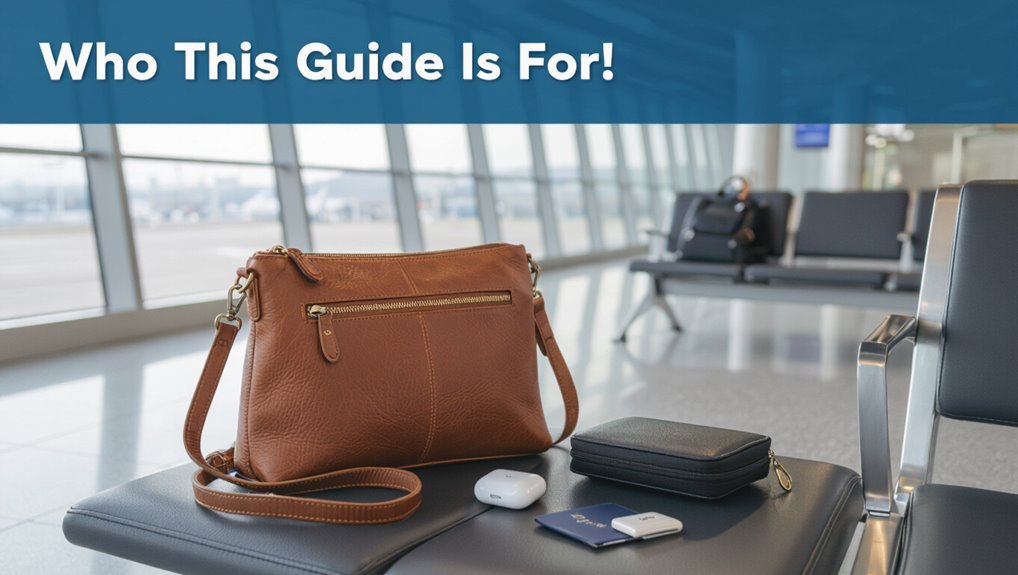
Wondering if this guide applies to you?
You’re a traveler who carries a purse and worries about airline rules—occasional flyers, frequent fliers, and those switching carriers.
You want clear criteria: size, contents, and cabin compatibility.
You’re seeking practical tips to avoid gate checks and fees, and want to know when a purse is considered a personal item versus a carry-on.
Quick Answer: Will Your Purse Count As a Personal Item?
Can your purse count as a personal item? Yes — in most cases, your purse qualifies if it fits beneath the seat in front of you and holds essentials like documents, phone, and wallet.
Check your airline’s specific size limits and carry-on rules before you pack. If it’s oversized, gate agents may require it to be stowed as a carry-on.
What Airlines Mean by “Personal Item” Vs. “Carry-On
Airlines distinguish a “personal item” from a “carry-on” mainly by size, placement, and purpose: a personal item—like a purse, small backpack, or laptop bag—must fit under the seat in front of you and hold essentials, while a carry-on is larger, goes in the overhead bin, and can contain additional clothing or bulkier items.
| Item Type | Placement | Typical Contents |
|---|---|---|
| Personal | Under seat | Wallet, phone, laptop |
| Carry-on | Overhead | Clothes, shoes, larger gear |
Why Airlines Limit Personal Items
Because cabin space and boarding speed are limited, carriers set strict personal-item rules to keep aisles clear and guarantee every passenger has room for essentials under the seat in front of them.
You’ll follow limits so boarding’s faster, exits stay accessible, and overhead space isn’t monopolized.
Policies protect comfort, safety, and fairness for everyone.
- Safety
- Efficiency
- Fairness
- Comfort
- Accessibility
Typical Size and Weight Limits for Personal Items
Most carriers let one personal item per passenger and set clear size—and sometimes weight—limits so your bag fits under the seat in front of you. You should check dimensions (commonly ~18x14x8 inches) and occasional 7–10 kg/15–22 lb weight caps. Pack compactly and test fit before travel.
| Item | Typical Limit |
|---|---|
| Dimensions | 18×14×8 in |
| Weight | 7–10 kg |
| Examples | Purse, laptop |
Which Airlines Explicitly List “Purse” in Policy
Several major carriers explicitly name a “purse” as an acceptable personal item in their baggage rules, so you can check policies with confidence before packing.
Airlines often list purses alongside backpacks and laptop bags; check size limits and placement.
Examples you might find include:
- Airline A: “purse” accepted under seat
- Airline B: listed with personal items
- Airline C: included in carry-on policy
- Airline D: purse allowed free of charge
- Airline E: defined in FAQ
Major U.S. Carriers: Purse Rules Compared
When you compare major U.S. carriers, you’ll find similar allowances for purses but important differences in size limits, placement rules, and enforcement that can affect whether your bag fits under the seat or needs to go in the overhead bin.
You should check each airline’s dimensions, whether purses count as the personal item, and gate agents’ typical strictness to avoid last-minute stowing.
Major International Carriers: Purse Rules Compared
When you fly internationally, you’ll notice carriers vary widely on carry-on allowances and what they count as a personal item.
Check each airline’s purse size restrictions before packing so you don’t get asked to gate-check it.
I’ll compare typical limits and examples from major international carriers next.
Carry-On Allowance Differences
Although airlines often list a purse as a “personal item,” what counts as one can vary widely between major international carriers.
You should check each airline’s specific size, weight, and placement rules before you fly. You’ll find allowances differ for free items, fees, cabin placement, carry-on plus personal combinations, and priority boarding perks.
- Free personal item policies
- Weight vs. size limits
- Overhead vs. underseat rules
- Fees for second items
- Priority/plus exceptions
Purse Size Restrictions
Since personal-item rules vary, you’ll want to compare the specific size limits each carrier enforces for purses.
Check dimensions airlines list—often around 40 x 30 x 15 cm or similar—and confirm whether a tote, clutch, or wristlet meets criteria.
Note measurement method (packed vs. empty) and weight caps.
When in doubt, contact the carrier or gate agent before travel.
Low‑Cost Carriers: Purse Restrictions to Watch
If you’re flying with a low‑cost carrier, expect stricter rules for what counts as a personal item and how big your purse can be—budget airlines often limit size, weight, and the number of carry items to keep fares low.
Know the policy, measure, and pack accordingly.
- Check exact size limits
- Weigh your bag preflight
- Consolidate essentials
- Pay for extra carry if needed
- Use a compliant tote
How Fare Class and Status Change Allowance
Your fare class can affect whether a purse counts as your personal item, so check what your ticket actually includes.
If you have elite status, you’ll often get more leeway on size or an extra small bag allowance.
Before you pack, confirm both fare rules and status perks to avoid surprises at the gate.
Fare Class Perks
Fare class — and your elite status — can directly change whether a purse counts as your personal item, because airlines set size and quantity rules by ticket type and frequent‑flyer level.
You should check your fare benefits before packing to avoid gate fees or forced gate‑check.
- Higher fares often allow larger personal items
- Basic fares restrict size/quantity
- Bundles may include extra allowance
- Add‑ons can upgrade allowance
- Check airline policy per booking
Elite Status Benefits
Beyond ticket type, elite status can change what bags qualify as your personal item and how strict gate agents are.
If you’ve reached elite tiers, you often get relaxed size rules, priority boarding, and occasional exemptions allowing a larger purse or briefcase.
Status can also earn fee waivers and smoother disputes at the gate, so always mention your status when policies seem unclear.
Gate Staff: How Interpretations Vary
Because gate agents deal with thousands of passengers and a patchwork of airline policies, you’ll find their judgments about purses as personal items can differ widely.
You should stay polite, know your airline’s rules, and be ready to adapt.
Consider these practical points:
- Size matters more than style
- Boarding order affects strictness
- Agent discretion varies by airport
- Proof helps (measurements)
- Be prepared to gate-check
When Your Purse Becomes a Second Carry‑On
Watch your purse’s dimensions and weight, because if it exceeds airline size rules it can be treated as a second carry-on.
You’ll also want to know gate check exceptions that might let you stow an oversize bag without paying extra.
Check carry-on weight limits and gate policies before boarding so you’re not surprised at the gate.
Airline Size Rules
Airlines set strict size limits for personal items, and your purse counts only if it fits those dimensions—otherwise it’s treated like a second carry‑on and may be gate‑checked or refused.
Check measurements before you pack, because overhead space is limited and fees vary. Know policy differences by carrier to avoid surprises.
- Measure your purse accurately
- Compare to carrier limits
- Pack essentials only
- Expect enforcement at boarding
- Opt for compliant bags
Gate Check Exceptions
If your purse exceeds the carrier’s personal‑item dimensions or the flight is full, it can be treated as a second carry‑on and asked to be gate‑checked; that means you’ll hand it over at the aircraft door, pick it up at baggage claim, and may not have immediate access to essentials during the flight.
Expect a tag, possible brief delay at arrival, and follow gate agent instructions to retrieve it.
Carry‑On Weight Limits
Because most carriers cap both size and weight for carry‑ons, your purse can be treated as a second carry‑on—and subject to weight limits—when it pushes you over the allowed allowance.
Check limits before packing, redistribute heavy items, weigh bags at home, use lightweight organizers, and board early to secure overhead space.
- Know airline policies
- Weigh combined items
- Move heavy items to checked luggage
- Use slim bags
- Board with priority
Purse Features That Make It Acceptable
While different carriers set their own rules, a purse counts as an acceptable personal item when it fits under the seat, closes securely, and holds only the essentials you’ll need during the flight.
Choose a compact, structured bag with a reliable zipper or clasp, comfortable straps, and organized pockets for documents, phone, and meds.
Keep bulky items and valuables minimal to stay compliant.
Purse Types That Often Cause Problems
In crowded boarding lanes and tight overhead bins, certain purse styles can quickly turn into a hassle—you’ll want to avoid anything oversized, rigid, or oddly shaped.
Pick compact, flexible bags instead so you won’t struggle stowing or gate-checking. Watch for styles that snag, block aisle space, or exceed size limits.
Opt for compact, flexible purses so stowing and gate-checking stay hassle-free—avoid snaggers and oversized shapes.
- Structured tote
- Large weekend bag
- Hard-shell clutch
- Wide-bottom satchel
- Oversized hobo
Backpacks Vs Purses: Which Counts As the Personal Item?
Wondering whether your backpack counts as your personal item or if you need a purse too? You should check airline size rules: small backpacks often qualify, large ones may not. Pick the item you’ll use onboard and fit under the seat to avoid gate checks.
| Item | Typical outcome |
|---|---|
| Small backpack | Counts |
| Large backpack | Might not |
| Purse | Usually counts |
Crossbody and Shoulder Bags: Usual Rules
If you wear a crossbody or sling bag, most airlines treat it as your personal item so long as it fits under the seat in front of you and doesn’t exceed the carrier’s stated dimensions.
You should wear it or stow it under the seat, avoid bulky shapes, and follow gate agent instructions.
- Wear it across your body
- Keep valuables accessible
- Avoid overstuffing
- Check carrier size rules
- Be ready to stow
Pack a Purse So It Fits Under the Seat
Although you’ll want your purse to hold essentials, pack it so it’ll slip under the seat without bulging or overstuffing the bin space. Choose a slim wallet, compact charger, tissues, and ID. Keep liquids small and upright. Arrange flat items first so the bag slides easily.
| Item | Size | Placement |
|---|---|---|
| Wallet | Slim | Bottom |
| Phone | Compact | Side |
| Charger | Small | Coil |
| Liquids | 100ml | Upright |
| Extras | Minimal | Top |
Rolling or Compressing a Purse Into a Carry‑On
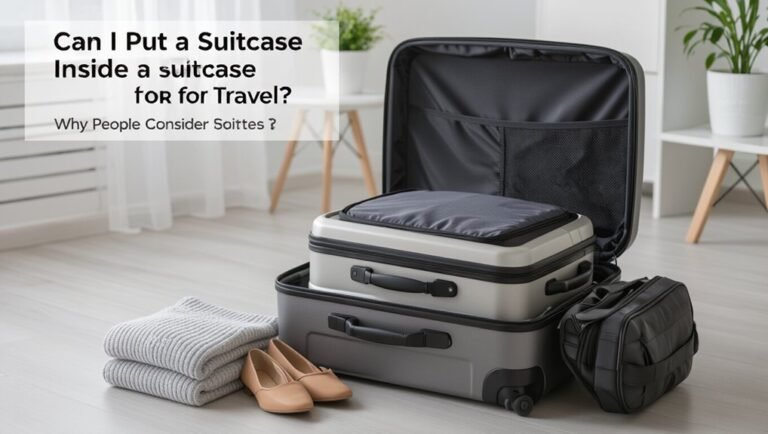
If your purse won’t fit under the seat, you can roll or compress it to tuck inside your carry-on.
You’ll want to protect fragile contents by padding them with soft items or using a hard case for electronics before squashing the bag.
Test the compressed shape so it still closes and won’t stress seams or zippers.
Fit Inside Carry‑On
Many travelers tuck a purse into their carry‑on by rolling or compressing it to save space and meet airline size rules.
You’ll want to test fit, remove bulky items, and place it where it won’t spring open. Consider how shape changes affect access and security.
- Test fit before departure
- Empty rigid items
- Fold soft sections evenly
- Stow zipped side up
- Keep essentials reachable
Protecting Contents While Compressing
After you confirm your purse fits, focus on protecting what’s inside while you roll or compress it into your carry‑on.
Empty loose items into secure pouches, remove fragile electronics, and pad delicate contents with clothing.
Zip compartments and use small plastic bags for cosmetics and chargers.
Compress gently to avoid crushing, then place the purse where it won’t be squashed by heavier bags during transit.
Measuring Your Purse for Airline Rules
To make sure your purse qualifies as a personal item, measure its height, width, and depth with a tape measure while it’s closed and fully packed the way you’ll carry it on the plane.
Record dimensions, compare them to your airline’s limits, and note expandable sections. Pack thoughtfully to avoid puffing.
- Measure accurately
- Include pockets
- Note compression
- Compare with policy
- Recheck before travel
What to Do at the Gate If Your Purse Is Flagged
If a gate agent flags your purse, stay calm and ask them politely what the issue is and whether it can be checked at the gate.
Have a small secondary bag ready so you can move essentials if they ask you to gate-check or stow the larger item.
That way you’ll resolve things quickly and keep your boarding on track.
Ask Gate Agent Politely
Wondering what to do when a gate agent flags your purse? Stay calm, speak clearly, and ask questions politely. Explain your items briefly and accept their guidance.
- Address the agent respectfully
- State your flight and carry-on needs
- Ask if re-checking is required
- Offer to remove specific items for inspection
- Request clarification on airline policy and next steps
Prepare Secondary Bag
Grab a small, compliant secondary bag before you reach the gate so you’re ready if an agent flags your purse—this could be a tote, daypack, or clear pouch that meets airline size rules and holds essentials like your passport, boarding pass, medication, phone, chargers, and a minimal toiletry kit. Pick items, transfer quickly, and stay calm.
| Item | Priority | Tip |
|---|---|---|
| Passport | High | Keep accessible |
| Medication | High | Original packaging |
| Phone | High | Charged |
| Chargers | Medium | Cable wrap |
How to Avoid Gate‑Checking Your Purse
One simple way to avoid gate‑checking your purse is to know the airline’s carry‑on and personal‑item rules before you pack; measure your bag and compare it to the airline’s size limits so you can confidently carry it onboard.
Know the airline’s carry‑on and personal‑item limits, measure your purse, and pack to fit so you board with confidence.
Pack light, choose slim styles, and board early to secure overhead space.
Consider these tips:
- Measure dimensions precisely
- Use compressible organizers
- Opt for soft-sided bags
- Wear bulkier items
- Gate‑check only valuables
How to Combine Purse and Personal‑Item Allowances
You can often carry both a small bag and a purse if you plan what goes where and layer items strategically so essentials stay accessible.
Check your airline’s policy for size and carry limits, and use smart workarounds like nesting a compact purse inside a larger personal item or wearing a crossbody to free up allowance.
With a clear plan you’ll keep everything on board without surprises at the gate.
Combine Bag And Personal
If your airline lets you carry both a purse and a personal item, you can often consolidate them to avoid extra fees and simplify boarding: tuck smaller essentials—wallet, passport, phone, meds—into the purse and place the bulkier items—tablet, chargers, a sweater—into the personal item so each piece meets the carrier’s size limits and fits under the seat.
- Prioritize must-haves
- Balance weight distribution
- Check size rules
- Keep documents accessible
- Use packing cubes
Layer Items Strategically
Now that you’ve split items between purse and personal bag, layer them strategically so both meet size rules and stay accessible.
Put essentials—passport, phone, wallet—in your purse for quick reach.
Stow bulkier or less-used items—chargers, snacks, paperback—in the personal bag.
Use small pouches for cords and meds to prevent digging.
Balance weight so neither bag bulges past limits.
Airline Policy Workarounds
Although airlines clearly define a purse and a personal item, you can often combine allowances by being strategic: pick a compact purse for essentials and a slightly larger personal bag for bulkier items, keep both within carry-on size limits, present them together when gate-checking, and know each carrier’s rules so you can politely assert your two-item right without sounding confrontational.
- Measure before packing
- Use expandable bags
- Keep valuables in the purse
- Wear bulky items
- Be polite but firm
Packing Checklist for Purse‑Only Travel
Packing light into a single purse takes smart choices and strict priorities, so start by listing essentials you’ll need within easy reach: travel documents, wallet, phone and charger, keys, a compact toiletry kit, any meds, and a small reusable bag for purchases or laundry.
Add sunglasses, a slim power bank, noise-canceling earbuds, a pen, emergency cash, a credit card, and a compact snack.
What to Keep in Your Purse for Security Screening
When you’re preparing for security screening, keep your passport, boarding pass, and any required ID in an easy-to-reach pocket so you can pull them out quickly.
Stash small electronics like your phone and tablet where they can be removed separately if asked, and pack chargers or power banks in an accessible spot.
Place liquids in a clear, quart-sized bag at the top of your purse so you can grab it without unpacking everything.
Essentials For Screening
If you want a smooth trip through security, keep only the items you’ll need before and during your flight in your purse: travel documents, ID, boarding pass, a small zip pouch of coins and cards, your phone and charger cable, and any medication in clearly labeled containers.
Pack minimally so screening is quick and predictable.
- Boarding pass and ID
- Wallet essentials
- Prescription meds
- Clear zip pouch for small items
- Pen and travel-size tissues
Electronics And Liquids
Although you can bring most small electronics and travel-size liquids in your purse, keep them organized and easy to remove for screening: place devices in a top pocket or clear pouch, remove larger tablets and e-readers when asked, and stash liquids in a transparent quart-sized bag.
Label chargers and power banks separately, and avoid overpacking to speed up security checks and prevent delays.
Liquids, Electronics, and Valuables in Your Purse
Many travelers keep liquids, electronics, and valuables in their purse, so it helps to organize them for security screening and quick access.
Pack thoughtfully: essentials reachable, liquids in a clear bag, devices charged, valuables secure, and receipts separate.
- Keep liquids ≤100ml in a single quart bag
- Place electronics on top
- Zip valuables in inner pocket
- Carry chargers organized
- Store passports handy
Traveling With a Purse and a Stroller or Wheelchair
If you’re traveling with a stroller or wheelchair, check the airline’s carry-on and gate-check rules so your purse doesn’t get left behind.
You’ll often be allowed the mobility device plus one personal item, so plan how you’ll carry or secure your purse during boarding.
Bring a small crossbody or clip-on option to keep essentials accessible without obstructing the device.
Carry-On Rules With Stroller
When you travel with a stroller or wheelchair, airlines usually let you gate-check the item and still bring a purse as your personal item.
However, rules vary by carrier and aircraft type. You should confirm dimensions, boarding procedures, and assistance options before flying.
- Check carrier gate-check policy
- Measure purse and stroller folded size
- Ask about carry-on exceptions
- Confirm boarding order
- Note liability and retrieval procedures
Managing Purse And Mobility Device
Because you’ll be juggling a purse plus a stroller or wheelchair at checkpoints and boarding, plan how each item moves with you: decide whether you’ll carry the purse, stow it in the mobility device, or gate-check it.
Confirm the airline’s rules and retrieval process so you don’t get separated from essentials or face surprises at the gate.
Pack critical items in a small, accessible bag you can keep on you.
International Travel: Airport and Country Differences
Though airlines often let you bring a purse as your personal item, airport rules and country regulations can change what that actually means, so you should check specifics before you travel.
You’ll face varying size limits, security screening, prohibited items, duty-free allowances, and customs declarations.
Check airline and airport sites, and pack to comply with the strictest rule you’ll encounter.
- size limits
- security screening
- prohibited items
- duty-free allowances
- customs declarations
Connecting Flights: Carry‑On Mismatches to Expect
Airport and country rules can affect what you carry, but connecting flights add another layer: different airlines and airports often enforce different carry‑on and personal item policies on the same itinerary.
You should check each carrier, confirm baggage allowances, and pack adaptable items to avoid gate hassles.
| Airline A | Smaller personal item allowed |
|---|---|
| Airline B | Larger carry‑on only |
| Airport X | Strict sizing |
| Airport Y | Lenient staff |
| Tips | Repack between flights |
TSA vs Airline Rules: What Actually Matters?
You’ll see TSA sets the baseline for what you can carry through security, like liquids and prohibited items.
Airlines often add size and number limits for personal items that vary by carrier, so you’ll want to check their specific policy before you pack.
When rules conflict, the airline’s gate agent usually enforces what matters for boarding, even if TSA screened your bag.
TSA Guidelines Only
While airlines set baggage allowances, the TSA’s rules determine what you can actually bring through the security checkpoint—what’s allowed in carry-ons, what must be declared, and what gets confiscated for safety reasons.
You should follow TSA limits, pack liquids properly, declare restricted items, expect screenings, and remove laptops.
- Liquids in 3-1-1 bags
- Sharp objects banned
- Medications declared
- Electronics screened
- Food allowed but inspected
Airline Policy Variations
TSA rules set the baseline for what can pass through security, but airlines get to decide what counts as your personal item and how it fits under the seat or in overhead bins. Check carrier size limits, fee policies, and gate agent discretion so you pack accordingly.
| Airline | Typical Personal Item |
|---|---|
| Budget | Small bag under seat |
| Legacy | Slightly larger bag |
Which Rule Prevails
Although security rules determine what can go through the checkpoint, the airline’s carry-on and personal-item policies usually control what you can bring onto the plane and where it fits; both matter, but the airline’s size/placement rules and gate agent decisions typically prevail once you’re at the gate or boarding.
You should follow both, expect gate checks, and pack strategically.
- Check airline dimensions
- Know TSA prohibited items
- Be ready to gate-check
- Use a compact purse
- Ask gate agents politely
Reading an Airline’s Baggage Policy Fast
If you want to know quickly whether your purse counts as a personal item, scan the airline’s baggage section for three things: dimensions, included items, and carry-on allowances.
Then check size limits against your purse, note examples the carrier lists (purse, laptop bag), and confirm whether a carry-on plus personal item is allowed.
Save a screenshot for reference at check-in.
When to Call the Airline Vs Trust Gate Staff
If your purse’s size or contents are borderline, call the airline before you get to the airport so you’re not surprised at the gate.
Once you’re at the gate, trust staff on site for quick, situation-specific guidance like seat swaps or overhead space.
Use the airline for policy clarifications and gate agents for real-time packing or seating fixes.
When To Call
When should you pick up the phone versus relying on gate staff? Call the airline when rules or booking specifics affect your carry-on allowance, you need confirmation in writing, you’re far from the airport, you face inconsistent staff answers, or you require a fee waiver.
Check official policy, get a reference number, and don’t wait until boarding confusion escalates.
- Confirm allowances
- Get written proof
- Save time pre-trip
- Resolve contradictions
- Request exemptions
When To Trust Gate
Wondering whether to trust the gate agent or call ahead? You can usually rely on gate staff for on-the-spot clarifications about carry-on vs personal item sizing and boarding rules.
Trust them when policies are clear and consistent. Call ahead if you have unusual baggage, tight connections, or a nonstandard fare.
Bringing measurements and photos helps resolve disputes quickly.
Practical Purse Swaps for Stricter Airlines
Since some airlines have tightened their personal-item rules, you’ll want a plan for swapping purses quickly and efficiently.
Pack essentials in a compact organizer, choose a lightweight backup bag, pre-sort items by priority, keep chargers and documents accessible, and practice a one-minute transfer.
- Essentials-only checklist
- Slim backup tote
- Zippered organizer
- Accessible passport pocket
- Timed practice swap
Best Purse Styles: Long‑Haul Vs Short Domestic Flights
For long-haul flights you’ll want a structured, roomy crossbody or tote that holds a charger, meds, a change of clothes and a compact toiletry kit, while for short domestic hops a slim wristlet or belt bag keeps just the essentials within easy reach without weighing you down.
Pick durable fabrics, secure closures, and organized pockets for quick access; size to airline personal item limits.
Real Traveler Scenarios: Common Outcomes
Now that you’ve matched purse style to flight length, let’s look at how those choices play out in real travel situations.
You’ll notice outcomes depend on size, gate crowding, airline strictness, carry-on needs, and timing.
- Gate agent lets compact crossbody slide
- Oversized tote moved to overhead
- Busy flight forces consolidation
- Tight connection prompts carry-on priority
- Calm gate allows flexibility
Documenting Dimensions and Policies for Disputes
When a gate agent questions your purse, have clear measurements and the airline’s carry-on rules ready so you can state your case calmly and confidently. Measure length, height, depth; note model and receipt; photograph next to a ruler. Present policy screenshots. Use this quick table to visualize proof:
| Item | Measurement | Evidence |
|---|---|---|
| Purse | 10×8×4 in | Photo |
| Receipt | N/A | Copy |
| Policy | N/A | Screenshot |
Appealing a Purse Baggage Fee
If an agent charges you a purse fee you believe is unfair, gather your evidence and start the appeal promptly: show the purse measurements, receipt or purchase information, and the airline’s carry-on policy screenshots, and state clearly that you were charged in error.
Explain timeline, request refund, and keep polite records.
- Photos of purse and tape
- Boarding pass and receipt
- Policy screenshots
- Agent name/time
- Refund request log
Three Quick Pre‑Flight Checks for Your Purse
Before you head to the airport, run three quick checks on your purse to avoid surprises: confirm size fits airline rules, remove prohibited items like liquids over limit or sharp objects, and guarantee essentials (ID, boarding pass, wallet, meds) are accessible.
Zip compartments securely, weigh it if you can, and tuck bulky items into carry-on to prevent gate refusal.
Packing Hacks to Make Any Purse Fit
Start by stripping your purse to the essentials and organizing items into slim, purpose-driven zones: cards and cash in a cardholder, phone and boarding pass in an easy-access pocket, meds in a small zip pouch, and chargers rolled tight in a cable wrap.
Then pack vertically, compress soft items, tuck receipts away, and limit duplicates.
- Prioritize daily must-haves
- Use clear pouches
- Keep weight low
- Layer strategically
- Reassess before travel
Recommended Organizers and Travel Bags
When you’re choosing organizers and travel bags, pick pieces that match your packing strategy: slim cardholders and zip pouches for daily essentials, a padded phone sleeve or small crossbody for quick access, and a lightweight toiletry cube or tech roll to contain bulkier items.
Choose durable, water-resistant fabrics, modular pieces that nest, and lightweight straps.
Prioritize quick-access pockets and TSA-friendly layouts for stress-free security.
Frequently Asked Questions
Can I Bring an Empty Purse Plus a Small Backpack as Two Personal Items?
Usually not — most airlines allow one personal item plus a carry-on. You’ll need to check your carrier’s rules, because some staff might accept a purse and small backpack as one combined item, but don’t count on it.
Do Airlines Count a Laptop Sleeve Inside a Purse Separately?
They usually won’t; airlines treat the purse and a laptop sleeve inside it as one personal item, so you shouldn’t count the sleeve separately. Check your carrier’s size rules though, because enforcement can vary.
Are Designer or Branded Purses Treated Differently at Boarding?
No, airlines won’t treat designer or branded purses differently at boarding; you’ll be judged by size and carry-on rules, not label. If it fits their personal-item dimensions, they’ll accept it regardless of brand or price.
Will Inflight Seat Storage (Seat-Back Pocket) Change Purse Rules?
Generally, no: seat-back pockets don’t change airline purse rules. You’ll still follow the carrier’s personal-item size limits and boarding policies; if your purse fits there, it’ll be fine, but larger bags may need to go in overhead.
Can I Gate-Check Only My Purse While Keeping a Carry-On Onboard?
Yes — you can usually gate-check just your purse while keeping a carry-on onboard, but policies vary by airline, gate agent, and aircraft; confirm at the gate to avoid surprises and tag the purse for retrieval at baggage claim.
Conclusion
In most cases, yes — your purse can count as your personal item, but it depends on the airline and how much you try to cram inside. Check size limits, weigh it if you’re worried, and stick to essentials so it fits under the seat. If you’re charged, politely appeal with airline policy or gate agent discretion. Use slim organizers, a tech sleeve, and only carry what you need to avoid surprises and speed up boarding.