Does Hardside Luggage Crack? Durability Explained
Yes — hardside luggage can crack, but how often and how badly depends on material, construction, and handling. You’ll find polycarbonate flexes and usually dents instead of cracking, while ABS is lighter and more prone to hairline fractures. Aluminum dents but rarely splits. Cracks concentrate at corners, seams, hinges, and wheel housings, and overpacking, drops, temperature swings, and rough baggage handling increase risk. Keep inspecting and maintaining gear, and the rest of the guide explains what to check and repair.
What People Mean by “Does Hardside Luggage Crack?” (Common Concerns)
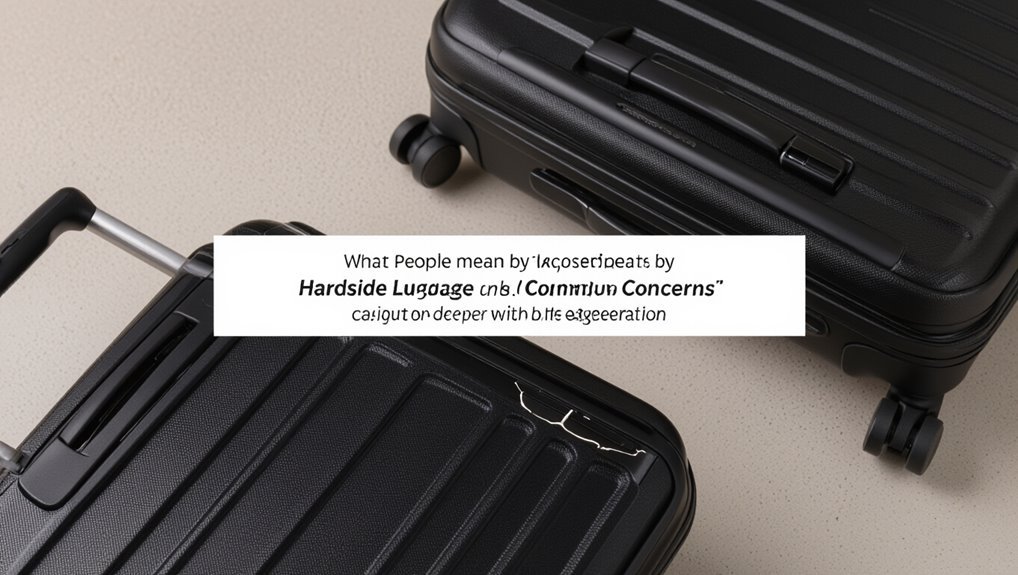
When people ask, “Does hardside luggage crack?” they usually worry about real-world scenarios—sharp impacts, extreme temperature changes, and repeated stress at corners or seams.
When people ask whether hardside luggage cracks, they’re really worrying about drops, cold, and seam or corner failure.
You mean whether shells split, seams separate, zippers fail, or wheels and handles pull out under load. You’re thinking about material brittleness after cold exposure, UV weakening, and point impacts from dropped or crushed bags.
You want to know if frequent packing/unpacking or overstuffing shortens life. You’re concerned about repairability, warranty coverage, and whether certain materials or construction methods resist cracking better.
That’s the set of common, practical concerns.
Quick Answer: Do Hardside Suitcases Crack?
Short answer: yes—hardside suitcases can crack, but how likely depends on the material type, with polycarbonate resisting impacts better than cheaper ABS.
You’ll also see failures at impact and stress points like corners, seams, and wheel housings where force concentrates.
Regular maintenance, prompt repairs, and proper packing can greatly reduce the chance of a crack spreading.
Material Type Matters
1 key factor in whether a hardside suitcase will crack is the material it’s made from, since different plastics and composites handle impact and stress very differently.
You should check what your case is made of: polycarbonate flexes and tends to resist cracking by absorbing force, while ABS is lighter and cheaper but can crack under sharp blows.
Thermoplastic blends and newer polymers offer balanced toughness and weight.
Aluminum shells resist punctures but dent rather than crack.
Knowing the material helps you choose maintenance, repair options, and realistic expectations for longevity and performance during travel.
Impact And Stress Points
Because impact concentrates at edges, corners, hinges and wheel housings, those are the spots where hardside suitcases are most likely to crack or dent.
You’ll find flat panels resist blunt force better, but repeated drops or torsion at seams causes stress risers. Thin shells flex, transferring loads to joints and handles; rigid shells transmit shocks to attachment points.
Wheels hit curbs and create leverage that opens cracks over time. Packing densely reduces internal movement, lowering internal impact, while external knocks still target those weak zones.
When choosing luggage, inspect reinforcement and overlap design at these high-stress areas.
Maintenance And Repairs
Those edges, corners and wheel housings that take the most abuse are also where you’ll most often see cracks form, but a well-maintained hardside shell can last years.
You should inspect seams, handles, and wheels after trips, cleaning dirt and salt that accelerate wear.
Tighten loose screws, replace worn wheels, and reseal small splits with appropriate adhesives or flexible epoxy made for polycarbonate or ABS.
For structural damage, consult a professional repair service; DIY fixes can worsen cracks if mismatched materials are used.
Regular care, prompt minor repairs, and smart packing greatly reduce the chance your suitcase will fail.
How Often Do Hardside Shells Fail in Real Travel?
Curious how often hardside shells actually crack, dent, or split in real travel? You’ll rarely see catastrophic failure if you pack sensibly and avoid extreme impacts.
Airline handling causes most visible dents and scuffs; full splits or cracks happen less often, typically after heavy drops or repeated stress at seams and zippers.
Frequency rises with older luggage, overpacking, or rough routes. You can expect occasional cosmetic damage and only intermittent structural failure—perhaps once every few years for frequent flyers, less for casual travelers.
Inspect joints and corners after trips; early fixes prevent small issues becoming total failures.
Which Hardside Materials Are Used: Polycarbonate, ABS, Aluminum
Hardside luggage typically uses three main materials—polycarbonate, ABS, and aluminum—each balancing weight, impact resistance, and cost differently.
You’ll find polycarbonate on premium models: it’s lightweight, flexible under force, and resists deep dents.
ABS appears on budget options; it’s cheaper and lighter than many alternatives but can be less resilient over time.
Aluminum suits frequent travelers who want maximal strength and a premium look; it’s heavier, shows scratches, and often costs more.
When you choose, weigh your priorities: budget, typical handling, and whether scratches or weight matter more for your trips.
How Polycarbonate Hardside Shells Crack vs. ABS
When you compare polycarbonate and ABS shells, you’ll notice polycarbonate takes impacts better and tends to flex instead of shattering.
That flexibility slows crack propagation in polycarbonate, while ABS is more likely to form brittle cracks that spread quickly.
Those differences also affect repairability—polycarbonate can often be reshaped or patched, whereas ABS usually needs part replacement.
Impact Resistance Differences
Although both polycarbonate and ABS are common for hard-shell luggage, they handle impacts in very different ways: polycarbonate flexes and can dent without splitting, while ABS tends to be stiffer and may crack or shatter under severe stress.
You’ll notice polycarbonate absorbs and redistributes energy, so blunt blows often leave scuffs or permanent deformations rather than clean fractures. ABS resists minor knocks but concentrates force at weak points, creating hairline cracks that can open under repeated impacts.
When choosing luggage, consider whether you want resilience to knocks (polycarbonate) or a lower-cost, more rigid option that risks brittle failure (ABS).
Crack Propagation Behavior
Because they’re engineered to deform rather than fracture, polycarbonate shells tend to develop shallow, rounded dents or surface crazing that absorb and blunt impact energy, while ABS more often forms sharp, hairline cracks that propagate rapidly from stress concentrators.
You’ll see polycarbonate localize damage and retain structural integrity longer, whereas ABS can channel a small crack into a larger split under repeated load.
You’ll notice crack initiation sites differ: polycarbonate displays distributed micro-crazes and blunt tips that slow growth, while ABS shows narrow fractures with high stress intensity factors.
That difference dictates failure patterns and lifespan under cyclic impacts.
Repairability And Flexibility
If you drop a polycarbonate suitcase, it’s likelier to dent and flex back rather than split cleanly, which makes on-the-spot repairs and heat-forming fixes more practical than with ABS.
You can often reshape polycarbonate by warming the dent with a hairdryer or heat gun and pressing it back into place; it regains toughness after cooling.
ABS, by contrast, tends to crack or fracture, needing patching, adhesive bonding, or panel replacement.
You’ll find polycarbonate repairs faster, cheaper, and more durable for everyday knocks, while ABS may demand more invasive fixes or shell swaps after impact.
How Aluminum Shells Fail Compared With Plastics
When you compare aluminum shells with plastic ones, you’ll notice they fail in fundamentally different ways: aluminum bends, dents, and can crack along stress points, while plastics tend to crack, shatter, or suffer surface abrasion and UV-related brittleness.
You’ll find aluminum absorbs impacts by deforming; dents are visible but often carry structural integrity unless a seam or corner fractures. Plastics resist denting but transmit shock, producing hairline cracks that propagate or sudden shattering under severe impact.
Temperature matters: cold makes plastics brittle, while aluminum stays ductile but can fatigue over repeated flexing.
Maintenance and inspection catch issues early.
Which Design Features Make Shells Crack-Resistant?
When you choose hardside luggage, material choice matters: polycarbonate bends instead of shattering, while reinforced plastics and aluminum alloys offer different trade-offs.
Look for structural reinforcements like ribbing, thicker edges, and internal frames that spread impact forces.
Also check for flexible seam design and gasketed joins that let the shell flex without cracking.
Material Choice Matters
Because the shell material is the luggage’s front line, your choice determines how it handles impacts, temperature swings, and rough handling. Pick polycarbonate for flexibility and self-healing tears, ABS for budget stiffness, or polypropylene for fatigue resistance. Thickness and resin quality matter more than buzzwords; look for impact-rated specs. Surface texture hides scuffs but doesn’t replace toughness. UV-stabilized blends resist embrittlement. You’ll also weigh weight versus durability: lighter composites may flex but crack less under sudden shock.
| Material | Strength | Typical Use |
|---|---|---|
| Polycarbonate | High impact resistance | Premium |
| ABS | Stiff, cheaper | Entry-level |
| Polypropylene | Fatigue resistant | Mid-range |
Structural Reinforcements Help
If you want a shell that resists cracking, look for deliberate reinforcements like molded ribs, internal cross-bracing, and multi-layer laminates that distribute impact forces instead of letting stress concentrate at one point.
You should favor raised ridges and contoured panels that add stiffness without much weight. Internal bulkheads and foam-filled cavities stop flexing and spread loads across larger areas.
Bonded seams and reinforced corners reduce local stress where cracks often start. Look for riveted or continuous-frame connections rather than spot-bonded parts.
These design choices keep the shell rigid under load and greatly lower the chance of fracture.
Flexible Seam Design
Reinforcements and ribs help keep a shell stiff, but seams determine how that stiffness behaves under repeated flexing. Therefore, you should pay equal attention to seam design when looking for crack resistance.
Choose molded, continuous seams that distribute stress rather than concentrating it at a single join. Look for engineered flex zones—thin, deliberate channels or scarfed overlaps—that allow controlled movement without creating sharp stress risers.
Double-welded or chemically bonded seams resist delamination better than simple glued joints. Rounded shifts, gradual thickness changes, and compatible materials at the seam all reduce cyclic fatigue, so your case lasts longer without cracking.
How Wall Thickness and Ribbing Reduce Fracture Risk
When you drop or press on a suitcase, the wall thickness and external ribbing work together to spread and absorb that load so cracks don’t start at a single weak point. You benefit because thicker panels raise the stress threshold, letting the shell flex slightly instead of failing.
Ribbing stiffens large areas, redirecting forces along contours and away from flat spans. Together they delay crack initiation and slow propagation if a blemish forms.
Consider these design effects:
- Increased wall thickness raises impact energy absorption.
- Ribs add bending stiffness without much weight.
- Ribs channel stresses away from corners.
- Combined features extend service life.
Why Hinges and Seams Are Common Failure Points
Because hinges and seams join separate panels and carry concentrated loads, they’re natural weak spots where stress concentrates and movement accelerates wear.
You open, close, and toss luggage; those cycles flex the jointed areas more than flat sections. Fasteners, pins, and adhesive lines focus force into tiny contact points that can notch or crack shells.
Misalignment or dirt increases abrasion and lever action magnifies loads at corners. Repeated micro-movement can fatigue polymers and loosen rivets, letting moisture and grit worsen corrosion or abrasion.
Inspect, clean, and tighten hinge hardware periodically to slow progressive damage and catch issues early.
How Zippers and Compression Systems Add Shell Stress
If you zip a packed bag tight or engage an internal compression panel, those closures concentrate inward force against the shell and raise local stress levels.
You’ll feel strain where fabric meets hard edges; zippers pull rims inward, and compression straps push rigid panels into curved areas. That repeated loading can create microcracks that grow with impact or cold.
- Zipper tension focuses force along the seam line
- Internal panels press unevenly against thinner shell sections
- Overfilled compartments amplify localized bending moments
- Rapid or repeated closure under load accelerates fatigue
Manage packing and relief points to reduce concentrated stress.
How Manufacturing Quality and Tolerances Change Cracking Risk
When you inspect hardside luggage, the materials chosen—ABS, polycarbonate, or aluminum—directly affect how cracks start and spread.
You’ll see that tighter manufacturing tolerances reduce stress concentrations at seams and corners, while looser tolerances leave gaps that amplify flexing.
Consistent assembly quality control then determines whether those design choices and tolerances translate into long-lasting shells or early failure.
Material Selection Impact
Material choices and the precision of manufacturing directly determine how prone a hardside shell is to cracking under stress.
You’ll notice different polymers and composites respond differently to impacts, UV, and temperature swings. Choosing materials with balanced stiffness and toughness reduces brittle failure, while additives and annealing can improve resilience.
Inspect how seams, welds, and thickness alterations use the chosen material—poor choices magnify stress concentrations.
- High-impact ABS: affordable, moderate toughness
- Polycarbonate: flexible, resists shattering
- Composite blends: tailored performance, costlier
- Reinforcements: localized strength without excess brittleness
Manufacturing Tolerance Limits
Tight manufacturing tolerances and consistent quality control directly cut the risk of cracking by minimizing geometric flaws and residual stresses that concentrate loads.
You should expect precise wall thickness, uniform melt flow, and controlled cooling rates so stress risers and thin sections don’t appear.
Dimensional accuracy keeps seams, joints, and reinforcements aligned, preventing localized bending.
Consistent material feed and mold maintenance reduce embedded voids and inclusions that initiate cracks.
When tolerances tighten, fatigue life improves and performance becomes predictable across batches.
You’ll pay more for tighter specs, but that cost usually beats repairs or early replacement.
Assembly Quality Control
Because parts only perform as well as the way they’re fitted together, assembly quality directly changes cracking risk in hardside luggage.
You notice gaps, misaligned seams, or overtorqued fasteners quickly affect stress paths and concentrate loads where shells are weakest.
Tight process control, calibrated tools, and operator training lower the chance tiny defects become cracks under repeated use.
Inspectors should catch skewed joints and inconsistent adhesive beads before they leave the line.
Key focus areas include:
- Fastener torque consistency
- Seam alignment accuracy
- Adhesive application uniformity
- Inspection frequency and traceability
You’ll reduce cracking by enforcing measured, repeatable assembly steps.
What Impacts and Forces Typically Cause Cracks?
When you drop or slam a hardside suitcase, the shell takes sudden, concentrated stress that can cause hairline fractures or full cracks at weak points like corners, seams, and near handles.
Dropping or slamming a hardside suitcase concentrates stress, causing hairline fractures or cracks at corners, seams, and handles.
You’ll also see damage from sharp impacts with airport conveyor edges, baggage carts, or vehicle doors where force is localized.
High-energy collisions transmit through latches and telescoping handle housings, prying panels apart.
Pressure from heavy stacking can deform panels and open existing flaws.
Thermal shock—rapid temperature shifts during transit—makes polymers more brittle and more likely to crack under impact.
Improper packing lets internal items shift and amplify internal impact forces.
How Repeated Flexing and Fatigue Cause Hairline Cracks
Although you mightn’t notice it at first, repeated flexing steadily weakens the polymer or composite panels on hardside luggage until tiny cracks form. You open, close, toss, and compress shells thousands of times; each cycle creates microscopic damage that accumulates.
You’ll see hairline cracks where stress concentrates—around seams, corners, and hinge mounts. Watch for early signs and act to slow progression:
- Inspect seams and corners regularly for fine lines
- Reduce overpacking to lower flex stress
- Avoid dropping or bending the shell repeatedly
- Repair small cracks promptly to prevent propagation
These steps help extend service life and prevent sudden failure.
How Temperature and Sunlight Make Plastics Brittle
You’ll notice that prolonged heat speeds up polymer breakdown, weakening the plastic’s internal bonds and making shells more prone to cracking.
Sunlight, especially UV, breaks down surface molecules and causes embrittlement that spreads inward over time.
Together, heat and UV exposure rapidly reduce your luggage’s toughness and lifespan.
Heat-Induced Polymer Degradation
If you leave hardside luggage in hot sun or expose it to repeated temperature swings, the polymers that make up shells and trims start breaking down at the molecular level.
You’ll notice stiffness, loss of impact resistance, and microcracking as chains cleave and additives migrate. Heat accelerates oxidation and hydrolysis reactions, reducing flexibility and making edges prone to fracture.
To spot and slow degradation, look for:
- Hardened seams and brittle hinge areas
- Fine surface craze lines near stress points
- Reduced flex when you bend corners
- Discolored or tacky trim indicating additive loss
Store luggage cool, ventilated, and out of direct heat.
UV-Driven Surface Embrittlement
Heat-driven chemical changes often go hand-in-hand with sunlight damage, because UV photons attack many of the same polymer bonds that heat weakens.
You’ll notice surface chalking, microcracks, and loss of flexibility when UV breaks molecular chains in ABS, polycarbonate, or polypropylene shells.
Sunlight also accelerates oxidation, so repeated heating and cooling make damage cumulative.
You can slow embrittlement by storing luggage out of direct sun, using UV-resistant covers, or choosing materials with UV stabilizers.
Inspect seams and corners for early signs; small surface degradation can spread under mechanical stress and turn into full cracks over time.
How Overpacking Increases Pressure on Hardside Shells
Because hardside shells are rigid, every extra item you cram inside directly raises internal pressure against the case walls, concentrating stress at seams, corners, and around fastenings.
Because hardside shells are rigid, overstuffing raises internal pressure and concentrates stress at seams and corners.
You’ll notice ridged panels bow outward, zippers strain, and molded latches bear uneven loads when volume exceeds designed capacity. Overstuffing also transmits impact forces more directly to the shell instead of letting contents shift or absorb shocks.
Watch for bulging or difficulty closing as early warnings; persistent overpacking speeds fatigue and microcrack formation. Simple habits reduce risk:
- Limit fill to recommended capacity
- Avoid forcing the zipper closed
- Distribute heavy items evenly
- Use external straps for excess gear
Internal Packing Choices That Prevent Shell Stress
When you organize the interior thoughtfully, you cut down on pressure points that can deform hardside shells. Pack soft items against the shell, layer fragile goods centrally, and avoid tight lumps that push outward. Use compression cubes, padded pouches, and clothing rolls to distribute load evenly. Balance weight across compartments and keep heavy items near wheels to reduce bending stress. Check for shifting by gently shaking the suitcase; secure loose bits. Small choices prevent cracks and extend service life.
| Soft layers | Central fragile zone | Even balance |
|---|---|---|
| Compression cubes | Padded pouches | Weight near wheels |
| Clothing rolls | Bubble wrap | Secured items |
How External Straps, Handles, and Attachments Concentrate Force
When you grab straps or tug on handles, those points channel load into tiny areas of the shell and frame.
You’ll notice stress builds where attachments bolt or rivet, making cracks and delamination more likely.
Addressing strap and handle stress at the attachment points is key to prolonging a hardside case’s life.
Strap And Handle Stress
A strap, handle, or external attachment may seem minor, but each one creates a predictable point where force concentrates and damage starts. You’ll notice stress where material flexes repeatedly, where seams meet rigid shell edges, and where sudden loads transfer during drops.
Inspect and manage those areas to reduce cracking.
- Check for micro-tears and loose stitching regularly.
- Avoid overloading handles; lift from reinforced spots.
- Use padding or routed straps to spread load.
- Replace worn straps before they bite into the shell.
Addressing strap and handle stress keeps your hardside case intact longer and prevents progressive failure.
Attachment Point Concentration
Think of every strap, handle, or clip as a tiny stress concentrator that focuses loads into a small area of the shell; you’ll see cracking, seam failure, or delamination where those concentrated forces repeat or spike. You should inspect attachment points, distribute loads, and avoid overtightening straps. Reinforced backing, wider bases, and flexible mounts reduce peak stress. If you carry heavy items externally or use compression straps, expect localized fatigue sooner.
| Attachment Type | Common Failure Mode |
|---|---|
| Handles | Shell cracking |
| Straps | Delamination |
| Clips | Point fractures |
| Backing plates | Seam tear |
Which Airline Handling Practices Raise Crack Risk?
How can airline staff actions shorten your hardside suitcase’s lifespan? You rely on handlers, but certain practices raise crack risk by concentrating stress or causing blunt impact.
Watch for rough or improper handling and insist on care when possible.
- Throwing or dropping bags during loading and unloading
- Stacking heavy items atop your case in tight cargo holds
- Grabbing by wheels, telescoping handle, or thin edges instead of frame
- Repeated bending or twisting when forcing tight placements
You can’t control everything, but tagging fragile, choosing checked placement, and reporting rough handling reduce cumulative damage.
How Ground Equipment and Conveyors Damage Hardside Luggage
You’ll notice conveyor belts rub repeatedly against shell surfaces, sanding down finishes and creating weak spots over time.
You’ll also see how tuggers, baggage carts, and loaders can strike or crush corners and seams, causing cracks or dents on impact.
Understanding these forces helps you pick designs and materials that resist abrasion and blunt trauma.
Conveyor Belt Abrasion
One of the most common ways hardside luggage gets ruined is from rubbing against conveyor belts and ground equipment during loading and unloading. You’ll notice scuffs, scratches, and gradual dulling where shells contact rough surfaces.
Keep edges and corners in mind—they take the most wear. To reduce abrasion, you can:
- Inspect conveyor seams and buckles that snag shells
- Use protective sleeves or wrap baggage edges
- Choose textured finishes that hide scratches
- Pack soft items against vulnerable panels
Regularly check for abrasion and rotate luggage orientation when possible; small preventive steps preserve finish and extend service life.
Impact From Ground Equipment
Conveyor abrasion wears finishes; direct impacts from baggage carts, belt loaders, and forklifts can crack shells, break handles, and deform corners in a single mishap.
When ground crews toss, slide, or stack your case, hard hits concentrate stress at seams, corners, and handle mounts.
Wheels and casters scrape and gouge polycarbonate or ABS, weakening panels over time.
Repeated pinching or bending at zippers and hinges leads to failures that look sudden but began earlier.
To reduce risk, choose reinforced corners, metal-reinforced handles, and wheel housings, and pack rigid items away from vulnerable areas.
Inspect after travel.
Cosmetic Chips vs. Structural Cracks: How to Tell
When judging damage, focus on how the flaw affects function as much as how it looks: cosmetic chips are surface-level paint or finish losses that don’t compromise the shell’s integrity, while structural cracks penetrate the material and can grow under stress.
You’ll spot differences by checking depth, spread, and stiffness. Cosmetic chips usually stay localized and don’t widen; cracks often trace through the substrate and may catch at edges. Use simple checks without invasive probing.
- Look for color-only loss versus visible material separation
- Run a fingertip over the flaw for snagging
- Note whether the damage aligns with stress points
- Photograph and monitor changes over time
How to Inspect a Crack and Judge Structural Safety
Start by visually inspecting the crack for length, depth, and whether it fans out from a stress point.
Then press around the area to check for flex or movement that indicates weakening, and see if the crack opens under slight pressure.
Finally, examine nearby frame joints, zipper tracks, and hardware for misalignment or gaps that would compromise the case’s structural safety.
Visual Crack Assessment
If you spot a crack in hardside luggage, don’t panic — assess it systematically to judge whether the bag is still safe to use.
Look closely in good light to map the crack’s length, width and location. Check for discoloration or separated layers that indicate deeper failure. Inspect seams, corners and load-bearing areas for related damage. Note if hardware or zippers nearby are distorted.
- Is the crack surface-only or does it penetrate through?
- Does it run along a seam or across a panel?
- Are there multiple cracks clustered?
- Any signs of impact point or material delamination?
Decide repair vs. replacement based on these visual cues.
Tactile Flexibility Test
Because a crack’s appearance doesn’t always reveal how the shell will behave under load, gently flex the area around the damage to gauge its remaining structural integrity.
Use two hands to apply controlled pressure on each side of the crack, feeling for soft spots, popping, or sudden give. Note whether the crack opens wider or stays stable; tiny hairline splits that don’t propagate under light flexing often remain serviceable.
Listen for delamination or internal movement. Repeat the test in different directions to simulate stresses from packing and impact.
If the shell deforms permanently or noise indicates internal failure, stop using that section.
Frame And Hardware Check
When you inspect the frame and hardware around a crack, focus on how the metal or molded components transfer load rather than just the shell’s appearance.
Check seams where the shell meets the frame and note any gaps or distorted rivets. Press and wiggle joints to see if movement spreads the crack. Test fasteners for looseness or corrosion; loose hardware often causes progressive failure.
Evaluate whether repair can restore structural integrity or if replacement is safer.
- Look for bent frame rails or split welds.
- Probe rivets and screws for play.
- Assess hinge alignment under load.
- Inspect wheel mounts for cracking.
Quick Field Fixes for Cracked Hardside Shells
Cracked hardside shells can usually be stabilized quickly so you can finish your trip without bulky repairs; with a few common tools and a bit of know-how you can stop cracks from widening, keep contents secure, and prevent water ingress.
Clean area, dry thoroughly, and remove loose fragments. Use duct tape or packing tape on the interior to bridge the crack and distribute stress; smooth edges to avoid snagging.
For exterior protection, apply tape overlapping both sides or a self-adhesive protective film. Reinforce corners with layered tape.
Avoid overstuffing the case and handle gently until you reach a place for permanent repair.
Permanent Repairs: Adhesives, Rivets, and Patch Methods
If you want a lasting fix, choose a method that matches the shell material, crack size, and how you use the case. You’ll assess whether adhesive bonding, mechanical reinforcement, or a hybrid works best.
Clean and roughen surfaces, clamp while curing, and follow cure times for strong bonds. For larger splits, reinforce from inside with plates or rivets; for hairline cracks, flexible adhesive preserves impact resistance.
- Use epoxy or plastic-specific glue for rigid shells.
- Try solvent welds on ABS/ABS blends.
- Add aluminum or composite backing plates for strength.
- Countersink rivets to avoid new stress points.
When a Cracked Hardside Case Is Worth Repairing
After you’ve evaluated repair options—adhesives, rivets, backing plates—you’ll need to decide whether fixing the shell makes sense for your situation.
Consider crack size, location, and function: small surface splits on non-structural areas are often worth repairing, while deep fractures near zippers or handles can recur.
Factor in travel frequency, sentimental value, and repair cost versus remaining lifespan. If repairs restore structural integrity, keep weight and sealing in mind.
Choose professional work for complex joins; DIY suits simple cracks.
If repair yields safe, reliable protection and saves money compared to replacement, it’s worth doing.
When Replacement Is the Smarter Option
When repair costs, safety risks, or diminished performance outweigh the benefits, replacing your hardside case is the smarter choice.
You should opt for replacement when repairs are costly, parts aren’t available, or the case no longer protects contents reliably. Consider how often you travel, the case’s age, and whether recurring fixes are likely.
Replacement can restore full functionality, improve security, and reduce stress.
- Multiple structural cracks or warped frame
- Repeated latch, wheel, or zipper failures
- Interior damage that ruins organization or padding
- Costs nearing or exceeding a new case
Choose replacement to regain confidence and safety.
How Warranties and Travel Insurance Cover Shell Damage
You’ll want to check the warranty’s coverage limits to see if shell cracks or scratches are included and whether repairs or full replacement are offered.
If you file a claim, follow the insurer or manufacturer’s steps precisely—document damage, keep receipts, and meet deadlines—to avoid denial.
Finally, compare insurance vs warranty terms to know when a policy will cover mishandling or loss that your warranty won’t.
Warranty Coverage Limits
Although many hardside luggage makers promise tough shells, warranties and travel insurance often limit or exclude coverage for cosmetic cracks, scratches, and impacts to external shells. You should read terms carefully: manufacturers usually cover defects in materials and workmanship, not damage from rough handling or normal wear.
Travel insurance may reimburse accidental, documented loss but often has deductibles, time limits, and exclusions for cosmetic damage.
- Check warranty duration and what “defect” means.
- Look for exclusions like impact, abrasion, or misuse.
- Note required proof: photos, receipts, repair estimates.
- Confirm insurer’s max payout and deductible.
Claim Process Steps
Because filing a claim can be time-sensitive, start by documenting the damage immediately—take multiple photos from different angles, keep your boarding pass and baggage tags, and note the date, location, and circumstances of the incident.
Next, contact your luggage manufacturer or retailer to report the issue and ask about covered repairs or replacements under warranty; follow their claim form instructions and submit receipts.
If you have travel insurance, notify your insurer, file a prompt claim, and provide the same evidence plus any police or airline reports.
Track correspondence, meet deadlines, and get written approvals before authorizing repairs or accepting settlements.
Insurance vs Warranty
When comparing warranties and travel insurance for shell damage, focus on what each actually covers and how claims are handled: You’ll rely on a warranty for manufacturing defects and on travel insurance for accidental damage or loss during transit.
Warranties usually require proof of purchase and inspection; insurers want documentation, receipts, and sometimes a police or carrier report.
Turn to warranty for repairs or replacement within terms; use insurance for reimbursement when repair isn’t possible or carrier liability fails.
Know exclusions, time limits, and deductibles so you choose the right route quickly.
- Warranty: defects, limited term
- Insurance: accidental damage, reimbursement
- Required docs: receipts, photos
- Exclusions: misuse, wear
What Evidence to Document for Airline or Manufacturer Claims
If you need to file a claim with an airline or the manufacturer, document everything clearly and promptly: take dated photos of damage from multiple angles, keep the original baggage tags and boarding passes, save repair estimates and receipts, and record the names and claim numbers of any airline or repair agents you speak with. You should also note the flight number, time, and handling circumstances. Organize evidence logically and back it up digitally. Submit copies, not originals, unless requested.
| Item | Why it matters | Where to store |
|---|---|---|
| Photos | Proof of damage | Cloud + local |
| Tags | Verify travel | Claim file |
| Receipts | Cost proof | Claim file |
| Estimates | Repair need | Claim file |
How to Choose Hardside Luggage for Rough Travel
Why choose a hardside piece for rough travel? You want protection, stability, and fewer surprises when baggage handlers play rough. Pick a suitcase that balances strength and practicality:
- Look for reinforced corners and impact-resistant shell design.
- Choose reliable wheels and a sturdy telescoping handle with solid attachments.
- Prioritize secure, replaceable hardware like zippers and external bumpers.
- Verify warranty terms and easy service options for dents or cracks.
Test weight versus durability—don’t buy extra bulk. Inspect seam integrity and interior organization to prevent internal damage.
Balance durability with weight—avoid unnecessary bulk; check seams and interior layout to protect packed items.
Buy smart so your gear survives tough transit.
Which Materials Suit Frequent Flyers vs. Casual Users?
Although polycarbonate and aluminum both resist rough handling, frequent flyers usually favor polycarbonate for its impact-flexibility and lighter weight, while casual users often get by with ABS or cheaper composites that cut cost but trade some long-term resilience.
You’ll want polycarbonate if you travel weekly: it bends rather than cracks, absorbs repeated impacts, and keeps weight down for carry-on limits.
Aluminum suits those prioritizing maximum scratch and dent resistance but adds weight and cost.
If you travel occasionally, ABS or blended plastics save money and perform acceptably.
Match material to trip frequency and handling risk.
Brands and Models Known for Tougher Hardside Shells
Think of a shell that takes a beating and still looks good—you’ll find a handful of brands and specific models that consistently deliver that kind of rugged performance.
You want proven construction, reinforced corners, and materials that resist cracking; these makers focus on those details.
Consider these standout options:
- Samsonite Winfield 3: durable polycarbonate, textured finish hides scuffs.
- Rimowa Essential: engineered aluminum-like strength in poly variants.
- Tumi Vapor: impact-resistant shells with reinforced ribs.
- Briggs & Riley Sympatico: military-grade plastics, thoughtful reinforcement.
Choose based on weight, warranty, and how much rough handling you expect.
Where to Spend Your Luggage Budget: Cost vs. Durability
If you’re deciding how much to spend on hardside luggage, prioritize the features that actually affect longevity—materials, corner reinforcement, wheel quality, and the warranty—rather than brand prestige alone. You should spend more where failure is common: choose thicker polycarbonate or ABS blends, metal-reinforced corners, and high-quality spinner wheels. Save on style elements, built-in organizers, or glossy finishes. A solid warranty and ease of repair often beat a high price tag. Compare options, test wheel smoothness, and read repair policies before buying to balance cost with real durability.
| Spend More On | Save On |
|---|---|
| Shell material | Aesthetics |
| Wheels & zippers | Extra pockets |
Packing Routines That Minimize Cracking Risk
When you pack with the shell’s stress points in mind, you’ll cut the chance of cracks from impact and overstuffing. You’ll also organize weight to prevent concentrated pressure.
Place heavy items near the wheels or base, cushion fragile things with soft clothing, and avoid forcing the zipper closed. Use internal straps to stabilize contents so items don’t shift and press repeatedly on one panel.
Pack heavy items low by the wheels, cushion breakables with clothing, secure with straps, and avoid overstuffing.
Rotate fragile, dense items across trips so damage doesn’t accumulate in the same spot.
- Put heavy items low and centered
- Wrap breakables in garments
- Don’t overfill; leave slight give
- Use compression straps to stabilize
Pre-Trip Checks to Spot Weak Spots Before Travel
Before you head out, run a quick hands-on inspection of your hardside case to find weak spots that could fail on the road.
Check shell surfaces for hairline cracks, soft spots, or discoloration that signal material fatigue.
Test zippers and latches: open, close, and wiggle them to confirm smooth operation and secure engagement.
Roll wheels and extend telescoping handles to detect wobble, sticking, or unusual noise.
Examine corner bumpers and seams for separation or compression.
Tighten loose screws and note any damage needing repair or replacement before travel so you won’t risk a mid-trip failure.
Storing Hardside Luggage to Prevent Warping and Cracks
You’ve inspected and repaired your case, so now protect it during storage to prevent warping and cracks.
Store hardside luggage in a cool, dry place away from direct sunlight and heat sources. Keep it slightly open to relieve pressure on seams and zippers, and avoid stacking heavy items on top. Use breathable covers to block dust while allowing airflow; don’t wrap in plastic.
- Store flat or upright on wheels, not on handles
- Stuff with acid-free paper to retain shape
- Rotate position occasionally to avoid long-term stress
- Check humidity and use silica gel packs periodically
Disposing or Recycling Broken Hardside Shells
If a hardside shell is irreparably cracked or warped, don’t just toss it in the trash—assess materials and local options for responsible disposal.
Check the shell’s resin type (polycarbonate, ABS, polypropylene) via labels or manufacturer info; some plastics are recyclable curbside, others require drop-off at specialty centers.
Remove metal hardware, wheels, and fabric liners—those often follow different recycling streams.
If recycling isn’t available, seek repurpose outlets: artists, makerspaces, or community swap groups may accept intact panels.
As a last resort, contact municipal waste services for guidance on bulky-item pickup or designated landfill procedures to minimize environmental harm.
Common Myths About Hardside Durability, Debunked
Although hardside luggage often gets credited with indestructible shells, several persistent claims about its durability don’t hold up under scrutiny. You should question blanket statements and inspect real-world limits.
Common myths include:
Common myths about hardside luggage include: shell invincibility, rigidity as protection, and uniform plastic performance.
- Hardshells never crack: impact angles and material fatigue can cause fractures.
- More rigid equals better protection: excessive rigidity can transfer force to contents.
- All plastics perform the same: polycarbonate, ABS, and polypropylene behave differently.
- Heavy equals durable: weight can mean thicker but not tougher construction.
You’ll assess claims by testing seams, hinges, and stress points rather than relying on brand promises or looks.
Final Checklist: Repair, Replace, or Upgrade?
When deciding whether to repair, replace, or upgrade your hardside luggage, weigh the damage, cost, and how you travel next; start by inspecting shell cracks, wheel and handle function, and seam integrity to spot what’s fixable.
If cracks are hairline and cosmetic, repair kits or epoxy will suffice.
Replace when structural failure, multiple broken fittings, or repeated repairs exceed half the bag’s value.
Upgrade if your travel style changed—more trips, heavier gear, or stricter airlines—so a better build and warranty matter.
Factor labor, part availability, and resale value.
Choose the option that minimizes future disruption and expense.
Frequently Asked Questions
Can Pesticides or Cleaning Chemicals Weaken Hardside Plastics?
Yes — certain pesticides and cleaning chemicals can weaken hardside plastics over time. You’ll see discoloration, surface crazing, or brittleness if you use harsh solvents or prolonged exposure, so stick to mild cleaners and rinse thoroughly.
Do Hardside Shells Interfere With Airline Weight Limits or Fees?
They don’t change weight limits, but they add to your bag’s weight, so you’ll hit airline allowances sooner and may face overweight fees; you’ll need to check your shell’s tare weight and pack lighter or redistribute items.
How Do Built-In TSA Locks Affect Shell Integrity During Impacts?
Built-in TSA locks usually don’t weaken the shell considerably; they’re recessed or reinforced, so you’re protected. However, heavy impacts near the lock can crack surrounding material, so inspect and avoid concentrated force on that area.
Are Convertible (Expandable) Hardside Cases More Crack-Prone?
Yes — convertible hardside cases can be more crack-prone because expansion seams and zippers create weak points; you’ll want reinforced seams, quality materials like polycarbonate, and careful packing to reduce stress and prevent shell failure.
Can 3d-Printed or DIY Shell Parts Match Factory Durability?
You can sometimes match factory durability with 3D-printed or DIY shell parts, but you’ll need high-quality materials, precise design, proper infill or lamination, and expert finishing; otherwise they’ll usually fall short under heavy travel stress.
Conclusion
You’re unlikely to see major cracking with good polycarbonate hardside luggage if you handle it sensibly, but cheaper ABS and heavy impacts raise the risk. Inspect shells after trips, store cases uncompressed in cool, dry spots, and repair small cracks with epoxy or plastic welds. Recycle or repurpose badly damaged shells. When in doubt, upgrade to high-quality polycarbonate or aluminum for frequent travel. Choose based on weight, price, and how rough your trips get.