How Do I Maximize My Luggage Packing Space Saving Tips
You can maximize luggage space by rolling clothes, using compression packing cubes, and stuffing shoes and gaps with socks or chargers to eliminate dead air. Choose a medium, lightweight suitcase that fits airline limits and put heavy items near the wheels. Pack versatile layers, wear bulky shoes on the plane, and keep essentials in accessible pockets or a personal item. Use vacuum bags for bulky gear and a checklist to avoid extras—keep going for practical setups and packing routines.
How to Maximize Luggage Space: Quick Guide
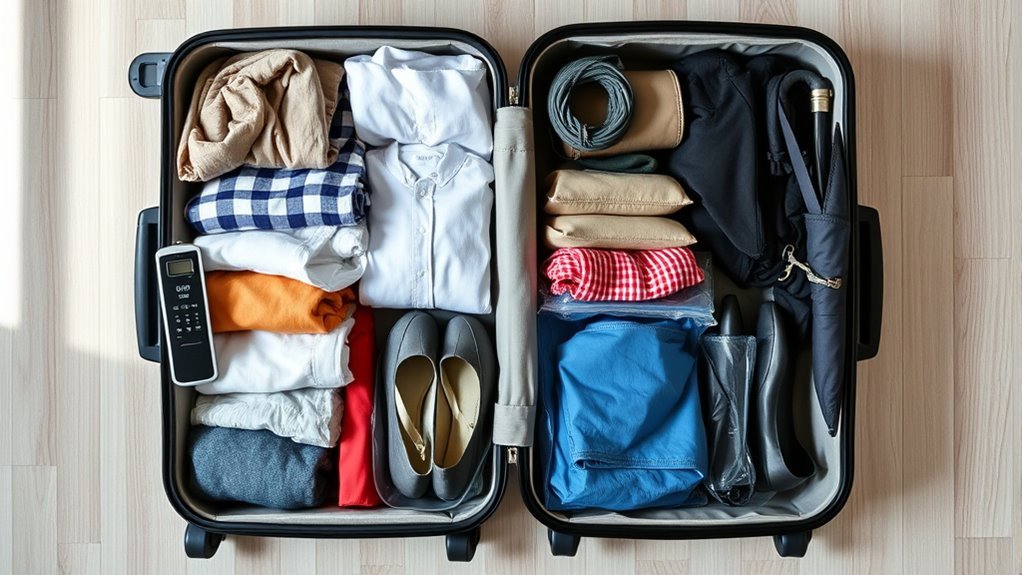
When you’re packing, think strategically: prioritize versatile items, use compression techniques, and fill every gap so you can bring what you truly need.
Roll clothes to save space and reduce wrinkles, then stack heavier items at the bottom. Use packing cubes to group outfits and compress textiles efficiently.
Slip socks and small accessories into shoes and corners to eliminate dead space. Choose travel-sized toiletries and refillable containers.
Wear bulkier layers on transit to free suitcase room. Keep a checklist to avoid extras, and reassess outfits before zipping up so every item earns its place.
Pack by Trip Type and Duration
Because the items you need change with where you’re going and for how long, tailor your packing list to the trip type and duration. List essentials first: documents, medications, chargers.
Tailor your packing to trip type and length—start with essentials like documents, meds, and chargers.
For business trips pack wrinkle-resistant outfits, one adaptable blazer, and minimal shoes.
For beach vacations prioritize swimwear, a light cover-up, and sun protection; roll towels or use quick-dry options.
For outdoor adventures include layered clothing, sturdy footwear, and compact rain gear.
For weekend getaways limit yourself to versatile pieces that mix and match.
For longer stays plan laundry options and pack fewer duplicates.
Review weather and itinerary to avoid overpacking.
Choose the Right Suitcase
Pick a suitcase that balances size and weight so you’re not paying extra fees or struggling with heavy empty luggage.
Look for durable materials like polycarbonate or ballistic nylon that stand up to rough handling without adding bulk.
Choosing wisely lets you maximize what you can pack and protects your things on the road.
Size Versus Weight
Although a bigger suitcase might seem like the easiest way to fit more, you should balance size with weight to avoid overpacking and extra fees. Pick a bag that fits airline limits when partially full so you don’t piggyback weight onto size.
Consider these quick rules:
- Choose a medium-sized case you’ll realistically fill, not an oversized one for “just in case.”
- Weigh the empty suitcase—light shells gain you packing room before hitting limits.
- Use soft-sided carry-ons for flexible expansion on short trips.
- Reserve large checked bags only when heavy gear or long stays require them.
Durable Material Choices
Once you’ve balanced size and weight, think about what your suitcase is made of—materials determine durability, protection, and how much you can pack without worrying about tears or dents.
Pick hard-shell polycarbonate for impact resistance and slimmer profiles; it resists crushing and sheds water, so you can compress contents confidently.
Choose ballistic nylon or high-denier polyester for flexibility, lighter weight, and external pockets that expand when needed.
Reinforced corners, sturdy zippers, and quality wheel housings matter more than color.
Test handles and seams before buying.
With the right materials, you’ll carry more, protect fragile items, and avoid costly replacements.
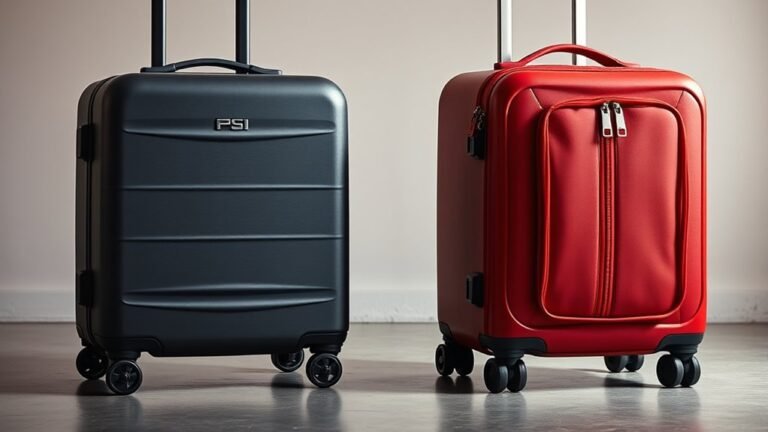
Hard vs Soft Shells: Which to Pick?
When you’re deciding between hard and soft-shell luggage, think about how you’ll use it. You’ll balance protection, flexibility, weight, and packing style.
Hard shells shield fragile items and compress oddly shaped loads; soft shells squeeze into tight spaces and offer exterior pockets.
- Protection: pick hard for breakables, soft for flexible stuffing.
- Weight: soft often weighs less, letting you pack more.
- Compression: soft adapts to odd shapes; hard keeps shape but limits expansion.
- Access: soft gives external pockets for small essentials; hard opens wide for organized packing.
Choose based on items, travel type, and storage needs.
Use a Packing Checklist
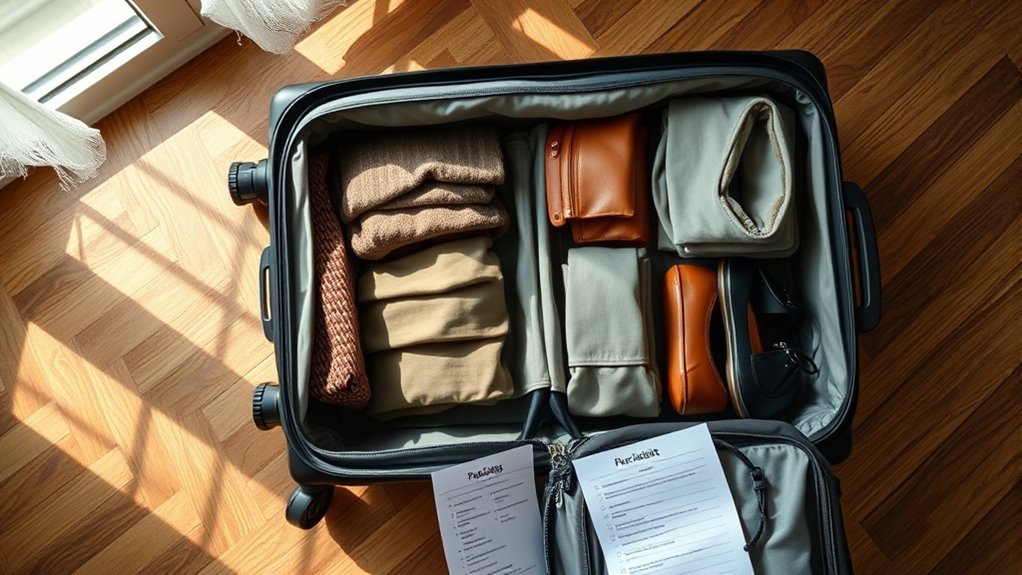
Start by listing every essential item you absolutely need so nothing important gets left behind.
Then rank those items by necessity, so you pack the must-haves first and trim less important stuff if space runs out.
A clear checklist helps you stay organized and avoid overpacking.
Essential Items Inventory
Although you can improvise on the road, a concise packing checklist guarantees you don’t forget essentials. You’ll create an essential items inventory that fits your trip length and activities, then tick items as you pack.
Keep categories tight: documents, tech, toiletries, medications, and a small repair kit. Revisit the list before leaving home and after using items during travel.
- Documents: passport, IDs, reservations, copies
- Tech: chargers, power bank, adapters, earbuds
- Toiletries & meds: basics, prescriptions, small first-aid items
- Repair kit: sewing kit, duct tape, spare buttons
Prioritize By Necessity
Because space is limited, prioritize items you’ll actually need rather than packing for every possible scenario; use your essential-items inventory to build a short, ranked checklist so you grab the must-haves first.
Start by ranking items by function: documents, medications, phone chargers, and a basic outfit beat novelty items. Limit duplicates and ask yourself when you’d realistically use each thing.
Assign tiers: critical, useful, optional. Pack only critical and one or two useful items; skip optional unless space allows.
Keep the checklist small, review it before you close the bag, and remove anything that doesn’t serve your trip’s main purpose.
Plan Outfits, Not Individual Items
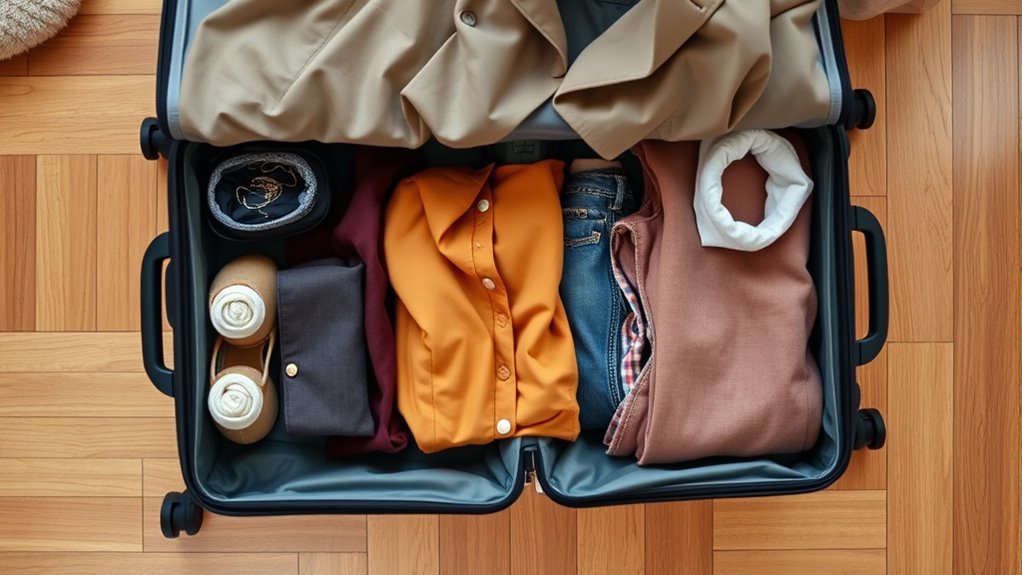
Instead of tossing individual garments into your suitcase, plan complete outfits so every piece serves a purpose and mixes with others; you’ll save space and avoid the “what goes with this?” scramble on the trip. You’ll pack fewer items when you build looks around a neutral base and one or two accent pieces. Lay outfits flat, photograph them to recall combinations, and roll similar sets together.
- Start with versatile tops and bottoms.
- Choose shoes that match multiple outfits.
- Add layers that change the look.
- Limit accessories to essentials that coordinate.
This keeps packing focused and reduces excess.
Prioritize Multi‑Use and Convertible Clothing
Pick versatile pieces you can wear in multiple settings so you don’t pack extras. Choose convertible items—like zip-off pants or a dress that doubles as a skirt—and prioritize layers you can add or remove.
Layer smartly and lightly to adapt to temperature changes without bulk.
Choose Versatile Pieces
When you choose versatile clothing, you’ll get more outfit options without more baggage. Pick neutral colors, lightweight fabrics, and classic cuts that mix and match easily. Focus on pieces that shift from day to night and layer without bulk.
- Pack a neutral blazer that dresses up jeans or works over a tee.
- Bring two tops that pair with every bottom.
- Choose one pair of shoes that’s comfortable for walking and smart enough for evenings.
- Include a lightweight scarf that changes a look and adds warmth.
These choices stretch outfits while keeping your bag compact.
Opt For Convertible Items
Think of clothes that do double duty so you can take fewer pieces without sacrificing looks or function. Choose convertible garments: a dress that becomes a skirt, pants with zip-off legs, shirts with roll-tab sleeves, or a scarf that’s also a sarong.
Pick items with removable liners or adjustable hems to adapt to occasions. Neutral colors and simple silhouettes make shifts seamless.
Focus on fabrics that resist wrinkles and dry quickly so you can wash and reuse. Bring one or two true multi-use pieces rather than multiples for each situation; they shrink your wardrobe and free valuable luggage space.
Layer Smartly And Lightly
Because temperatures and plans can change fast, layer smartly and lightly so each piece pulls double duty and keeps your bag slim. Choose versatile fabrics and silhouettes that mix, match, and compress. Pack items that convert—zip‑off pants, wrap dresses, thin sweaters that act as tops or light jackets. Think neutral bases with one accent color to multiply outfits without extra bulk.
- Start with moisture‑wicking base layers for warmth and dryness.
- Add a packable midlayer that can be worn alone or layered.
- Bring a light, weather‑resistant shell for wind and rain.
- Choose accessories that transform looks.
Limit Shoes to Two Versatile Pairs
If you stick to just two pairs of shoes, you’ll cut bulk without sacrificing style or function. Choose one casual pair that’s comfortable for long walks and one dressier, versatile option that pairs with outfits. Wear the bulkier pair on travel days to save space. Pack shoes in cloth bags or shower caps to protect clothes and compress with socks inside. Use shoe cavities for small items like chargers. Prioritize neutral colors to match multiple outfits. Check weather and activities to decide which two cover most needs.
| Pair | Purpose | Tip |
|---|---|---|
| Sneakers | Walking | Wear them |
| Loafers | Dress | Neutral color |
| Sandals | Beach | Compact |
| Boots | Cold | Bulky |
| Flats | Versatile | Pack in bag |
Roll and Military‑Fold Combo Techniques
When space is tight, combine rolling for soft items and the military (flat) fold for structured pieces to squeeze more into your bag without creasing key garments. You’ll pack smarter by pairing techniques: roll tees, underwear, and knitwear; flat‑fold blazers, dress shirts, and trousers.
- Roll soft layers tightly to create dense cylinders that fit into gaps.
- Military‑fold shirts and pants flat, smoothing seams to minimize bulk.
- Nest rolls inside folded items’ cavities—sleeves, pant legs—for stability.
- Stash delicate items between layers to prevent wrinkles.
Practice this combo once and you’ll consistently fit more while keeping clothes travel‑ready.
Use Packing Cubes to Organize and Compress
Though small, packing cubes transform chaos into order by grouping items and shaving wasted space, so you can find things fast and fit more into your bag.
Use a few sizes: large for bulk clothing, medium for shirts and pants, small for underwear and tech accessories. Compressible cubes flatten when zipped; soft-sided ones let you squish them into odd gaps.
Color-code or label cubes so outfits and categories are obvious. Pack heavier items at the bottom of the suitcase and place frequently used cubes near the top.
Unpack only the cube you need to keep clothes contained and tidy.
When to Use Vacuum or Compression Bags
Decide based on what you’re packing: use vacuum bags for bulky, compressible items like winter coats and blankets to remove as much air as possible.
Choose compression bags for soft clothing when you need to reduce volume without requiring a vacuum and want reusable, travel-friendly options.
Both save space, but match the bag to item type and trip needs.
When To Use Vacuum Bags
If you need to compress bulky items like winter coats, blankets, or bulky sweaters, vacuum or compression bags can shrink their volume dramatically and free up valuable suitcase space. Use vacuum bags when you’re packing for long cold trips, storing seasonal gear, or moving and need maximum reduction without worrying about wrinkles. Remember they need a flat surface and a pump or vacuum. Avoid packing delicate items that could be crushed.
- Long winter trips — saves room and consolidates coats.
- Moving — reduces boxes and weight.
- Seasonal storage — protects from dust/moisture.
- Space-limited carry cases — maximize every inch.
When To Use Compression Bags
When you need to shrink bulky items fast and still keep them organized, compression or vacuum bags are ideal for long trips, moves, or seasonal storage. Use them when you’re packing sweaters, jackets, blankets, or bulky shoes that won’t wrinkle easily.
They’re great for checked luggage where weight matters less than space. Avoid compressing delicate fabrics, leather, or items that need ventilation.
Don’t overfill bags — leave room to seal properly. For air travel, check airline rules; some forbid vacuum-packed liquids or sealed bags.
Label bags so you can find essentials without unpacking everything.
Stuff Shoes and Gaps With Small Items
Tuck socks, chargers, belts, and other small essentials into shoes and narrow gaps to save space and keep items from shifting; you’ll protect fragile pieces and make the most of every inch in your suitcase. Use shoes as mini-containers and tuck fragile items in the center, then compress clothing around them for stability.
Fill gaps along zippers and corners with rolled underwear or packing cubes’ leftover pockets. Keep dirty or wet items separate in a small bag.
- Put chargers and cables inside shoes.
- Stuff socks into heels for shape.
- Slide belts along suitcase edges.
- Use small pouches for toiletries.
Layer Heavy Items Near the Wheels
Since the suitcase wheels bear the brunt of movement, pack your heaviest items—shoes, toiletry kits, and dense electronics—close to that end to keep the center of gravity low and the bag balanced.
Position weight against the wheel end, then layer lighter clothing above to prevent shifting.
Use compression cubes or zip bags to stabilize heavy pieces and tuck soft items like socks around them to fill voids.
If you’ve got fragile gear, wrap it in a soft garment and place it atop the heavy base.
Close and roll the bag briefly to check balance; readjust if it tips or feels lopsided.
Keep Frequently Used Items Accessible
Although you won’t want to fumble through layers at the airport or hotel, keep items you’ll need most—passport, boarding pass, phone charger, medications, and a small toiletry kit—within easy reach. Use an external pocket or a slim organizer so you can grab essentials without opening your main compartment.
Keep your passport, charger, meds, and a mini toiletry kit in an external pocket for quick, fuss-free access.
Stash valuables near the top of carry-ons and clip a charger cable to the pocket edge. Consider a clear pouch for security checks.
Review accessibility before you zip and prioritize what you reach for first.
- Passport and documents
- Phone and charger
- Medications
- Small hygiene items
Minimize Bulky Toiletries With Travel Refills
Swap full-size bottles for travel-size refillable containers to cut weight and free up space in your bag. You can also choose solid alternatives—like shampoo bars, solid lotion, and toothpaste tabs—to eliminate leaks and bulky packaging.
Pack a small toiletry pouch so those refills stay organized and easy to reach.
Travel-Size Refillable Bottles
Looking to cut bulk without sacrificing your favorite products? You can swap full-size bottles for travel-size refillables that save space and weight. Pick leakproof, soft-sided bottles that compress as you use them, and label each clearly. Carry only what you need for the trip length to avoid excess.
- Choose durable, BPA-free silicone bottles with secure caps.
- Pre-fill and test at home to prevent spills.
- Use one bottle for multi-purpose liquids when possible.
- Pack bottles in a clear, sealed pouch for organization and airport ease.
These steps keep toiletries compact, tidy, and ready.
Solid Toiletry Alternatives
Want to ditch bulky bottles without giving up your routines? Switch to solid toiletries: shampoo, conditioner, soap bars, and deodorant sticks save space and avoid liquid limits.
Pick compact, travel-specific formulations that lather or soften quickly. Wrap bars in a small tin or reusable pouch to prevent mess.
Try solid toothpaste tablets, sunscreen sticks, and concentrated balm cleansers for face and body.
Use multi-purpose solids—shampoo-conditioner or soap that doubles as shaving cream—to cut items further.
Store solids in breathable containers to dry between uses.
You’ll free weight, skip spills, and streamline your bag for smarter travel.
Choose Compact Travel Tech and Chargers
Because bulky gadgets eat space and add weight, pick compact travel tech and multiport chargers to keep your bag lean and functional. Choose slim power banks, foldable mice, and tiny Bluetooth earbuds that stow in pockets.
Swap single-purpose chargers for a multiport USB-C hub to charge phone, tablet, and laptop at once.
Protect devices with soft cases that compress.
- Prioritize multiport chargers over several single plugs.
- Replace bulky adapters with a universal compact travel adapter.
- Use one cable that supports power and data where possible.
- Opt for collapsible or modular accessories to save space.
Wear Bulkiest Items During Transit
If you’ve got bulky coats, boots, or sweaters, wear them on the plane or during transit to free up suitcase space and reduce checked-bag weight.
Layer strategically: put on a warm base, then a sweater and the heaviest coat.
Slip bulky boots over thin socks or pack lighter shoes instead.
Use coat pockets for small essentials—phone, passport, chargers—to save internal space.
Choose compressible outerwear when possible and secure scarves or hats to avoid taking extra compartments.
Wearing heavy items also lets you balance weight limits and avoid extra fees, while keeping your bag slim and efficient.
Build a Capsule Travel Wardrobe
When you build a capsule travel wardrobe, focus on versatile pieces that mix and match so you can create multiple outfits from a few items. Choose neutral colors, a lightweight jacket, two tops, and one pair of pants that dress up or down.
Build a capsule travel wardrobe: versatile neutrals, a lightweight jacket, two tops, and one pair of dressier pants.
Pack items that layer, dry quickly, and resist wrinkles.
- Neutral top that pairs with everything
- Compact jacket for warmth and style
- Convertible bottoms (jeans or chinos that suit day/night)
- One multipurpose dress or shirt you can layer
Rotate pieces, launder as needed, and you’ll cut bulk while staying stylish.
Use Tissue Paper and Dry Bags to Protect Fabrics
Slip thin tissue paper between delicate garments to prevent snags and friction.
Tuck clothes into sealable dry bags so they stay moisture-free and odor-free.
These small steps keep your fabrics looking fresh and your suitcase organized.
Prevent Fabric Snags
Because delicate fabrics can catch on zippers, buckles, and rough seams, wrap silk, lace, and knitwear in tissue paper before you pack and store them inside lightweight dry bags to keep everything smooth and protected. You’ll reduce pulls and stains, and you’ll spot-check items before stuffing your suitcase.
Follow simple steps to prevent snags and keep garments ready to wear.
- Fold garments gently, avoiding tight creases.
- Layer tissue between items to stop friction.
- Place fragile pieces in separate dry bags or pouches.
- Keep sharp accessories isolated to prevent contact with fabric.
Keep Items Moisture-Free
After protecting delicate fabrics from snags, turn your attention to moisture, which can ruin silk, lace, and knits just as quickly. Pack tissue paper between layers to absorb humidity and prevent fabrics from sticking.
Use resealable dry bags for underwear, swimwear, and sweaters; squeeze out air to save space and keep contents dry. Include silica packets or a small microfiber pouch of rice to trap extra moisture.
If you’re packing damp items, seal them separately to avoid spreading mildew. Check bags on arrival and air garments if needed.
These simple steps preserve fibers and keep your wardrobe travel-ready.
Fold vs Roll: Best Methods by Fabric
When you’re deciding whether to fold or roll, consider the fabric first—its weight, stretch, and tendency to wrinkle dictate the best method. You’ll pick rolling for knits and casual tees to save space and avoid creases.
Fold structured items to preserve shape and reduce bulk. Delicate fabrics need gentle folding with tissue to prevent snags. Heavy materials compress differently; layer them flat.
- Cotton tees: roll to save room and minimize wrinkles.
- Dress shirts: fold along seams to keep collars neat.
- Stretchy leggings: roll tightly for compactness.
- Silk/linen: fold loosely with protective tissue to prevent creases.
Compress Bulky Fabrics: Practical Hacks
If you’ve packed bulky items like coats, sweaters, or heavy denim, strategic compression can free up surprising space without crushing fabrics. Use vacuum-seal bags for non-delicate pieces to reduce volume dramatically; squeeze air out manually if you lack a vacuum.
Stuff coat pockets and footwear with socks or small items to maintain shape while saving room. Layer compression gently—compress heavier items first, then tuck lighter pieces around them to cushion and prevent creasing.
Roll thick knits instead of folding to avoid rigid edges. Reassess arrangement once compressed to redistribute weight and optimize remaining gaps.
Store Documents & Valuables Safely in Your Luggage
Tuck passports, extra cash, and small electronics into hidden zipper pockets to keep them out of sight and easy to access.
You’ll also want a waterproof pouch for important papers and a phone to protect them from spills or bad weather.
Combine both strategies so your valuables stay secure without wasting packing space.
Use Hidden Zipper Pockets
Because you’ll want quick access to essentials without advertising them to pickpockets, add hidden zipper pockets to your luggage for documents and valuables. They keep passports, cards, and small gadgets tucked away yet reachable. Use them to separate fragile or important items from bulk clothing and reduce rummaging time.
- Place passports in an interior seam pocket.
- Store backup cards and cash in a flat hidden sleeve.
- Slide a slim power bank into a zippered lining compartment.
- Reserve one pocket for a compact set of emergency documents.
Choose discreet zippers and reinforce weak seams for lasting security.
Carry A Waterproof Pouch
When you want to keep passports, bank cards, and important papers dry and easy to find, carry a slim waterproof pouch inside your luggage. Choose one with transparent panels so you can spot contents without opening it. Seal it before packing and tuck it into a flat compartment or between folded clothes to save space.
Use it for chargers, spare cash, and jewelry too—grouping small valuables prevents loss and reduces time spent searching. If you need quick access at checkpoints, place the pouch near the top.
Clean and dry it after trips to avoid mold and odor.
Maximize Carry‑On and Personal Item Allowances
While airlines vary, you can usually squeeze more into your trip by treating both your carry-on and personal item as complementary spaces. Use size limits to your advantage and divide items to avoid duplication. Keep essentials reachable and heavier things in the carry-on for balance.
- Pack clothing in the carry-on using compression cubes; reserve the personal item for documents and electronics.
- Wear bulky shoes and layers to save interior space.
- Stow toiletries in a compact, TSA‑compliant bag inside the personal item for quick access.
- Use flat organizers for chargers and cords to prevent tangled messes.
Airline Tips to Avoid Checked Bag Fees
You’ve already stretched your carry-on and personal item to the limit, so now focus on strategies that stop you from paying for checked luggage. Book tickets that include a free carry-on or loyalty status perks; compare airlines’ size and weight rules before you buy.
Pack versatile clothing, plan quick washes, and wear your bulkiest items on the plane. Consolidate toiletries into travel sizes and use compression to fit more. If you must bring extras, ship items ahead or split gear among travel companions.
At the gate, politely ask agents about complimentary exceptions or last-minute upgrades to avoid fees.
Space‑Saving Gadgets Worth Buying
If you want to squeeze more into your bag without adding bulk, invest in a few smart gadgets that do heavy lifting for you. You’ll travel lighter and smarter with tools that compress, organize, and replace bulky items. Consider these essentials:
- Compression packing cubes — shrink clothes volume and keep outfits separated.
- Inflatable toiletry bottles — save space and avoid leaks with flexible refillables.
- Portable garment steamer — ditch bulky irons and freshen clothes fast.
- Lightweight travel router/power bank combo — replace multiple chargers and keep devices charged.
Pick quality, multipurpose items to maximize every inch.
Troubleshoot Common Packing Mistakes
Those gadgets can save space, but you still might hit common packing snags that eat room, add weight, or damage items. Check for overpacking: prioritize essentials and eliminate duplicates.
Avoid stuffing random gaps with fragile items—wrap them and place them at the center. Don’t mix dirty or damp clothes with clean ones; use separate compression bags.
Zip pockets often bulge—fill them with soft items to maintain shape. Weigh your bag before heading out to prevent overweight fees.
Finally, test-fit bulky items at home and refold if needed so everything nests efficiently and stays protected.
Quick Packing Routine for Last‑Minute Trips
When time’s tight, follow a simple checklist and pack in stages so you don’t forget essentials or waste space. You’ll move fast but stay organized if you prioritize items and use space-saving habits. Start with core pieces, layer efficiently, and finish with carry-on musts.
- List essentials: documents, meds, chargers, underwear.
- Choose versatile outfits; roll or bundle to save space.
- Pack shoes at the base in bags; tuck socks inside.
- Use a toiletry pouch and compress liquids; stash flats in gaps.
Double-check the list, zip, and go — you’ve packed smartly.
Frequently Asked Questions
How Do I Pack Medications and Medical Devices Safely and Compactly?
Pack meds and devices in a clear, labeled pouch, keep originals and prescriptions, use pill organizers or blister packs, cushion devices with clothing, carry essentials in your carry-on, check temperature needs, and notify security about medical gear.
Can I Ship Bulky Items Ahead Instead of Checking Extra Luggage?
Yes — you can ship bulky items ahead using carriers or courier services; just compare costs, insurance, delivery times, customs rules, and tracking. Pack securely, label clearly, and consider door-to-door options to avoid airport handling hassles.
How Do I Pack Fragile Souvenirs for Return Trips?
Wrap fragile souvenirs in clothing and bubble wrap, then nest them in the suitcase center surrounded by soft items. Use hard-sided cases, fill gaps with socks, label as fragile, and consider shipping bulky pieces ahead to avoid damage.
What Are TSA Rules for Lithium Batteries and Power Banks?
You must carry lithium batteries and power banks in your carry-on; you can’t put them in checked baggage. Airlines limit capacity (usually up to 100Wh without approval). Protect terminals, keep devices powered off, and follow airline rules.
How Do I Pack for Extreme Weather or Adventure Travel?
Pack layered, weather-proof clothing, moisture-wicking base layers, and a warm insulating midlayer; compress with packing cubes, waterproof stuff sacks, and a drybag; bring sturdy boots, repair kit, emergency shelter, and extra food, water, and batteries.
Conclusion
You’ve got this—pack smart, not hard. Start with a checklist, pick the right suitcase for your trip, and pack by duration to avoid overstuffing. Roll, compress, and use cubes or organizers to squeeze in more while keeping things tidy. Know airline rules to skip fees, bring a few space‑saving gadgets if needed, and learn from past mistakes. With a quick routine, you’ll breeze through last‑minute trips and always fit what matters.