How Do I Pack a Small Suitcase for a Week Efficiently
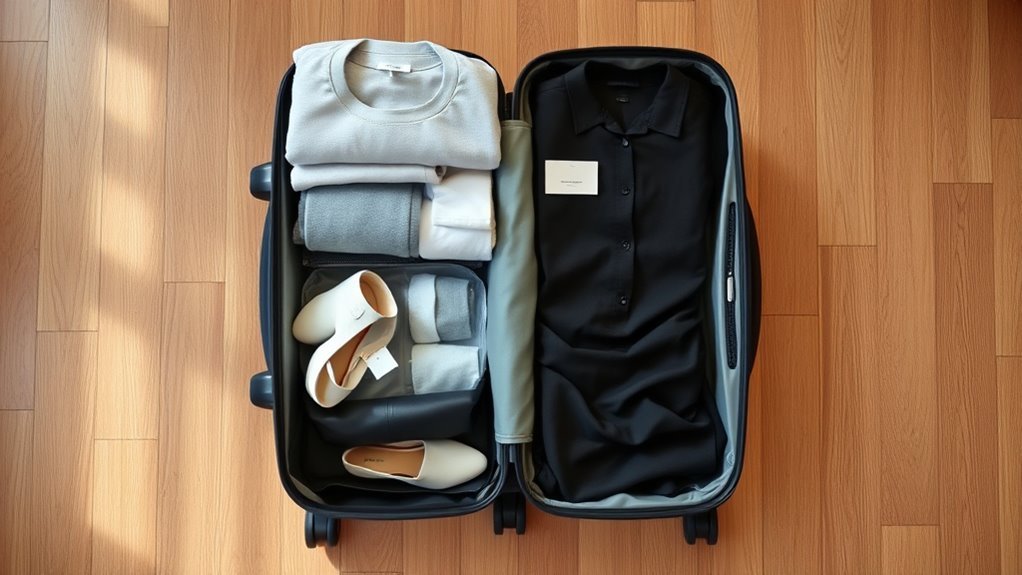
Pick a neutral capsule you can mix and match—two bottoms, three tops, one dressier outfit, lightweight sweater, jacket, and three pairs of shoes max. Roll quick‑dry, wrinkle‑resistant fabrics and use compression cubes to group outfits. Put heavy items near the wheels, stuff shoes with socks, and keep toiletries in a clear leakproof pouch. Pack a foldable tote and multiuse products to save space. Follow these steps and you’ll unpack fast and stay organized for the whole week.
Quick Answer: Pack a 7‑Day Small‑Suitcase Capsule
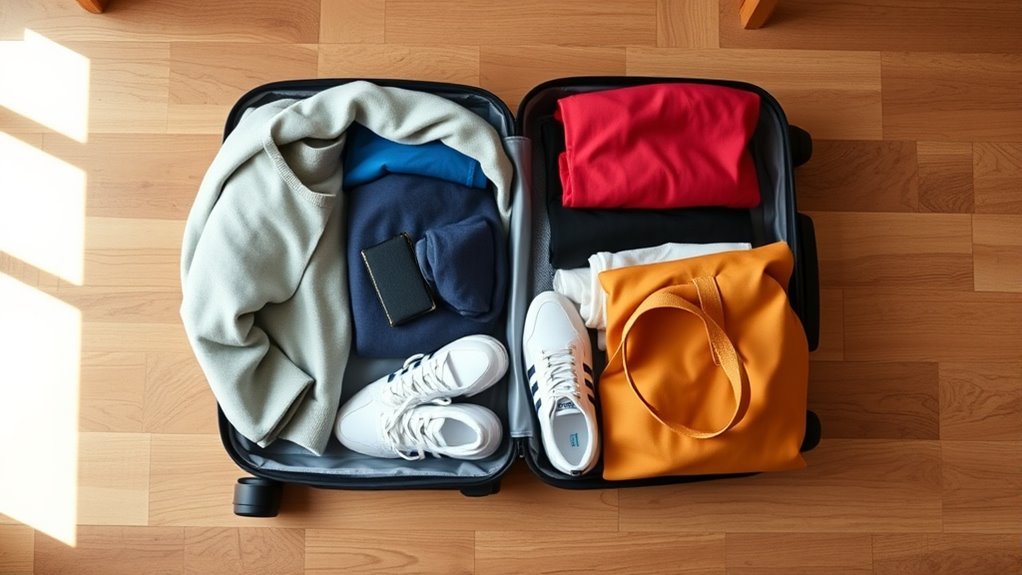
If you want to travel light and still have outfits for a full week, pack a 7-day capsule: choose a neutral base (one pair of pants or a skirt and two tops).
Add three mix-and-match tops, one lightweight sweater or jacket, two versatile shoes, underwear and socks for seven days, and a compact set of toiletries—everything should coordinate so each piece works with the rest.
Plan outfits for each day, prioritize fabrics that resist wrinkles, and pick layers for changing weather.
Roll clothes to save space, use packing cubes to separate items, and limit accessories to a few multipurpose pieces.
Pick an Airline‑Friendly Small Suitcase
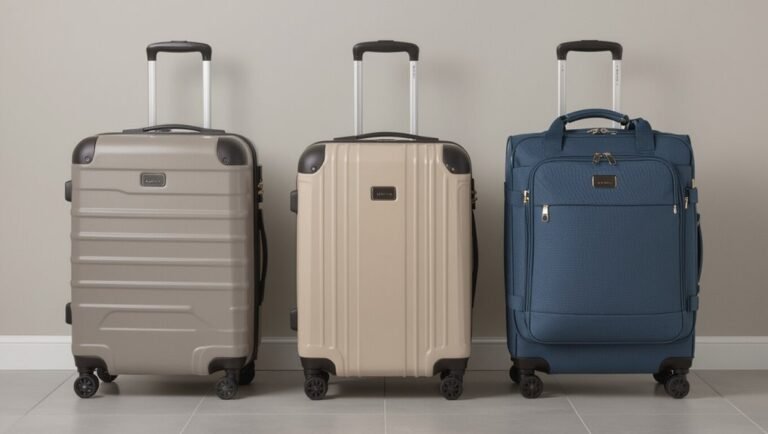
Before you pack, pick a small suitcase that meets common carry-on size limits so it won’t get gate-checked.
Choose one made from lightweight, durable materials—like polycarbonate or ballistic nylon—to keep weight down without sacrificing protection.
That way you’ll have more room for clothes and fewer surprises at the airport.
Carry‑On Size Limits
Wondering which dimensions really matter when you’re choosing a carry-on? Airlines set strict size and weight limits; you’ll want one that fits the most common maximums (22 x 14 x 9 inches) to avoid gate checks and fees. Check your carrier’s specific policy—budget airlines and international flights often differ.
Measure including wheels and handles, since those count. If you frequently switch carriers, aim slightly smaller to cover tighter limits. Also confirm weight allowances and whether personal items combine with carry-on size.
Choose a bag that fits overhead bins comfortably to save time and prevent surprises at boarding.
Lightweight Durable Materials
Now that you’ve nailed the size limits, focus on materials so your carry-on stays light and survives knocks in overhead bins. Choose polycarbonate shells for impact resistance without heavy weight; they flex, then return to shape.
Consider ballistic nylon or Cordura for soft-sided bags—water-resistant, abrasion-proof, and easy to squeeze into tight spaces. Look for reinforced corners, quality zippers, and sturdy telescoping handles; they matter more than flashy features.
Check weight empty: every ounce counts. Prioritize warranties and repairable designs so your suitcase lasts. That way you’ll carry less, protect gear, and avoid airline damage headaches.
Plan Week‑Long Outfits for Your Trip Activities
Because you’ll be juggling activities, pack outfits that mix and match so one top can work for sightseeing, a casual dinner, and a museum visit. Choose neutral bottoms and versatile tops, layer for changing weather, and pick shoes that balance comfort and style.
Pack mix-and-match outfits: neutral bottoms, versatile tops, layers, and comfortable-but-stylish shoes for every outing.
Plan one dressier outfit for a night out and two relaxed looks for day trips. Limit patterns to one or two statement pieces to keep combinations coherent. Consider quick-dry and wrinkle-resistant fabrics to reduce ironing needs.
- Neutral trousers or jeans
- Two versatile tops
- Lightweight cardigan or jacket
- One dressier outfit
- Comfortable multipurpose shoes
Set a Wearable‑Only Limit for Seven Days
Count the wearable pieces you’ll need for seven days and stick to that number so you don’t overpack.
Prioritize mixable basics—neutral tops, a couple of bottoms, and versatile layers—to create more outfit options from fewer items.
Plan an outfit rotation before you pack so each piece gets used and nothing ends up wasted.
Count Wearable Pieces
If you’ll be gone a week, set a wearable-only limit and stick to it: pick the exact number of tops, bottoms, and layers you’ll need for seven days without repeats beyond planned outfits.
Count what you actually wear daily, include sleepwear and workout items, and factor in laundry chances.
Aim for versatile pieces that cover weather and events, then finalize quantities. Pack only what’s on the list.
- 4 tops (daytime + one dressier)
- 2 bottoms (casual + dressier)
- 1 light layer
- 1 heavier layer or jacket
- 2 sets: sleep/workout
Prioritize Mixable Basics
When you set a wearable-only limit for seven days, choose mix-and-match basics that let every top pair with every bottom so you can create outfits without overpacking.
Pick a neutral palette—black, navy, gray, beige—and add one accent color.
Limit tops to three (neutral, neutral, accent) and bottoms to two (trousers and skirt/shorts) that share tones.
Include one lightweight layering piece and one versatile dress that doubles as a top with leggings.
Choose fabrics that resist wrinkles and wash quickly.
Stick to interchangeable shoes: one casual, one dressier.
This reduces decisions and keeps your suitcase compact.
Plan Outfit Rotation
Before you pack, decide you’ll wear each item at least once over seven days and build a rotation that minimizes extras. You’ll limit pieces to what’s wearable for a full week, choosing versatile tops, bottoms, and a layer that mix well.
Plan outfits daily so nothing’s packed “just in case.” Aim for three bottoms, four tops, one jacket, and two pairs of shoes; swap accessories to vary looks.
Lay combinations out before folding to confirm coverage. Stick to the rotation while traveling, wash one item if needed, and resist adding backups unless an event demands it.
- Three bottoms
- Four tops
- One jacket
- Two shoes
- One washer-friendly item
Choose a Flexible Color Palette for Mixing
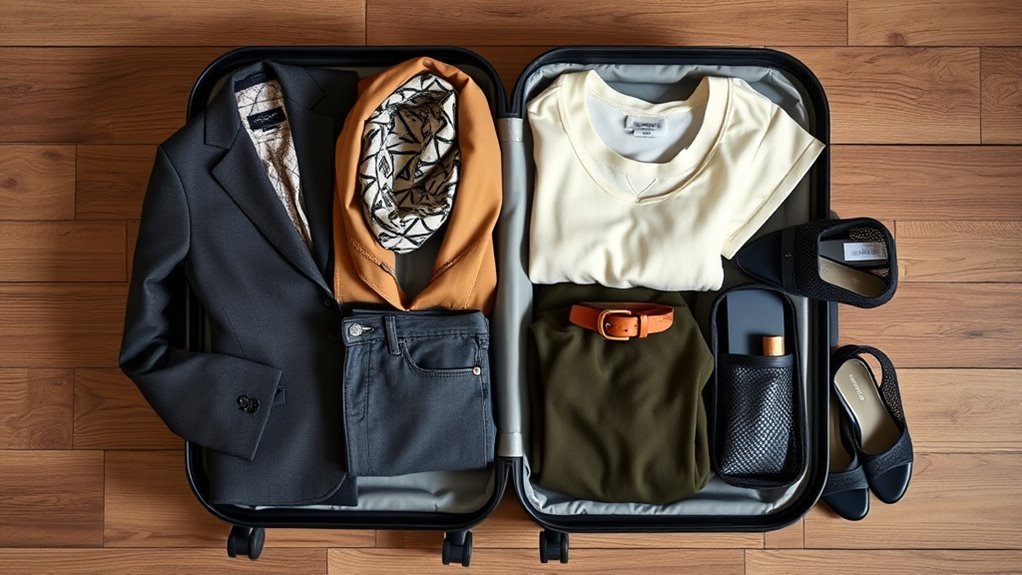
Pick two to three core neutrals—like navy, gray, and beige—and one or two accent colors you’ll actually wear. That lets you mix and match everything without overpacking.
Choose neutrals that suit your skin tone and travel activities so every bottom and jacket pairs with most tops. Limit prints and keep patterns in your accents to avoid clashing.
Pick accent shades that complement each other and your accessories—scarves, shoes, belts—to create fresh looks.
Stick to a simple palette when choosing shoes and outerwear so each piece amplifies multiple outfits, reducing items while maximizing outfit combinations.
Pick Versatile Tops That Layer Well
So you’ll want tops that work alone and layer easily—think thin-knit sweaters, lightweight button-ups, and fitted tees that won’t add bulk under jackets or cardigans.
Pick neutral shades plus one accent so each top pairs with others.
Choose breathable fabrics that dry fast and resist wrinkles.
Roll or fold tops to save space and keep shapes intact.
Limit bold patterns so pieces remain interchangeable.
Focus on fit: close to the body for layering, but not constricting.
Plan three to five tops depending on laundry access and activities.
- Thin-knit sweater
- Lightweight button-up
- Fitted T-shirt
- Long-sleeve tee
- Compact cardigan
Choose Bottoms That Match Multiple Tops
Now that your tops layer well, round out your wardrobe with bottoms that pair with everything. Pick two neutral pairs—one tailored (black or navy) and one casual (denim or khaki)—so you can shift between smart and relaxed without extra pieces.
Choose fabrics that resist wrinkles and dry quickly. Favor mid-to-high waist cuts that flatter different tops and allow tucking.
If you need a third, pick a patterned or colored skirt or pant that echoes accent colors in your tops.
Roll or fold carefully to save space, and wear the bulkiest pair while traveling to maximize suitcase room.
Include One Weekday and One Dressy Outfit
When you plan outfits, include one reliable weekday look and one dressy option so you’re ready for workdays and unexpected evenings out. Pick a neutral blazer or smart cardigan, a pair of tailored pants or a pencil skirt, and comfortable shoes that still look polished.
Include one reliable work outfit and a dressy option—neutral blazer, tailored bottoms, and polished, comfortable shoes.
For the dressy set, choose a simple dress or dressy top with statement jewelry and compact heels or sleek flats. Keep colors coordinating so you can mix pieces.
Roll or fold these pieces carefully and place them near the top of your bag for easy access.
- Neutral blazer or cardigan
- Tailored bottoms
- Comfortable polished shoes
- Simple dress or dressy top
- Compact accessories
Prioritize Wrinkle‑Resistant, Quick‑Dry Fabrics
Pick lightweight synthetic blends that resist wrinkles and cut weight so you can fit more in a small case.
Bring versatile layering pieces that can be dressed up or down and swapped for changing weather.
Include quick‑dry undergarments so you can wash and wear without added bulk.
Choose Lightweight Synthetic Blends
Because they’ll save space and hassle, choose lightweight synthetic blends that resist wrinkles and dry fast. You’ll pack fewer items when fabrics stay neat and fresh; synthetics like polyester, nylon, and modal blends weigh less and recover shape. They dry quickly after a sink wash, so you can reuse pieces without bulky extras.
Look for breathable, odor‑resistant finishes and simple colors that mix well. Treat delicate blends gently to maintain performance.
- Lightweight polyester tees
- Quick‑dry nylon shorts
- Modal blend underwear
- Packable synthetic jacket
- Travel‑friendly knit dress
Pack Versatile Layering Pieces
Lightweight synthetics give you a great base, but layering is what lets a small suitcase handle changing weather and plans. Pack a thin merino or synthetic long‑sleeve, a compact fleece, a lightweight down or synthetic vest, and a smart casual blazer or cardigan. Choose wrinkle‑resistant, quick‑dry fabrics so pieces stay fresh and pack flat. Mix neutral colors to maximize outfit combos and limit shoes. Roll or fold layers to save space; stuff smaller items into jacket pockets.
| Layer | Use |
|---|---|
| Base | Moisture control |
| Mid | Warmth |
| Insulating | Lightweight heat |
| Outer | Wind/rain |
| Smart layer | Evenings/meetings |
Use Quick‑Dry Undergarments
When you’re squeezing everything into a small suitcase, choose underwear and socks made from wrinkle‑resistant, quick‑dry fabrics so you can wash and wear them on the go. Pick lightweight blends like merino, microfiber, or nylon‑spandex that resist odor, dry fast, and fold small.
Pack a couple extra pairs to rotate, and roll them into shoes or corners to save space. Wash in a sink, wring gently, and hang to dry overnight. That way you carry less, stay fresh, and avoid bulky backups.
- Merino wool briefs
- Microfiber sport socks
- Nylon‑spandex blends
- Seamless quick‑dry bras
- Travel detergent packets
Limit Shoes to Two Pairs Plus Foldable Flats
If you want to keep your suitcase compact, stick to two sturdy pairs of shoes and one pair of foldable flats; they’ll cover most activities without hogging space.
Choose versatile options: one casual pair for walking and sightseeing, one dressier pair for dinners or meetings, and lightweight foldable flats for evenings or quick errands.
Choose versatile shoes: comfy walking pair, a dressier option for evenings, and lightweight foldable flats.
Tuck socks or small items inside shoe interiors to save room.
Pack shoes in separate bags to protect clothing and keep soles from soiling fabrics.
Balance weight by placing shoes along the suitcase edges.
This trio minimizes bulk while keeping you prepared for varied plans.
Wear Your Bulkiest Shoes During Transit
Because you’ll save space and reduce carry weight, wear your bulkiest shoes while traveling instead of packing them. Choose comfortable, versatile footwear that matches multiple outfits and can handle walking or a sudden dress-up need. Slip them on at the airport or train station to free suitcase volume. Use shoe storage inside the bag only for lighter pairs or dirty shoes. Keep an extra pair of thin insoles or foldable flats in your luggage for comfort if needed.
- Pick neutral colors that coordinate easily
- Wear breathable socks to avoid odor
- Use slip-on styles for security lines
- Protect clothes with a shoe bag
- Test comfort before departure
Pack Socks and Underwear Efficiently for Seven Days
Though you’ll want enough fresh pairs for seven days, you don’t need to overpack—pick versatile, quick-dry socks and underwear and use rolling or bundling to save space. Choose neutral colors you can repeat, and prioritize breathable fabrics that dry overnight. Roll underwear into tight cylinders and tuck socks inside shoes or into suitcase corners. Use small packing cubes or zip bags to separate clean from worn, and label them. Carry one extra pair in your day bag for emergencies. Check laundry options at your destination so you can rewear basics confidently.
| Item | Tip |
|---|---|
| Socks | Roll or pair inside shoes |
| Underwear | Bundle to save space |
| Packing cube | Keeps sets together |
| Extra pair | Day bag emergency |
Pack One Sleepwear Set and One Loungewear Outfit
Pick a lightweight sleep set that packs small—cotton or modal pajamas are comfy and won’t take up much room.
Choose a loungewear outfit that doubles as casual daytime wear, like a soft tee and joggers or a knit dress.
Roll or fold the sleepwear tightly and tuck it inside shoes or a corner to save space.
Choose Lightweight Fabrics
When space is tight, choose sleepwear and loungewear in lightweight, breathable fabrics so you stay comfortable without adding bulk to your bag. Pick soft modal, cotton blends, or thin merino for temperature regulation and easy folding. Look for quick-dry finishes to wash in a sink and wear again.
Favor wrinkle-resistant knits that compress without losing shape. Stick to simple cuts that layer if needed.
- Modal or bamboo for softness
- Lightweight merino for odor control
- Cotton blends for comfort
- Thin jersey knit for stretch
- Quick-dry synthetics for easy washing
Prioritize Multipurpose Pieces
Lightweight fabrics make it easy to carry fewer garments, so focus next on pieces that can pull double duty: one sleepwear set and one loungewear outfit that work for rest, lounging, and quick errands. Pick neutral colors, breathable materials, and simple silhouettes so you can mix and match. Use the loungewear top as a casual shirt, and slip the bottoms under a skirt or jacket for errands. Roll the sleep set to save space and keep it separate in a small pouch. Balance comfort with versatility to avoid extra items.
| Item | Fabric | Use |
|---|---|---|
| Sleep set | cotton | night + spare |
| Loungewear top | modal | lounge + out |
| Loungewear bottom | knit | lounge + errand |
| Pouch | mesh | organize + wash |
Pack Compact Sleepwear Set
Because space is limited, bring just one sleepwear set and one versatile loungewear outfit that can double as casual daywear. Choose breathable, quick‑dry fabrics and neutral colors so each piece works for sleeping, lounging, and short errands.
Pack the sleep set compressed in a packing cube or vacuum pouch to save room and keep it separate from worn clothes.
Pick a loungewear top that layers under a jacket and bottoms that pass for errands. Quick‑dry materials mean easy hand‑washing.
Rotate pieces to extend wear between laundries and avoid overpacking.
- Breathable modal or cotton sleep set
- Neutral zip or pullover
- Lightweight joggers
- Compression packing cube
- Travel detergent packets
Build a 7‑Day Capsule Wardrobe
If you want to travel for a week with one small suitcase, build a capsule wardrobe of mix-and-match pieces that cover your activities and the climate.
Choose a neutral base—black, navy, or beige—then add two accent colors.
Pack three tops for daytime, two dressier options, one lightweight sweater, and a compact jacket.
Bring two bottoms that work for day and evening plus one skirt or shorts if needed.
Include versatile shoes: one comfortable pair and one dressier option.
Add underwear, socks, and a multipurpose scarf or belt to change looks without extra bulk.
Roll Clothes to Save Space and Reduce Creases
Pick lightweight fabrics like cotton blends and knits so your rolls stay compact and crease less. Roll each item tight and even from one end to the other to maximize space and keep shapes smooth.
If you want even more room, pop your rolls into compression cubes to squeeze out air and organize by outfit.
Choose Lightweight Fabrics
Want to save space and keep your clothes looking sharp? Choose lightweight fabrics that compress well and resist wrinkles. You’ll pack more outfits with less bulk, and laundering or air-drying will be faster.
Favor materials that dry quickly and breathe, so you can rewear items comfortably. Pick versatile pieces that mix and match, and avoid heavy knits or dense denim unless necessary.
Use travel-friendly blends that hold shape and color.
- Linen blends for breathability
- Merino or thin wool for odor control
- Polyester blends for quick-dry
- Lightweight cotton shirts
- Stretchy ponte or jersey for shape
Roll Tight And Even
Lightweight fabrics pack and behave better when you roll them tight and even, so start by laying each garment flat, smoothing out wrinkles, and folding sleeves or edges inward.
Press firmly from one end, keep tension consistent, and roll toward the folded edge to form compact cylinders.
Stack rolls in your suitcase by shape and size, tucking smaller rolls into gaps and placing heavier rolls at the bottom to stabilize the load.
Rolling evenly reduces creases and maximizes space, letting you fit more items without bulking.
Unroll garments promptly on arrival to relax any minor roll lines before wearing.
Use Compression Cubes
If you’re aiming to save space and keep clothes tidy, compression cubes are a simple, effective tool: roll garments tightly, tuck them into the cube, zip it closed, and squeeze out excess air to compact the bundle. You’ll cut volume, isolate outfits, and reduce wrinkles without extra effort.
Use different cubes for tops, bottoms, underwear, and electronics to stay organized. Choose breathable fabric cubes to avoid odors, and pack heavier items at the bottom of your suitcase for balance.
When you arrive, unpack the cube first to let garments decompress and smooth easily.
- Saves space
- Reduces creases
- Organizes outfits
- Prevents odors
- Speeds unpacking
Use Packing Cubes by Outfit or Category
When you group clothes into packing cubes by outfit or category, you’ll grab exactly what you need without rifling through the whole bag. Choose cubes that fit folded outfits or categories like tops, bottoms, underwear, and sleepwear. Label or use clear mesh so you can spot items quickly.
Pack complete outfits together — shirt, pants, socks — so mornings are easier. Put delicate or wrinkle-prone pieces flat inside a separate cube.
Reserve a small cube for toiletries or chargers to prevent spills and tangles. Reorganize cubes after each use to keep the suitcase orderly for the rest of your trip.
Pack Heavier Items Near the Wheels
Because the wheels bear the suitcase’s weight as you roll it, pack heavier items—like shoes, books, and toiletries—near that end to lower the center of gravity and keep the bag balanced. Position boots or sneakers against the wheel-side wall, then layer denser items flat to prevent tipping.
Use smaller soft items elsewhere so weight stays close to the wheels. Place fragile heavier things in the middle of that end for protection. Zip compartments facing upward will stop shifting when upright.
- Pair heavier shoes together
- Stack books flat
- Put toiletry bag near wheels
- Use a small packing cube for weights
- Distribute electronics evenly
Fill Gaps With Socks and Small Items to Stabilize
Start by filling the corners of your suitcase so bulky items sit snugly.
Use rolled socks as padding around fragile pieces and to wedge empty spaces.
Tuck chargers, belts, and other small accessories into gaps to keep everything from shifting.
Fill Corners First
Although it might seem minor, filling the corners first gives your suitcase a sturdy base and prevents items from shifting. You’ll place small, firm bits—chargers, belts, toiletries—into each corner so heavier pieces sit centered and stable.
Work methodically: tuck something on all four corners before piling clothes. This keeps stacks even and reduces wrinkles.
Leave tiny voids for compression and quick access to essentials. When you zip, the case closes evenly, and contents don’t migrate during transit.
Use this habit every trip to protect fragile items and make unpacking quicker.
- chargers
- belts
- travel-size toiletries
- folded underwear
- compact accessories
Use Socks As Padding
If you want to keep everything snug and wrinkle-free, tuck rolled socks into gaps between packed items so they double as padding and small storage. Roll socks tightly to create firm cushions that prevent shifting and protect delicate fabrics.
Use mismatched or spare pairs for uneven voids around shoes, toiletries, and folded shirts. Place a sock ball under collars to maintain shape and between layers to absorb pressure.
Swap heavier items toward the center and use socks at edges to balance weight. When unpacking, grab socks first to maintain order and check for any small lost items tucked inside.
Tuck Small Accessories
When you tuck small accessories into gaps, they do double duty—stabilizing your load while keeping tiny items organized and easy to find. You’ll use socks, chargers, belts, and cosmetics to fill voids around shoes and folded clothes, preventing shifting.
Wrap fragile bits in soft fabric, stash jewelry in a pill case, and tuck cables into shoe cavities. Place frequently used items near the top for quick access. Check weight distribution so the suitcase stays balanced.
- Socks stuffed into corners
- Chargers coiled in shoe hollows
- Belts looped along edges
- Jewelry in a small container
- Toiletries cushioned by fabric
Use Compression Bags Selectively for Bulky Items
Because bulky items eat space fast, use compression bags selectively to flatten coats, sweaters, and bulky knitwear so you free room for shoes and extras. Choose lightweight, reusable bags with reliable seals and avoid over-compressing delicate fabrics.
Fold items neatly before sliding them in, expel air gradually to prevent wrinkles, and label bags for easy access. Reserve compression for pieces you won’t need mid-trip; keep one outfit unpacked.
Don’t rely on bags for everything—they add weight and can limit flexibility. Balance compressed items with rolled lighter garments and strategically place shoes to maintain suitcase structure.
Pack Toiletries Smartly: TSA Liquids & Must‑Haves
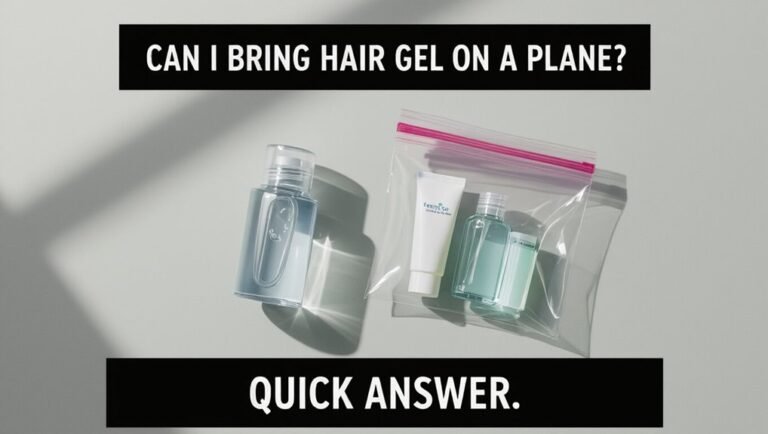
You’ll want to know the TSA liquid rules so you’re not stuck repacking at security. Pack travel-size essentials and consolidate creams and gels into clear, leakproof containers.
Use a sealed pouch and double-check caps to prevent spills from wrecking the rest of your bag.
TSA Liquid Rules
TSA rules limit the liquids you can carry through security, so pack only what you need and keep everything organized. You’ll follow the 3-1-1 rule: containers 3.4 ounces (100 ml) or less, all fit in one clear quart-sized bag, one bag per traveler.
Put the bag at the top of your carry-on for easy removal. Choose multi-use products and solid alternatives to cut liquid count. Label items and check local airport rules for exceptions like medications or baby formula.
- 3.4 oz (100 ml) max per container
- One quart-sized clear bag only
- One bag per person
- Keep meds and essentials accessible
- Prefer solids when possible
Travel-Size Essentials
When space is tight, pack only what you’ll actually use and opt for travel-size or solid versions to stay within the 3-1-1 liquid limits. Choose concentrated shampoo, solid conditioner, and a travel toothbrush. Put liquids in clear quart bags and keep essentials accessible. Prioritize multipurpose items—face cleanser that doubles as makeup remover, moisturizer with SPF. Replace bulky bottles with tablets or powders where possible. Don’t forget a small first-aid kit and any medications in original packaging.
| Must-have | Compact options |
|---|---|
| Shampoo | Solid bar |
| Moisturizer | Sample tube |
| Toothpaste | Travel tube |
| Sunscreen | Mini bottle |
Leakproof Packing Tips
If a spill could ruin your clothes or toiletries, pack proactively: seal all liquids in clear quart-size bags, tighten caps, and wrap bottle necks with tape or plastic wrap before screwing the cap back on. Use leakproof travel bottles, label contents, and keep creams and gels in separate pouches.
Put heavier liquid containers upright in the center of your suitcase, cushioned by clothing. Carry critical toiletries in your carry-on to avoid checked baggage losses. Check TSA rules for allowed sizes and accept liquids only in designated bags at security.
- Use silicone travel bottles
- Double-bag liquids
- Store pumps inverted
- Keep makeup palettes sealed
- Test caps before packing
Choose Multi‑Use Beauty and Grooming Products
Because space is limited, pick beauty and grooming items that do double duty so you can bring less without sacrificing your routine.
Choose a tinted moisturizer with SPF to combine hydration, coverage, and sun protection.
Swap separate cleanser and makeup remover for a micellar water that does both.
Bring a solid shampoo bar that cleans hair and doubles as a body wash.
Pack a multipurpose balm for lips, cuticles, and dry spots.
Opt for a compact brush that styles hair and massages scalp.
Transfer products into travel-sized containers and label them clearly to stay organized and minimize bulk.
Bring a Lightweight Rain Jacket or Packable Layer
A compact rain jacket or lightweight packable layer takes up little room but saves outfits and plans when the weather shifts. You’ll want one that folds into its pocket, dries fast, and blocks wind without bulk.
Pick a neutral color to match everything and choose breathable fabric so you’re comfortable in transit. Stash it at the top of your bag for quick access.
- Packs into a small pouch or its own pocket
- Lightweight, water-resistant material
- Breathable and quick-drying fabric
- Neutral color to match outfits
- Easy to layer under a sweater or over tees
Layer Outfits Instead of Packing Bulky Coats
When space’s tight, layer lightweight pieces to stay warm without lugging a heavy coat. Choose thin merino or synthetic base layers, a long-sleeve shirt, a lightweight sweater, and a packable vest you can stuff into a corner.
Mix textures and colors so items pair multiple ways; a neutral sweater over patterned tops changes the look. Roll thinner layers to save space, and use one warm scarf that doubles as an extra layer or blanket on transit.
Wear your bulkiest shoes and jacket when traveling. This strategy keeps you adaptable across temperatures without sacrificing suitcase room.
Pack Compact Tech and Chargers in One Pouch
Keep all your chargers, adapters, and a slim cable organizer in one padded pouch so cords don’t tangle or eat space.
You’ll save time at security and avoid hunting for the right cable.
Pack only the essentials to keep the pouch light and compact.
Slim Cable Management
Although your suitcase is small, you can still bring all your essential tech without the tangle: pack chargers, cables, a compact power bank, and small adapters in a single slim pouch.
Use short, flat cables and label each end with a tiny marker so you grab the right one quickly.
Coil cables using the figure-eight or flat-roll to minimize bulk.
Choose a pouch with elastic loops or mesh pockets to keep items visible and secure.
Prioritize multiport chargers and one short charging cable per device to reduce quantity.
- Short flat cables
- Elastic loops
- Mesh pocket visibility
- Multiport charger
- Labeled ends
Single-Pouch Organization
Want a single pouch that carries all your compact tech and chargers without chaos? Pick a slim, zippered pouch with internal dividers or mesh pockets.
Roll short cables and secure them with velcro ties; tuck adapters and USB sticks into tiny compartments.
Place a compact power bank and a foldable wall plug in the center to balance weight.
Use a dedicated slot for earbuds or wireless charger pad to avoid scratches.
Label the pouch or use color-coded tags so you grab it quickly.
Stash it near the top of your suitcase for easy access during security checks or midtrip charging.
Use a Shoe Bag and Protect Soles
If you’re trying to save space and keep clothes clean, slip each pair of shoes into a lightweight shoe bag or a reusable grocery-style bag before packing them. You’ll prevent dirt transfer, tame odors, and keep soles from scuffing garments.
Put heavier shoes at the suitcase base to stabilize items, and tuck socks or small accessories inside shoes to maximize volume. Wrap delicate soles with tissue or a small plastic liner if they’re wet or muddy.
Label bags or use clear ones so you can spot pairs quickly without unpacking everything.
- Use breathable fabric shoe bags
- Stuff shoes to save space
- Place shoes sole-down
- Seal wet shoes separately
- Keep an extra bag for laundry
Add a Collapsible Tote for Day Trips and Extras
After you’ve protected shoes and packed them efficiently, tuck a lightweight collapsible tote into a corner of your suitcase for day trips and overflow items. You’ll want one that folds flat, weighs almost nothing, and has sturdy handles. Use it for groceries, souvenirs, beach gear, or an extra layer on cooler days.
Its roomy interior lets you carry odd-shaped purchases without cramming your main bag. If something spills, you won’t worry about your clothing.
Pick a neutral color that hides dirt and choose a water-resistant fabric for unpredictable weather. Unfold it when you need extra carrying capacity.
Choose Accessories That Change Your Look Fast
Bring a few statement jewelry pieces to give basic outfits instant personality.
Pack versatile scarves or wraps that can act as a top, shawl, or headcover for different looks.
Add one or two belts to cinch dresses, change silhouettes, and make everything feel new.
Statement Jewelry Pieces
When space is tight, pick one or two statement jewelry pieces that instantly shift your outfit—think a chunky necklace, bold cuff, or oversized earrings—to go from day to night without changing clothes.
Choose pieces that pack flat or fit in a small pouch; metal cuffs, thin layered necklaces, or clip-on earrings work well.
Limit colors to one accent tone that complements everything.
Store each item separately to avoid tangles or scratches.
Rotate a single statement with subtle studs so you always look fresh without extra bulk.
- Chunky necklace
- Bold cuff
- Oversized earrings
- Statement ring
- Layered pendant
Versatile Scarves And Wraps
Statement jewelry can change an outfit in seconds, and scarves and wraps do the same while adding warmth, coverage, and variety. Choose one lightweight silk scarf for daytime prints and one larger neutral wrap for evenings or chilly flights.
Fold the silk into a neckerchief, headband, or bag tie to shift style quickly. Use the wrap as a shawl, beach cover, or lightweight blanket on planes.
Pick versatile colors and patterns that mix with all outfits. Roll scarves to save space and tuck them into shoes or corners.
You’ll stretch limited garments into multiple looks without extra bulk.
Belts That Transform Outfits
Although small, a well-chosen belt can instantly change proportions and style, turning a loose dress into a tailored look or elevating jeans for dinner.
You’ll want one slim leather, one woven or fabric, and a statement piece for nights. Pick neutral tones to match most outfits, plus a metallic or bold color that adds instant polish.
Roll them flat or thread through shoe cavities to save space. Choose lightweight buckles and versatile widths so you can cinch waists or define hips.
- Slim leather belt (black or brown)
- Woven/fabric belt for casual looks
- Narrow metallic belt for evenings
- Wide belt to sculpt dresses
- Convertible belt with removable buckle
Pack a Small Laundry Kit to Refresh Clothes
Want to freshen up outfits on the road without lugging a bulky kit? Pack a compact laundry kit: a travel-size detergent pod or a small, leakproof bottle of concentrated liquid, a sink stopper, and a quick-dry travel towel.
Add a lightweight clothesline with clips and a reusable zip bag for wet items. Include a stain stick or wipes and a tiny sewing kit—two needles, a few thread colors, and spare buttons.
Store everything in one pouch to keep your suitcase organized. This lets you hand-wash essentials and dry them overnight, extending your wardrobe without extra baggage.
Plan Where and When to Launder Midweek
If you’ll be gone more than a few days, decide in advance where and when you’ll launder so you won’t scramble mid-trip. Check lodging amenities, nearby laundromats, or hotel laundry services, and map timing into your itinerary.
If your trip lasts more than a few days, plan where and when you’ll do laundry to avoid last-minute scrambling.
Pack quick-dry items and travel detergent packets so you can hand-wash essentials overnight. Schedule a midweek wash after two or three wearings to keep the suitcase light and fresh.
Note local laundry hours and costs to avoid surprises.
- Verify on-site machines and detergent availability
- Locate 24-hour or nearby laundromats
- Plan a wash day in your schedule
- Pack fast-dry garments
- Bring travel detergent packets
Prepare a Minimalist Meds and First‑Aid Kit
When you pack light, your meds and first-aid kit should be just as streamlined. Start by listing daily prescriptions—pack exact doses in labeled containers and bring copies of prescriptions.
Include small amounts of pain relievers, antihistamines, anti-diarrheal, and antacids in travel-sized packaging.
Add adhesive bandages, a few sterile wipes, blister pads, and a compact antiseptic ointment.
Bring any personal medical devices in a protective case.
Use a clear zip pouch for visibility and security screening.
Keep everything accessible in your carry-on, and check local regulations for controlled substances before you leave.
Make a Boarding and Arrival Outfit Checklist
Because you’ll be wearing this outfit for transit and first impressions, pick pieces that balance comfort, weather, and easy layering.
Decide on a neutral base, one statement layer, and shoes you can walk in for hours.
Plan pockets for travel docs and a lightweight bag for essentials.
Choose materials that resist wrinkles and dry fast.
Pretest the full outfit while loaded to guarantee comfort.
- Comfortable shoes (broken in, versatile)
- Lightweight top (breathable, wrinkle-resistant)
- Layering piece (cardigan, light jacket)
- Pants/skirts with secure pockets
- Compact crossbody or neck pouch
Do a Final Weight and Carry‑Limit Check
Before you zip up, weigh your packed bag and compare it to airline limits so you can adjust rather than scramble at the counter. Use a luggage scale or bathroom scale; include toiletries and shoes in the measurement.
Check both airline weight and carry-on size rules—some carriers enforce strict weight even for cabin bags. If you’re close to the limit, shift heavier items to personal items or wear bulkier pieces on the plane.
Note any fees for overweight bags and decide if paying is worth it. Record the final weight so you know what to expect on return.
Re‑Evaluate and Remove Two Items Before Zipping
If you’re close to your limit, pause and pull out the two least-essential items you packed—trust me, you won’t miss them and they’ll save space or weight. Look for duplicates, single-use items, or anything heavier than it’s worth. Ask: will I really wear this? Could I borrow or buy it there? Reassess toiletries, extras, and bulky shoes.
Removing two items often frees room for souvenirs or reduces airline fees. Pack with intent: keep versatile pieces and cancel the impulse extras. Zip with confidence knowing you pared down to necessities.
- spare pair of flip‑flops
- heavy book
- duplicate charger
- bulky sweater
- travel umbrella
Strategies to Unpack Quickly and Stay Tidy
When you arrive, unpack methodically so your space feels organized and livable within minutes. Start by hanging worn-but-clean items and placing folded clothes in drawers or a suitcase shelf to free surfaces.
Use a portable laundry bag for dirty garments and keep it closed.
Arrange daily essentials—toiletries, chargers, medications—near the bed or bathroom for easy access.
Reuse packing cubes as drawer dividers to maintain order.
Fold shoes and place them at the bottom of the closet or by the door.
Do a five-minute tidy each evening: return stray items to their spots so clutter doesn’t build.
Troubleshoot Common Packing Problems on the Road
Unpacking quickly sets you up, but problems can still pop up while you’re on the road — lost zippers, last-minute outfit changes, or unexpected weather. Act fast: patch zippers with a keyring, repair seams with safety pins, and refresh clothes with wrinkle-release spray or a hotel iron.
Unpack fast, then stay ready: quick fixes—keyring zippers, safety‑pin seams, wrinkle spray or hotel iron—save the day.
Keep a lightweight rain layer and a neutral outfit for emergencies. Reorganize daily so essentials stay accessible and to avoid digging through everything.
- Carry a compact repair kit
- Use a small stain pen for spills
- Rotate outfits to prevent overuse
- Keep toiletries in a clear pouch
- Snap photos of outfits and receipts
Smart Swaps for Colder or Dressier Trips
Although you’ll still want to keep weight down, swap a few core pieces to handle colder or dressier trips: trade lightweight tees for a merino base layer, exchange casual sneakers for a compact pair of dress shoes or insulated boots, and replace bulky coats with a packable down jacket that compresses into your suitcase.
Add a slim sweater or cardigan that layers well, choose neutral trousers that dress up or down, and bring one versatile dress or blazer.
Pack thin wool socks, a travel scarf that doubles as a blanket, and compact accessories (belt, simple jewelry) to elevate outfits without extra bulk.
Packing Checklist You Can Copy and Use
If you want a ready-to-use list, here’s a concise packing checklist you can copy and adapt to your trip length and activities. Use this as a base: pick neutral tops, layerers, and one smart outfit; limit shoes to two pairs; roll or pack cubes; stash toiletries in a clear pouch; keep chargers and docs accessible.
Use this simple packing checklist—neutral tops, a smart outfit, two shoes, roll clothes, and stash toiletries and chargers.
Tailor quantities by wash options and weather.
- 3 tops (neutral, one dressy)
- 2 bottoms (jeans, lightweight)
- 1 lightweight jacket or layer
- Toiletries pouch (essentials only)
- Shoes: 1 comfy pair, 1 dressy pair
Frequently Asked Questions
Can I Bring Prescription Liquids Over 100ML in My Carry-On?
No — you can’t carry prescription liquids over 100ml in your carry-on unless you get prior airline or security approval; you’ll need to declare them, bring original labels/doctor’s note, or pack them in checked luggage.
How Do I Pack Souvenirs Coming Home Without Expanding My Suitcase?
Pack souvenirs inside shoes, toiletries bags, or empty spaces, and compress clothes with packing cubes or vacuum bags. You’ll wear bulky items home, mail fragile pieces, and prioritize small, flat keepsakes to avoid expanding your suitcase.
What’s the Best Way to Keep Jewelry Tangle-Free While Traveling?
Use small zip bags or a pill organizer to separate pieces, clasp necklaces before packing, thread chains through straws, wrap fragile items in tissue, and tuck everything into a padded pouch so your jewelry won’t tangle or get damaged during travel.
How Do I Handle Unexpected Weather Changes Midweek?
You pack a lightweight waterproof jacket, quick-dry layers, and a compact umbrella; you’ll roll or compress items to save space, tuck a spare pair of shoes in a waterproof bag, and check forecasts daily to adjust.
Are There Airline Rules About Packing Power Banks in Checked Luggage?
Yes — you can’t pack most power banks in checked luggage; airlines require them in carry-on due to fire risk. Check capacity limits (usually 100–160 Wh) and airline policies; declare larger batteries and follow carrier rules.
Conclusion
You’ve got a compact, wearable-only plan that fits a seven-day trip into a small, airline-friendly suitcase. With a flexible color palette, preplanned outfits, and a wearable-item limit, you’ll mix looks without excess. Use quick-unpack strategies to stay tidy, troubleshoot swaps for weather or dressier plans, and keep this checklist handy for repeat trips. Pack once with intention and you’ll spend your week enjoying the destination, not wrestling with your luggage.