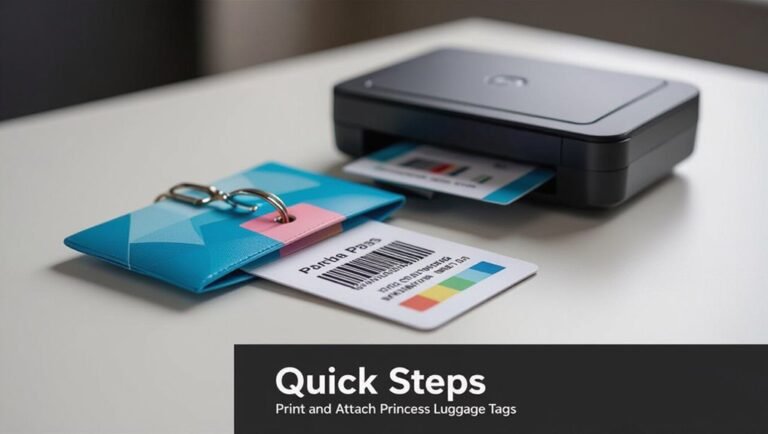
How Does Luggage Get Lost at Airports Explained
Your checked bag can go missing when the tracking chain breaks: tags get damaged or swapped, conveyor systems jam, transfers are rushed, or security pulls items for inspection, and human or equipment errors send your luggage to the wrong flight. Tight connections, reroutes, and interline handoffs increase the risk. Airlines start traces and searches, but you should keep claim documents and essentials with you—keep going and you’ll find practical steps to prevent, document, and resolve lost baggage.
Immediate Steps When Your Checked Bag Is Missing
If your checked bag doesn’t arrive, stay calm and act quickly: head straight to the airline’s baggage office or the airport’s lost-and-found desk before you leave the terminal. Report the missing bag, and get a written or electronic Property Irregularity Report (PIR) with a reference number you’ll need for follow-up.
Describe the bag, show your tag and ID, and note contents and any valuables. Ask about delivery options, expected search timelines, and compensation rules.
Keep copies of all documents and receipts for essentials you must buy. Monitor the airline’s tracking portal, call if you don’t get updates, and stay persistent.
How Baggage Moves From Check‑In to Aircraft
Now that you’ve reported a missing bag and secured a PIR, it’s helpful to understand how your luggage actually travels from the check‑in counter to the plane. You hand over your bag, staff scans its barcode, and it joins conveyors. Baggage sorting directs it to the correct flight’s hold; handlers load it onto carts or containers. Security screening may divert items. Ground crew receives containers at the aircraft, verifies flight numbers, then loads them into the belly. Delays, misrouting, or manual transfers can interrupt this chain.
| Step | Action | Who’s involved |
|---|---|---|
| 1 | Check‑in scan | Agent |
| 2 | Conveyor sorting | System |
| 3 | Screening | Security |
| 4 | Loading | Ground crew |
Tagging Errors That Cause Missing Bags
You might think a tag is just a sticker, but incorrect placement can hide barcodes or cause scanners to miss them. If a barcode is smudged, creased, or attached over a seam, it can be misread and route your bag to the wrong flight.
Let’s look at how placement and barcode legibility lead to missing bags and what staff can do to prevent it.
Incorrect Tag Placement
When airline staff or travelers attach baggage tags too loosely, tuck them into pockets, or fix them on removable straps, the tag can fall off during handling and your bag won’t be matched to its flight. You should place tags through a durable handle or dedicated loop, secure the tag’s plastic cover, and avoid straps that detach. Inspect tags after check-in and request a reattachment if it looks weak. Staff training and clear tagging procedures cut errors, but you’re your best safeguard. Use a visible, permanent tag placement to guarantee tracking stays intact.
| Risk | Cause | Fix |
|---|---|---|
| Tag loss | Loose attachment | Thread through handle |
| Misrouting | Obscured tag | Use visible placement |
| Delay | Detached strap | Secure plastic cover |
Misread Barcode Labels
Although barcode scanners speed baggage handling, misreads and damaged labels still send bags astray, and you’re the one who can reduce the risk. You should check that the tag is firmly attached, faces outward, and isn’t creased or obscured by straps or pockets.
If the agent prints a thigh-high or hidden tag, ask for repositioning. Protect labels with clear tape or a plastic sleeve when possible, and remove old tags so scanners read the current code.
At self-tag kiosks, confirm the barcode prints cleanly; if it’s smudged or faint, request a reprint to avoid misrouting or manual delays.
Tight Connections and Transfer Timing Problems
If your itinerary leaves little margin between flights, tight connections can make mishandled luggage far more likely, since ground crews and baggage systems get just minutes to reroute bags. You depend on rapid transfer at crowded hubs, but delays—inbound aircraft, slow deplaning, or gate changes—shrink that window.
Baggage handlers may prioritize quick transfers, send bags on later flights, or misroute them to avoid missed departures. You can reduce risk by booking longer layovers, selecting same-airline connections, tagging bags for priority transfer, and alerting staff when time is tight so teams can flag and expedite your luggage.
Sorting‑System Failures and Conveyor Mishaps
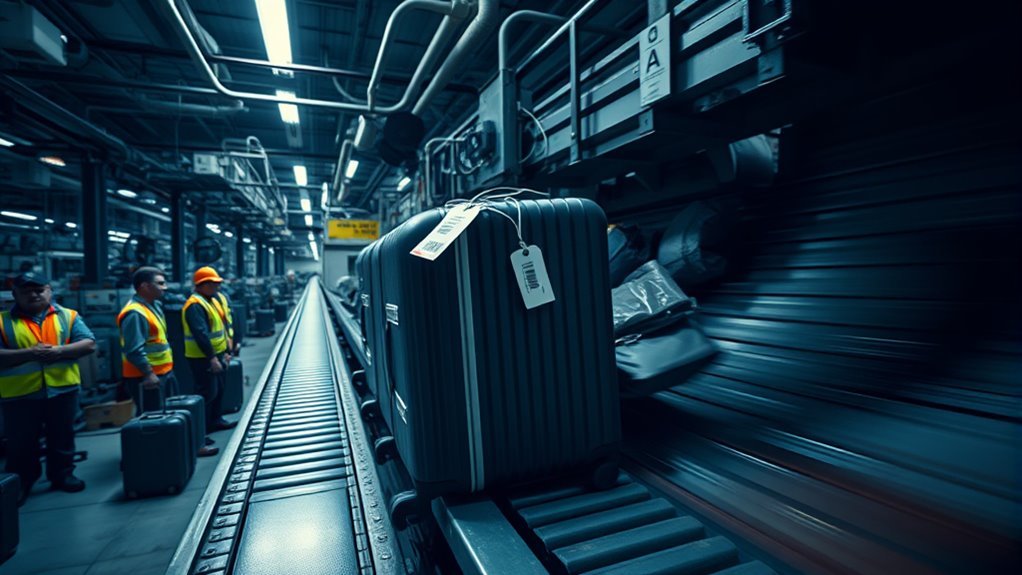
When a belt jams or conveyor sections fail, your bag can be held up or damaged before it even reaches sorting.
Misrouted sorting codes can send your luggage to the wrong flight or terminal, and small transfer gaps between conveyors can cause drops or losses.
You’ll want to examine how these mechanical and coding errors interact to prevent future mishaps.
Belt Jam Causes
Because sorting systems and conveyors handle thousands of bags every hour, even small misalignments or software glitches can bring a whole belt to a halt. You’ll see jams when rollers seize, belts wrinkle, or guides misposition, forcing staff to stop flow to clear snarls.
Overloaded sections, uneven weight distribution, or damaged wheels on suitcases can wedge between pulleys. Sensors may fail to detect obstructions, so belts keep pushing and worsen blockages.
Human errors—improper loading or skipping routine maintenance—raise risk. Quick, methodical response prevents secondary delays, but persistent mechanical issues can sideline conveyors until technicians replace parts or recalibrate controls.
Misrouted Sorting Codes
Although automated scanners usually keep bags on the right route, misread or corrupted sorting codes can send your luggage to the wrong carousel or even a different airport; you’ll see delays when scanners misinterpret barcodes, thermal prints smudge, or data packets drop in the routing system. Staff then manually reroute bags, increasing error risk. You should know common failure modes and how airlines detect them.
| Cause | Effect | Fix |
|---|---|---|
| Smudged barcode | Wrong tray | Reprint tag |
| Scanner error | Misroute | Rescan |
| Database glitch | Airport mix | Manual check |
| Network lag | Delay | Retry |
Conveyor Transfer Gaps
If a gap opens between conveyor belts or a transfer roller stalls, your bag can catch, tumble, or be denied passage to the next sort zone, creating delays and raising the risk of damage or misrouting. You rely on smooth transfers; when rollers seize, belts misalign, or sensors fail, bags jam or spill onto maintenance walkways.
Staff may remove items manually, delaying sorting and increasing human-error chances. Small tears or broken wheels can create tracking problems if tags detach.
Regular inspections, prompt maintenance, and improved sensor redundancy reduce these mishaps, but you still face occasional conveyor transfer failures.
Human Error on Ramps and in Baggage Halls
When workers are rushed or distracted on ramps and in baggage halls, they make mistakes that can send your bag the wrong way, damage it, or leave it behind. Simple mix-ups—misreading tags, skipping scans, or loading to the wrong belt—cause a large share of lost luggage.
You rely on handlers to follow tag info, but human limits matter: fatigue, time pressure, poor lighting, or unclear labels make errors likelier. You may see bags shoved, stacked wrong, or unloaded prematurely.
When procedures slip—no double-checks, skipped reconciliation—your bag can end up off-route or left in a staging area unnoticed.
Code‑Share and Interline Transfers: Misrouting Risks
When your flight is on a code‑share or involves an interline transfer, routing confusion can send your bag to the wrong carrier or city.
Misread tags, incorrect transfer scans, and mismatched transfer agreements make it easy for luggage to be misrouted.
You’ll want to know how these tagging and transfer errors happen so you can reduce the risk of loss.
Airline Routing Confusion
Why does your bag sometimes end up on the wrong flight? You rely on airline systems and staff to route luggage across partners. Code‑share and interline agreements add steps: transfers between carriers, differing schedules, and misread itineraries. When routing data isn’t synced or staff pick the wrong carrier flight, your bag can be misrouted. You face delays while reclaiming it or having it forwarded later. Clear communication, accurate itineraries, and vigilant staff cut risks, but complexity still breeds errors.
| Factor | Cause | Result |
|---|---|---|
| Code‑share | Mixed carrier codes | Confusion |
| Interline | Multiple legs | Misroute |
Tagging And Transfer Errors
After routing errors between carriers, the next weak point is physical tagging and transfer handling—this is where digital mistakes become concrete. You rely on baggage tags to bridge systems during code-share and interline transfers, but tags can be attached wrong, smudged, or swapped.
Ground staff might miss a transfer label, or scanners won’t read a damaged tag, so your bag gets left or sent to the wrong hub. Tight connection windows and busy transfer belts amplify risk.
To reduce loss, verify tag info at check-in, keep receipts, and alert staff immediately if tags look incorrect or damaged.
Weather and Delays That Break the Baggage Chain
Because storms and system failures can halt conveyor belts and delay flights, weather and other disruptions frequently break the baggage chain and leave your luggage stranded. You rely on tight timing and automated systems, and when rain, lightning, snow, or power outages hit, those links snap.
Ground crews scramble, flights get rerouted, and connections tighten.
- Delayed departures force missed transfer windows.
- Conveyor stoppages create backlogs and misplaced carts.
- Rerouted flights scatter bags across alternate airports.
- Manual handling increases human errors during recovery.
You should expect slower reunification and check status proactively.
Security Holds and Inspection Reroutes
Weather-related delays often expose weak links that then intersect with security procedures, so you’ll also deal with bags pulled for inspection or flagged by screening systems.
When a scanner alerts, handlers remove your suitcase for manual checks, paperwork, and possible X-rays, which pauses its journey.
Security holds can misalign timing with tight connections, leaving bags behind or rerouted to centralized inspection areas.
Communication gaps between security, airlines, and ground crews increase chances your luggage misses its designated flight.
You can reduce risk by labeling clearly, arriving early, and ensuring prohibited items aren’t packed to avoid extra scrutiny and delays.
When Airlines Offload Bags on Oversold Flights
Ever wondered what happens to your checked bag when a flight is oversold and they need to bump passengers? If you get bumped, your bag can be offloaded too. Here’s how it usually plays out:
- Airline staff scan tags and identify bags assigned to bumped passengers.
- Those bags are removed from the aircraft and held in a secure area.
- You’ll be notified at the desk; staff arrange rebooking and bag retrieval or transfer.
- Delays or mislabeling during offload can cause temporary misplacement until trackers or manual sorting resolve it.
You should keep receipts and contact the airline promptly.
Handles, Zippers, and Tags That Fail in Transit
When a handle snaps, a zipper splits, or a tag tears off during transit, your bag can quickly become hard to identify and harder to retrieve. You rely on intact hardware and clear tags to keep your suitcase tied to your itinerary.
Broken handles make handlers set bags aside; split zippers expose contents, prompting resealing or quarantine; torn tags erase routing data so bags miss conveyors or skip scans.
You should use reinforced luggage, add a sturdy external tag and label inside, and photograph your bag and tags before travel. Those steps cut the odds of misidentification and speed recovery.
Peak‑Time Bottlenecks at Busy Airports
Because flight volumes, staffing, and ground operations all spike at the same time, busy airports create bottlenecks that raise the risk your bag gets delayed, misrouted, or left behind. You’ll notice longer waits and frantic staff juggling loads. Simple timing mismatches can cascade into missed transfers and unscanned tags.
To keep your luggage safer, consider actions that reduce chance and speed recovery:
- Check connections and allow extra transfer time.
- Tag baggage visibly and add contact info inside.
- Use carry-on for essentials and valuables.
- Photograph tags and contents for faster claims.
Who’s Responsible: Airlines vs. Ground Handlers
Peak‑time chaos can expose who actually handles your bag at each step — and that split responsibility matters if luggage goes missing. You’ll check in with the airline, but ground handlers usually tag, transport, and load your bag.
If something goes wrong, liability can depend on contracts and where the error occurred. You should insist on clear documentation: baggage tags, receipts, and incident reports. Keep photos and timestamps.
When filing a claim, expect the airline to lead the process even if a handler erred, but they may seek reimbursement from the handler. Know who to press for timely updates and compensation.
Tracking and Prevention Tech: RFID, Barcodes, Apps
You’ll want to weigh RFID’s faster, hands-free tracking and its range limitations against barcode scanners’ proven reliability and occasional read failures.
Consider how consumer tracking apps can fill visibility gaps but only if they’re integrated with airline and ground-handler systems.
Together, these technologies can cut mishandling, but their real power depends on standardized implementation and data sharing.
RFID Benefits And Limits
Although RFID tags can’t magically make lost bags reappear, they give you faster, more precise tracking than barcodes and let airports automate scans across checkpoints. You’ll get real-time location updates, reduce human error, and speed handling, but RFID isn’t perfect. Consider:
- Improved visibility: you can trace movement through multiple zones.
- Durability: tags survive rough handling better than paper labels.
- Privacy and cost: readers and infrastructure raise expenses and data concerns.
- Interference and range limits: metal, water, and distance can block reads.
You should view RFID as a strong prevention tool that complements, not replaces, other systems.
Barcode Scanning Reliability
When barcodes work, they give a simple, low‑cost way to verify baggage at each transfer point, but their reliability depends on consistent scanning practices and label integrity. You rely on staff to scan at check‑in, transfer, and loading; missed scans or damaged tags break the chain. Poor placement, crumpling, or toner fading make reads fail. Manual checks help, but they slow operations. Training, durable labels, and redundant scans reduce errors so your bag’s path stays recorded without needing extra tech.
| Issue | Cause | Mitigation |
|---|---|---|
| Missed scan | Human error | Staff training |
| Damaged tag | Wear/tear | Durable labels |
| Read failure | Poor placement | Redundant scans |
Tracking Apps And Integration
If you want real‑time visibility, tracking apps tie together RFID and barcode reads with airline systems so you can see where your bag is and get alerts if it goes off course. You’ll install an app, pair a tag, and get push notifications when scans register transfers, loading, or delivery.
Integration speeds recovery and reduces misrouting by flagging breaks in the chain. You can also authorize handlers to update status, improving accountability.
Consider features and privacy before choosing.
- Real‑time alerts
- Scan history
- Handler access controls
- Privacy and data settings
Why International Transfers Raise the Risk
Because international transfers involve multiple carriers, customs checks, and often tighter connection windows, your baggage faces more handoffs and complexity than on a single domestic journey. You depend on coordinated transfers, but delays, misrouted tags, and differing ground procedures raise mishap odds. Customs inspections can pull bags off conveyors, and interline communication gaps mean updates don’t always follow. You should allow extra connection time, confirm through-checks, and label contacts inside your luggage. Quick actions and preparation cut risk, but international legs simply add points of failure compared with straight domestic trips.
| Risk factor | Impact |
|---|---|
| Multiple carriers | Miscommunication |
| Customs checks | Physical holds |
| Tight windows | Missed transfers |
What Airlines Do After a Bag Is Lost
After you report a missing bag at the airport or online, the airline opens a trace, records your contact and flight details, and starts searching handoffs, tag scans, and baggage handling logs to locate the item. You’ll get a reference number and regular status updates while agents check systems and coordinate with connecting carriers.
If the bag’s not found quickly, they classify it as delayed or lost and advise next steps.
- Reconfirm contact, delivery address, and baggage tags.
- Search local and connecting airport inventories.
- File a Property Irregularity Report (PIR).
- Arrange delivery or compensation procedures.
Packing and Check‑In Tips to Reduce Risk
When you pack, keep essentials like medications, a change of clothes, and chargers in your carry‑on so you’re covered if a checked bag goes missing.
Always label checked luggage with your name and contact info, and add a durable, visible tag to help staff identify it quickly.
These simple steps cut your risk and speed up recovery if problems occur.
Pack Essentials In Carry‑On
Want to make sure a lost bag doesn’t ruin your trip? Pack essentials in your carry‑on so delays won’t derail plans. Prioritize items you’ll need for 24–48 hours and keep them accessible.
- Passport, wallet, phone charger, and any boarding passes.
- Medications, basic first‑aid, and a change of clothes.
- Valuables: jewelry, electronics, and irreplaceable documents.
- Toiletries (toothbrush, travel‑size liquids) and a compact snack.
Keep a small, organized bag within your carry‑on for quick access. Double‑check liquid limits and battery rules to avoid confiscation at security.
Label Checked Luggage
Although checked bags move out of sight, you can cut the odds of them going missing by clearly labeling them inside and out. Put a durable tag with your name, phone, and an email on the exterior, and a copy of your itinerary and contact details inside in case the outer tag is lost. Use a business card or waterproof card in an internal pocket.
Add a distinctive ribbon or sticker so staff spot your bag quickly. Remove old tags to prevent confusion. Before check‑in, verify the airline prints the correct destination tag and keep your claim stub until you retrieve the luggage.
How to Document and File a Missing‑Bag Claim
If your bag doesn’t arrive, act quickly and methodically: stay at the baggage office until you’ve filed a report, collect written confirmation, and note every detail the agent records. You’ll need clear records to pursue recovery or reimbursement. Follow these steps:
- Get a Property Irregularity Report with date, time, agent name, and reference number.
- Photograph your claim form and any luggage tags, receipts, and the empty carousel.
- Provide a detailed packing list and proof of ownership for high‑value items.
- Ask about next steps, expected timelines, and contact info; confirm how updates will be sent.
When to Escalate: Timelines, Rights, and Small Claims
Once you’ve filed the report and gathered documentation, you’ll need to know when to push beyond the airline’s routine follow-up: timelines for declaring bags lost, your legal rights, and when small-claims court becomes the next step.
Check the carrier’s policy—domestic airlines often consider checked baggage officially lost after 5–21 days; international rules can vary under the Montreal Convention.
If deadlines pass with no plan or offer, demand a written final denial. Keep receipts, correspondence, and the PIR.
If the airline won’t settle, file promptly in small claims (limits vary by jurisdiction). You’ll act faster and preserve remedies.
Frequently Asked Questions
Can Pets’ Travel Crates Ever End up Separated From Luggage?
Yes — your pet’s crate can get separated from luggage during transfers, mislabeling, or routing errors. You’ll want clear labels, microchips, direct flights, and coordination with airlines to reduce risks and speed up reunification.
Do VIP or Priority Passengers’ Bags Get Handled Differently?
Yes — priority or VIP bags do get handled differently: you’ll usually receive faster processing, dedicated tagging, separate conveyor routing, and priority loading; airlines and handlers prioritize those tags to reduce delays and lower loss risk.
Are Valuables or Medical Items Ever Accepted in Checked Baggage?
You shouldn’t; airlines often prohibit valuables and require medicines, though many let non-controlled meds in checked bags. You’re better off carrying valuables and essential prescriptions in carry-on to avoid loss, damage, or access issues.
How Are Unaccompanied Minor Bags Tagged and Tracked?
Airlines tag unaccompanied minor bags with special UM labels and priority codes, scan them at each transfer, link scans to the child’s flight record, and staff monitor transfers so you’ll get status updates until the bag’s delivered safely.
Can Cabin Crew Accidentally Take Passengers’ Checked Bags Onboard?
Yes — crew can accidentally take checked bags onboard if tags are misread, handlers misplace items, or communication fails; you should report immediately, keep baggage receipts, and insist staff verify tags and reclaim procedures.
Conclusion
When your bag goes missing, stay calm and act fast: report it at the airline desk, keep your claim number, and document contents and receipts. Follow up daily, use tracking tools, and accept interim essentials if offered. Prevent future losses by tagging luggage clearly, packing valuables in your carry‑on, and checking connection times. If the airline can’t find your bag within established timelines, escalate via complaints, regulatory bodies, or small claims to recover costs.