How Much Liquid Can You Put in Checked Luggage TSA Rules
You can pack most liquids in checked luggage as long as they’re sealed, non‑flammable, and meet airline rules; pack heavier bottles centrally and use leak‑proof containers or original retail packaging. Alcohol is allowed up to 70% ABV but commercially sealed bottles over 5 liters per person aren’t permitted, and flammable liquids like fuels or solvents are banned. Declare medical or baby liquids, keep prescriptions accessible, and follow TSA/airline limits to avoid confiscation — more details follow.
Quick Answer: TSA Limits for Checked Liquids
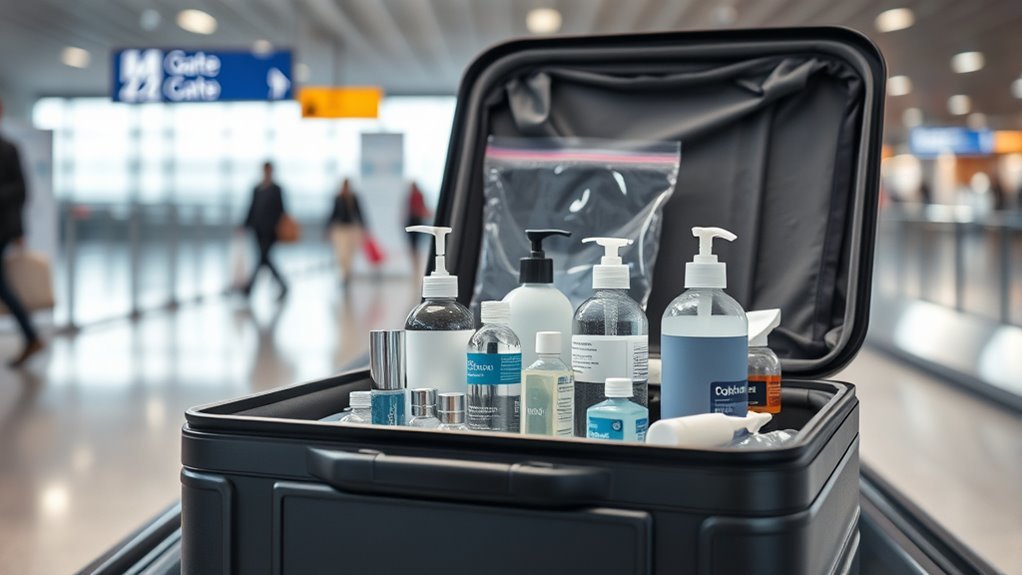
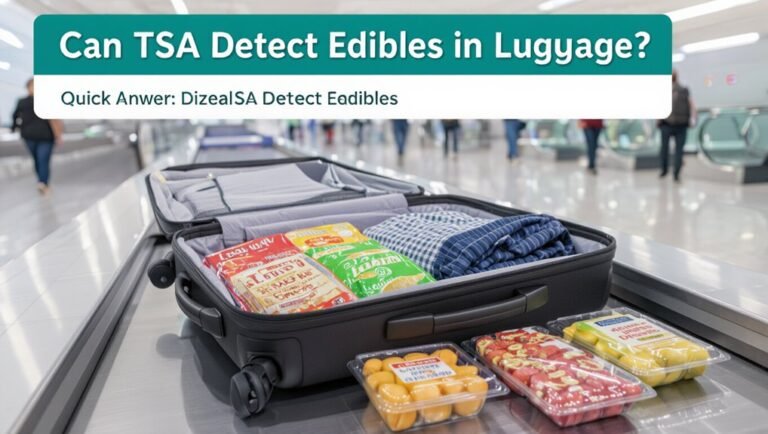
Because checked bags aren’t subject to the 3-1-1 carry-on rule, you can pack larger quantities of liquids in your hold luggage—but TSA still expects you to follow airline and international regulations, and some items are restricted or prohibited.
You may transport most toiletry-sized and larger containers, including shampoo, conditioner, and bottled beverages, provided they’re sealed and protected from leaks.
Flammable, corrosive, and pressurized liquids remain banned or limited.
Airlines may impose weight or hazardous material rules, and international destinations can have stricter controls.
Always check your airline and destination rules before packing to avoid confiscation or fines.
What TSA Counts as a “Liquid” in Checked Baggage
You’ll want to know exactly what TSA defines as a liquid for checked baggage so you can pack correctly. That includes obvious items like shampoo and lotion, as well as gels, pastes, and most aerosols.
Though some aerosol types and medically necessary liquids get exceptions. Read on to see which items are restricted, which are allowed, and how to declare or pack exceptions.
What Counts As Liquids
Wondering what the TSA considers a “liquid” in checked baggage? You should treat obvious fluids—water, shampoo, lotion—as liquids, plus gels, creams, pastes, and liquid-filled electronics. Pack them securely and in leak-proof containers. Remember solids that melt (like lip balm or chocolate) count once soft. Below is a simple guide to help you sort items quickly:
| Common liquids | Examples |
|---|---|
| Personal care | Shampoo, lotion, toothpaste |
| Food & drink | Water bottles, sauces, oils |
Seal containers, use plastic bags or original packaging, and place heavier items centrally to prevent leaks and damage.
Exceptions And Aerosols
Although most liquids follow straightforward rules, some items fall under special exceptions or are classified as aerosols, so you should check them before packing.
You can pack larger quantities of medicinal liquids, baby formula, and breast milk in checked bags, but declare them if they’re unusual or odor-producing.
Aerosols like hairspray and deodorant are allowed in limited quantities and must be in protective containers to prevent accidental discharge.
Flammable, corrosive, or toxic liquids and certain pressurized aerosol products are banned.
When in doubt, consult the TSA hazardous materials list or contact your airline to avoid confiscation or fines.
Alcohol Limits: Volume and Proof Rules
When packing alcohol in checked luggage, pay attention to both volume and proof limits so your bottles don’t get confiscated or cause hazards. You can pack alcohol up to 70% ABV (140 proof) but airlines and international rules vary.
Above 24% and up to 70% is limited to 5 liters per person in retail packaging. Be aware that beverages under 24% ABV have fewer restrictions.
Secure bottles in sealed retail packaging and cushion them to prevent leaks. Check your carrier’s policy and destination regulations before travel, since limits and allowances can differ and enforcement is inconsistent.
Flammable and Combustible Liquids Prohibited
Because flammable and combustible liquids can ignite or explode under pressure and temperature changes, you can’t pack items like gasoline, lighter fluid, paint thinners, or certain aerosols in checked luggage. You must also avoid solvents, fuel additives, and many camping stove fuels.
These substances pose fire and safety risks during flight and ground handling. If you’re unsure about a product, check its Safety Data Sheet or manufacturer labeling for flammability classifications and consult airline or TSA guidance before travel.
Violating these rules can lead to confiscation, fines, or criminal charges, so always declare questionable items and choose safe alternatives.
Aerosols and Pressurized Containers: Limits and Rules
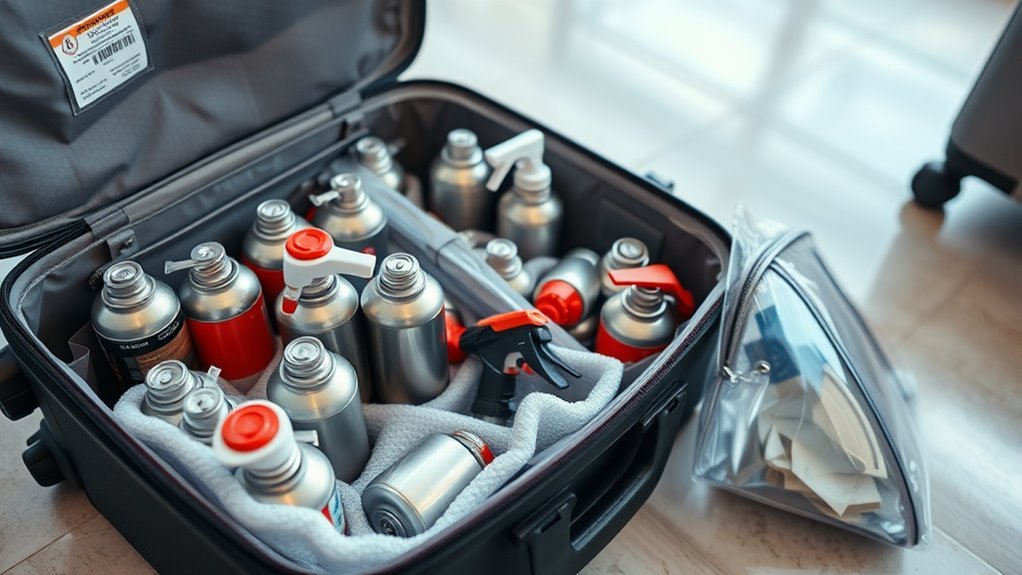
Along with flammable liquids, aerosols and other pressurized containers deserve special attention since they can rupture, spray, or ignite under pressure and temperature changes during flight.
You can pack many nonflammable aerosols in checked luggage if they’re consumer-sized and have protective caps, but quantity limits apply—typically small personal care cans and toiletries are acceptable.
Prohibited items include large spray canisters with combustible contents, self-defense sprays, and compressed gas cylinders.
Always check airline and TSA guidelines before packing, secure lids, and consider tape over nozzles.
When in doubt, declare questionable items at check-in to avoid confiscation.
Medicines, Breast Milk, and Baby Food Rules
You can bring necessary medicines, breast milk, and baby food in both carry-on and checked bags, but TSA allows exceptions to standard liquid rules for these essential items.
You should pack prescription medicines in original containers and keep them accessible; declare them at the checkpoint if asked.
For breast milk and formula, quantities exceeding 3.4 ounces are permitted; separate them for screening and inform the officer.
Baby food and juice for infants are allowed in reasonable quantities beyond the 3.4-ounce limit and may be screened.
Label items when possible and consider carrying documentation for prescribed medications or medical needs.
Household Chemicals and Cleaners: What You Can Check
You can pack some common household cleaners in checked baggage, but you’ll need to know which products are allowed and which hazardous chemicals are banned. Check labels for proper packaging and secure lids, and keep original containers with clear ingredient information when possible.
If a cleaner contains flammable, corrosive, or oxidizing ingredients, don’t expect to check it—declare any questions to the airline or TSA before you fly.
Allowed Household Cleaners
When packing household cleaners in checked luggage, know that many nonflammable, nonpressurized products are allowed if they’re sealed and meet quantity limits—think liquid dish soap, laundry detergent, and most aerosol air fresheners with low flammability ratings.
You should double-wrap liquids, keep them in original containers when possible, and place absorbent material between items to prevent leaks. Labeling helps inspectors identify contents quickly.
Check airline and country-specific limits for quantities and sizes before travel. If a product contains alcohol or other volatile ingredients, verify its classification; when in doubt, declare it at check-in to avoid delays or confiscation.
Prohibited Hazardous Chemicals
While many common cleaners can go in checked baggage if sealed and nonflammable, some household chemicals are outright banned and must never be packed. You can’t check aerosols that are flammable, bleach or peroxides in large concentrations, pool chemicals, fertilizers with oxidizers, or strong acids and bases.
Pesticides, herbicides, and insect fumigants are also prohibited. Even small containers of certain reactive or corrosive substances pose risks and are disallowed.
Check TSA and airline hazardous materials lists before packing. When in doubt, leave the item at home or ship it via an approved hazardous materials carrier.
Packaging And Labeling Requirements
If you plan to pack household cleaners in checked baggage, make sure each container is tightly sealed, cushioned against breakage, and clearly labeled with its contents and hazard information so airline and TSA staff can quickly identify what’s inside.
You should use original manufacturer labels when possible; if you transfer fluids to smaller bottles, add a durable label stating product name, concentration, and any hazard symbols.
Place liquids in a sealed plastic bag and pad them with absorbent material inside a sturdy box or hard-sided suitcase.
Declare any substances if airline rules require, and check limits for corrosives, aerosols, or flammables.
Cosmetics and Toiletry Quantities Safe for Checked Bags
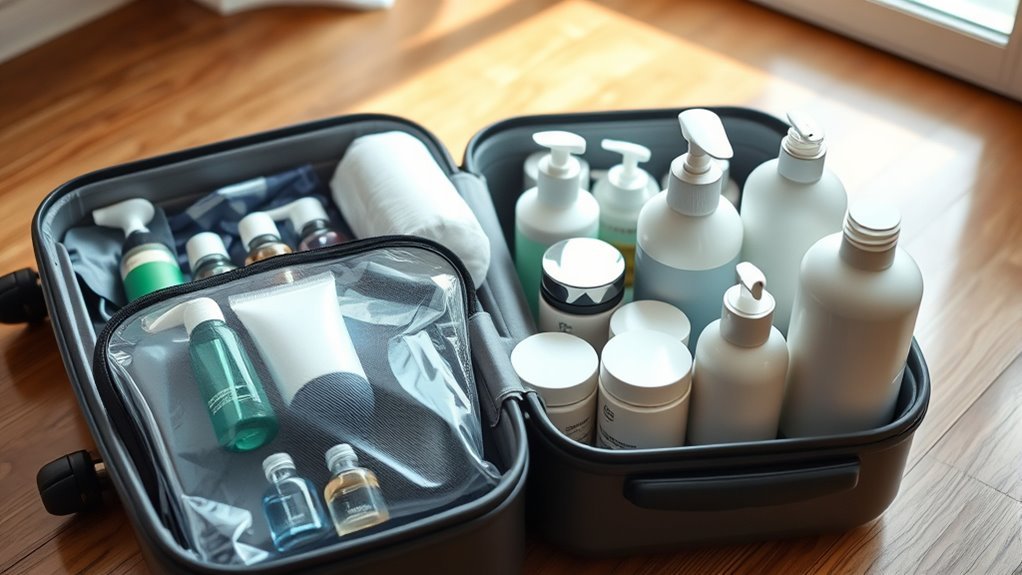
You can pack most full-size cosmetics and toiletries in checked luggage without worrying about the 3.4-ounce carry-on limit, but you should follow airline and TSA guidelines for volume, packaging, and hazardous ingredients.
You’ll usually stow shampoo, conditioner, lotion, foundation, and perfume in checked bags, but keep aerosols and flammables minimal and declare anything regulated.
Place items in leak-resistant containers and inside a sealed plastic bag or pouch to protect clothing.
Check airline weight and hazardous materials policies for items like nail polish remover or alcohol-based products.
If in doubt, consult the airline or TSA before packing.
Approved Containers and Seals for Checked Liquids
For checked liquids, use sturdy, leak-resistant containers and secure seals so spills won’t damage your luggage or other bags. Choose approved bottles with tight screw caps or locking flip-tops, and check manufacturer specs for travel use. Use original packaging for aerosols and pressurized items when possible. Label hazardous or prescription liquids clearly and keep documentation accessible. Inspect seals before packing and replace cracked caps.
- Use hard plastic or metal bottles with threaded caps
- Prefer tamper-evident or child-resistant closures for safety
- Keep aerosol cans within airline size limits and original cartons
- Seal caps with adhesive tape for extra assurance
Leak-Proof Packaging: Bags, Wrap, and Techniques
After securing containers and caps, protect them with proper outer packaging to prevent spills from soaking into clothes or other bags.
After sealing containers and caps, put them in proper outer packaging to stop spills soaking into clothes.
Place bottles upright in sealable plastic bags, squeeze out air, and double-bag for added security.
Wrap fragile or oddly shaped containers in bubble wrap or clothing, then tuck them into stiff-sided toiletry cases to avoid crushing.
Use leak-proof travel pouches with welded seams for extra protection.
Pad gaps with soft items so contents can’t shift.
Label clearly if contents are fragile or perishable.
Inspect seals before closing your suitcase, and carry essential liquids in your carry-on when possible.
Packing Aerosols and Specialty Containers Safely
You should know TSA limits for aerosols—how much pressure-filled product and which types are allowed—before packing them.
Secure specialty containers by sealing lids, using protective sleeves, and placing them in leak-proof bags to prevent spills and pressure changes.
If an item seems restricted or fragile, don’t assume it’s fine—check TSA guidance or airline rules first.
Aerosol Limits Explained
Wondering what aerosol items you can pack in checked luggage and how to secure specialty containers? You can bring common aerosols like deodorant, hairspray, and sunscreen, but TSA limits and airline rules apply.
Follow container capacity and quantity rules, and stow items to prevent accidental discharge. Consider these quick tips:
- Check each aerosol’s net quantity and label for flammability.
- Keep disposable aerosol cans capped and upright inside a sealed bag.
- Limit total volume per airline policy; contact carrier if unsure.
- Declare unusual or medical aerosols at check-in to avoid delays or confiscation.
Specialty Container Precautions
When packing aerosols or specialty containers in checked baggage, make certain each item’s valve is protected, labels are intact, and cans are stored upright to prevent leaks or accidental discharge. You should cap or tape valves, use original caps when possible, and place items in sealed plastic bags or a rigid container to contain spills.
Keep pressurized or reactive products away from heat and sharp objects, and avoid mixing chemicals that could react. Check airline and TSA rules for quantity limits and prohibited materials.
Declare anything unusual if required, and inspect containers before travel to ensure they’re secure and undamaged.
Labeling and When to Declare Liquids to TSA/Airline
How should you label liquids in checked bags, and when must you tell TSA or your airline about them? You should clearly label containers with contents and hazard info, especially for chemicals, aerosols, or large quantities. Declare items that are hazardous, contain alcohol above allowed concentrations, or require special handling.
- Label with product name, volume, and hazard statement.
- Attach original manufacturer labels when possible.
- Declare lithium battery-powered pumps or refrigeration units.
- Notify airline/TSA during check-in for oversized or commercial shipments.
Failure to declare can cause delays, fines, or confiscation, so be proactive and honest.
Airline-Specific Limits and Weight Considerations
You’ll need to check each airline’s carry-on size and allowance because they can vary considerably between carriers.
Also note checked baggage weight limits and the fees that kick in when you go over them.
Knowing both rules before you pack will help you avoid surprises at the gate or check-in.
Airline Carry-On Differences
Curious how carry-on rules vary between airlines? You’ll find size, weight, and allowance differ a lot, so check before you pack. Some airlines are strict about dimensions, others about total pieces. Know airline policies to avoid gate checks or fees.
- Low-cost carriers may limit carry-ons to one small bag or charge for larger items.
- Full-service airlines often include a standard carry-on plus a personal item.
- Regional jets can have smaller overhead bins and tighter size limits.
- International carriers sometimes allow heavier carry-ons than domestic U.S. airlines.
Always verify your airline’s specific carry-on rules before travel.
Checked Baggage Weight Limits
Many airlines set different checked-bag weight limits, so check your carrier’s policy before you pack to avoid surprises and overweight fees.
You’ll usually see 50 lbs (23 kg) for economy and 70 lbs (32 kg) for premium cabins in U.S. and international rules, but exceptions apply.
Weigh your suitcase at home, distribute heavy items across bags, and consider shipping bulky or heavy goods.
Liquids add weight—pack full bottles thoughtfully or transfer to lighter containers.
If you hit the limit, expect steep fees or forced repacking.
Contact the airline ahead for waivers or advice on oversized baggage.
International Travel: Checked-Liquid Rules and Customs Limits
When you’re packing liquids for an international flight, remember that checked-baggage allowances and customs rules both matter. You’ll follow airline weight/volume limits, but destination customs can restrict alcohol, medicines, and agricultural products. Declare items as required to avoid fines. Keep receipts and original packaging for proof. Consider duties and quarantine rules before packing.
When packing liquids for international travel, follow airline limits, check customs rules, and declare restricted items with proof.
- Check airline and country limits for alcohol and duty-free allowances
- Pack medicines with prescriptions and carry a copy
- Separate food, plant, and animal products; many countries ban them
- Keep valuable or fragile liquids cushioned and declared when necessary
If TSA Finds Prohibited Liquids: Confiscation, Fines, and Appeals
If TSA discovers prohibited liquids in your checked baggage, agents will remove them and may dispose of or retain the items depending on the risk and policy; you’ll usually get a receipt for confiscated goods.
You’re responsible for declared hazardous materials and follow-up.
Low-risk, accidental violations generally lead to confiscation only.
Deliberate or dangerous violations can trigger fines, citations, or criminal charges based on federal and airline rules.
If you disagree, you can appeal through the TSA claims process or seek legal advice; preserve documentation, receipts, and photos to support your case.
Cooperate with agents to reduce escalation and speed resolution.
Troubleshooting Common Problems and Last-Minute Tips
Because last-minute issues can derail travel plans, it’s smart to run a quick checklist and know simple fixes before you reach the airport. You’ll want calm, quick responses if a bottle leaks, a label’s missing, or an agent questions an item. Keep documentation handy and be ready to separate suspect containers.
- Seal liquids in double bags to prevent spills.
- Label medically necessary liquids clearly and carry prescriptions.
- Pack expensive or fragile liquids in the center, cushioned by clothes.
- Have photocopies of receipts for rare or high-value items.
Stay cooperative with TSA, act promptly, and you’ll reduce delays.
Practical Packing Checklist for Checked Liquids
Although checked liquids travel out of sight, you should still pack them deliberately to prevent leaks, damage, and extra screening. Pack liquids upright in sealed plastic bags, use leakproof travel bottles, and cap everything tightly.
Wrap bottles in clothing or bubble wrap, place them in the center of your suitcase, and surround with soft items to cushion impacts.
Separate hazardous or restricted liquids and check airline rules for alcohol limits. Label fragile toiletry bags and consider a secondary containment tray.
Keep receipts for expensive items and take photos before packing. Inspect seals at your destination and report any damage promptly.
Frequently Asked Questions
Can I Pack Frozen Liquids in Checked Luggage?
Yes — you can pack frozen liquids in checked luggage, but they must remain frozen when screened; if thawed, they’ll be treated as liquid and inspected. Pack them securely to prevent leaks and follow airline restrictions.
Are Refillable Travel Containers Allowed in Checked Bags?
Yes — you can pack refillable travel containers in checked bags. Just make sure they’re tightly sealed, stored upright or cushioned to prevent leaks, and follow airline or international rules about hazardous or restricted liquids to avoid confiscation or penalties.
Do Duty-Free Liquid Purchases Go in Checked Luggage?
Yes—you can pack duty-free liquids in checked luggage, but you should seal them properly and follow airline and country restrictions; fragile bottles need cushioning, and some destinations may limit or declare certain alcohol quantities upon arrival.
How Are Liquid Samples or Vials Treated in Checked Baggage?
They’re allowed in checked baggage, but you’ll want to pack vials securely, cushion them against breakage, seal against leaks, and follow any airline or international hazardous-materials rules; declare restricted substances and don’t exceed quantity limits for dangerous goods.
Can I Claim Liquid Damage on Checked Luggage Insurance?
Yes — you can usually claim liquid damage on checked luggage insurance if your policy covers water or contents damage, you document losses, file promptly, and meet policy limits and exclusions; check terms, receipts, and required proof.
Conclusion
You can pack most liquids in checked luggage, but you must follow TSA and airline rules so your trip stays smooth. Remember alcohol limits by proof, avoid flammables and forbidden aerosols, and label or declare items when needed. If TSA flags something, expect confiscation or fines and follow appeal steps. Double-check international and carrier-specific rules, pack securely to prevent leaks, and use the checklist to confirm you’ve packed everything safely.