How to Fold Suit Jacket for Luggage Without Wrinkles
Button the jacket, empty pockets and smooth the lining so nothing bulges. Pick wrinkle-resistant fabrics or a slightly structured fit when possible. For most jackets, align shoulder seams, fold along natural seams and support shoulders with tissue or a dry-cleaning bag; for delicate fabrics, turn inside-out and nest the shoulders before folding. Pack the jacket near the top surrounded by soft items, use straps gently, and hang or steam on arrival—keep going to find detailed steps and fixes.
Fold a Suit Jacket for Carry-On in 2 Minutes
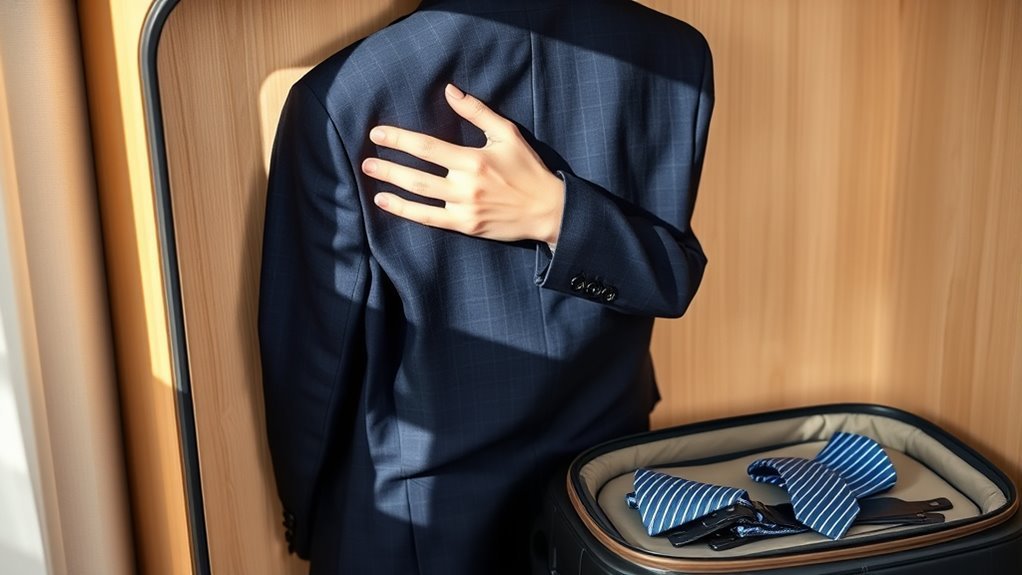
If you’re short on time, you can fold a suit jacket for carry-on in about two minutes by following a simple, repeatable sequence:
Button the jacket, lay it face down, tuck one shoulder into the other, fold vertically along the center, then fold once more horizontally so it fits your bag’s depth.
Button the jacket, lay it face down, tuck one shoulder into the other, fold vertically, then fold once more horizontally.
You’ll line up seams and smooth fabric as you go, avoiding sharp creases. Keep collars flat and sleeves neat.
Slide tissue paper or a plastic dry-cleaner sheet inside to reduce friction.
Place the folded jacket atop other items in your carry-on to minimize movement and protect the shape.
Prep the Jacket: Button Up, Empty Pockets, Smooth the Lining
Before you fold, button the jacket, empty all pockets, and smooth the lining so the garment holds its shape and avoids surprise bulges. Check for loose lint, receipts, or pens that crease fabric. Run your hands inside the lining to lay it flat and align shoulder seams. Hold the jacket by the collar and give it a gentle shake to settle sleeves.
- Flat lining and aligned seams.
- Empty pockets—no lumps later.
- Buttoned front to keep structure.
These quick steps make folding neater, reduce internal strain, and help prevent wrinkles during transit.
Choose Travel-Friendly Jacket Fabrics and Fits
Now that the jacket’s prepped, think about fabric and fit—these decide how you’ll pack and how much wrinkle risk you take. Choose wool blends, lightweight tropical wools, or performance fabrics with wrinkle resistance; they recover shape and tolerate compression.
Avoid 100% linen or loosely woven tweed for long trips unless you plan to hang immediately. Opt for a slimmer, structured fit if you want less internal movement in transit, but don’t force a tight jacket that creases easily.
If you own multiple jackets, prioritize one with stretch or blended fibers for suitcase travel to minimize care on arrival.
Flat-Fold Method to Minimize Shoulder Wrinkles
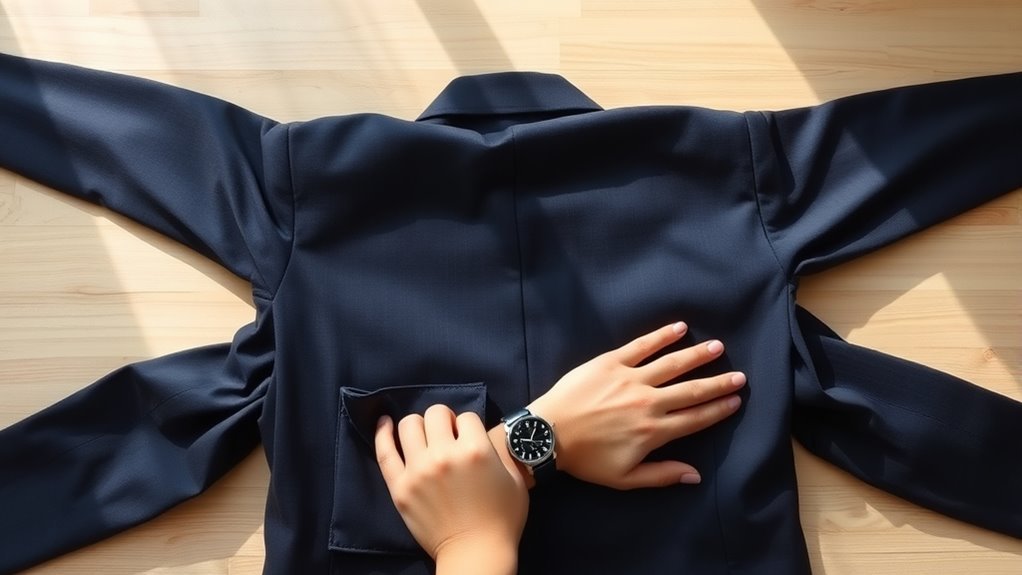
When you use the flat-fold method, align the shoulder seams precisely so they sit smooth and even.
Smooth the fabric panels outward from the center to remove air pockets and creases.
Finally, pack the jacket along a flat surface in your luggage to keep the shoulders supported and wrinkle-free.
Align Shoulders Carefully
If you want to keep the jacket’s shoulders smooth, lay it face down and align the shoulder seams so they sit flat and even; this gives you a true baseline for the flat-fold and prevents uneven creasing.
Once aligned, check shoulder pads for lumps and adjust fabric so both sides mirror each other.
Fold one sleeve across the back, then the other, keeping weight off the seams.
Imagine the silhouette as a narrow rectangle.
- Smooth seams: feel for bumps.
- Mirror alignment: match left to right.
- Gentle pressure: avoid flattening pads too much.
Smooth Fabric Panels
With the shoulders aligned and sleeves smoothed, lay the jacket face up and flatten each fabric panel so they sit uniformly across the body. Run your hands gently from shoulder seams toward the center, removing any ripples or folds.
Smooth lapels and front panels flat, keeping buttons and pocket flaps in place to avoid shifting. Press down on creases lightly without stretching fabric.
If you spot buckling near armholes, adjust the panel edges inward so tension redistributes evenly. Maintain a flat, even surface before folding to make certain shoulders remain supported and the jacket stacks neatly in your luggage.
Pack Along Flat Surfaces
Once you’ve smoothed the jacket panels, lay it flat on a hard surface and align it so the shoulders sit flush against the edge. This gives you a stable base to fold without compressing the shoulder pads.
You’ll fold along natural seams, keeping fabric taut to avoid creases. Follow these visual cues:
- Shoulder line: fold one side inward, matching shoulder points so padding stays rounded.
- Lapel alignment: smooth lapels flat, tucking them slightly toward the center to prevent ridges.
- Hem and back: fold the hem up over the back, creating a compact rectangle that keeps shoulders uncrushed.
Inside-Out Fold for Delicate or Structured Jackets
Because delicate fabrics and strong shoulder pads need extra protection, the inside-out fold keeps seams and structure aligned while shielding outer cloth from pressure and friction. Turn your jacket inside out, smooth lining flat, and button up to maintain shape.
Fold one shoulder into the other so pads nest without distortion, then fold vertically along the center back. Lay a clean tissue or thin packing cloth over sharp creases to cushion them.
Fold the hem up toward the collar in one or two neat folds depending on length. Place the folded jacket in a garment bag or between layers to minimize shifting.
Rolling Technique for Soft Jackets and Knit Blazers
If your jacket is soft or knit and doesn’t have firm shoulder pads, rolling can save space and reduce creases. Lay the jacket face down, smooth seams, fold sleeves inward so they lie flat against the back.
Starting at the hem, roll upward firmly but gently, keeping edges aligned. When you reach the shoulders, tuck any excess fabric into the roll to prevent bulk.
Place the roll in your suitcase alongside shoes or soft items to hold shape.
- compact cylinder
- aligned seams
- tucked shoulders
This method minimizes sharp folds and keeps knit texture neat.
Fold a Jacket With Matching Trousers
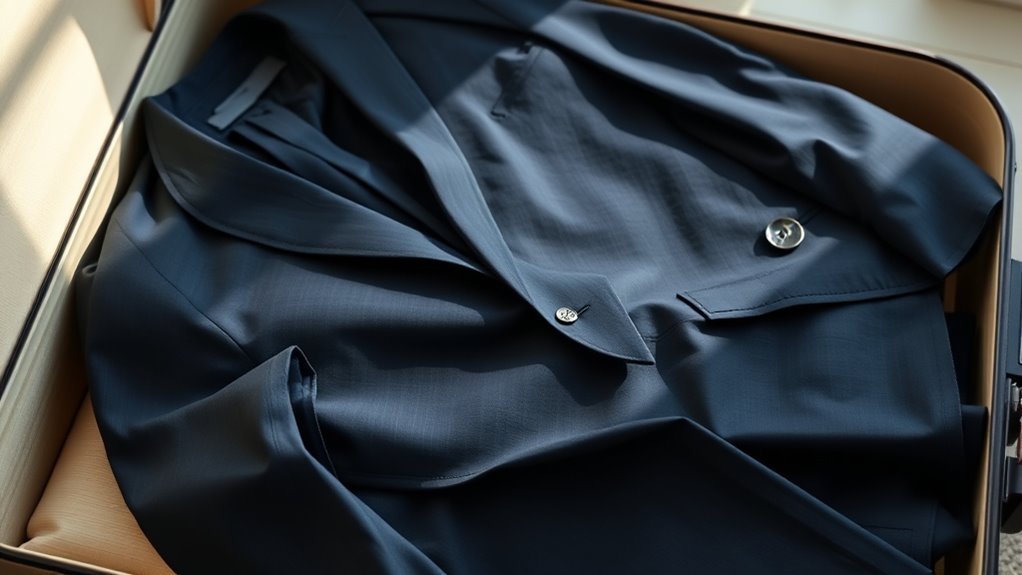
When you’re packing a suit, folding the jacket with its matching trousers lets you keep the set aligned and cuts down on extra creases. Start by laying the jacket face down and placing the folded trousers centered over the shoulders so the pant creases match the jacket’s lapels.
Smooth fabric, fold one sleeve across the back, then fold the other to create a neat rectangle. Fold the jacket in half at the waistline, aligning edges.
Tuck trousers inside the folded jacket to protect creases. Place the combined bundle flat in your suitcase, weight-balanced among other items to avoid shifting.
Cut and Place Tissue Paper and Dry-Cleaner Bags to Prevent Creasing
To add an extra layer of protection after tucking your trousers into the jacket, cut soft tissue paper into panels that match the jacket’s body and sleeves and slide them between folds to cushion fabric and preserve creases. Then, layer thin dry-cleaner plastic over the tissue to reduce friction and moisture. Arrange pieces smoothly so nothing bunches.
- Tissue panel along the back to keep the center seam flat.
- Narrow strips inside sleeves to maintain sleeve shape.
- Plastic sheet over the folded jacket to let it glide in the suitcase.
Pack gently; avoid heavy items on top to prevent new creases.
Layer Shirts and Sweaters Around a Packed Jacket
Because the jacket’s been cushioned and folded, build a soft buffer by arranging your shirts and sweaters around it to stabilize the shape and absorb pressure.
Lay a clean shirt flat, fold sleeves inward, and place it under the jacket’s shoulders to support contours.
Stack lightweight shirts atop the jacket, smoothing fabric to avoid lumps.
Use folded sweaters only at the jacket’s edges — collars, lapels, and hem — where bulk protects seams.
Keep heavier sweaters away from the center to prevent crushing.
Check that layers sit evenly, then zip or fasten your luggage to maintain consistent pressure during transit.
Best Luggage for Packing a Suit Jacket Wrinkle-Free
Choose luggage with a structured garment compartment to keep your folded jacket flat and supported.
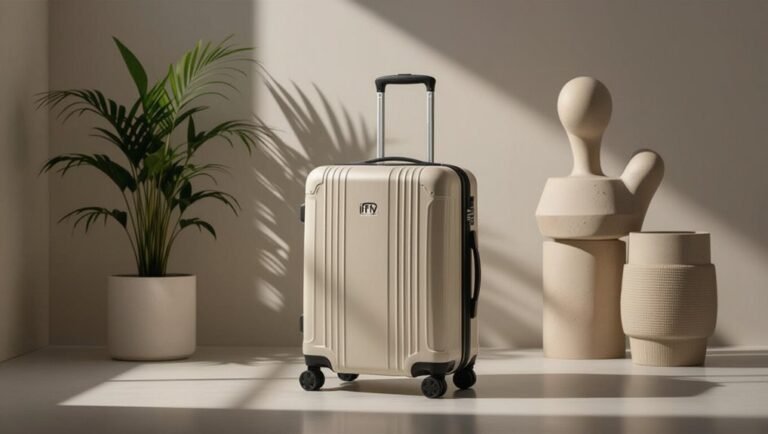
You’ll also want a hard-shell carry-on to protect against crushing in transit.
Together, those features help prevent wrinkles and make unpacking easier.
Structured Garment Compartments
When you need to keep a suit jacket wrinkle-free on the road, luggage with a structured garment compartment makes the job far simpler. You’ll appreciate dedicated space that holds the jacket flat, suspends it by the shoulders, and shields it from compression.
Choose a bag with a padded divider, internal clips or hanger slot, and a smooth lining to prevent fabric creasing. Visualize how it works:
- A rigid frame supports the jacket like a miniature closet.
- A hanger slot keeps the collar aligned and shoulders rounded.
- A zippered flap locks the jacket in place, blocking shifting and folds.
Hard-Shell Carryons
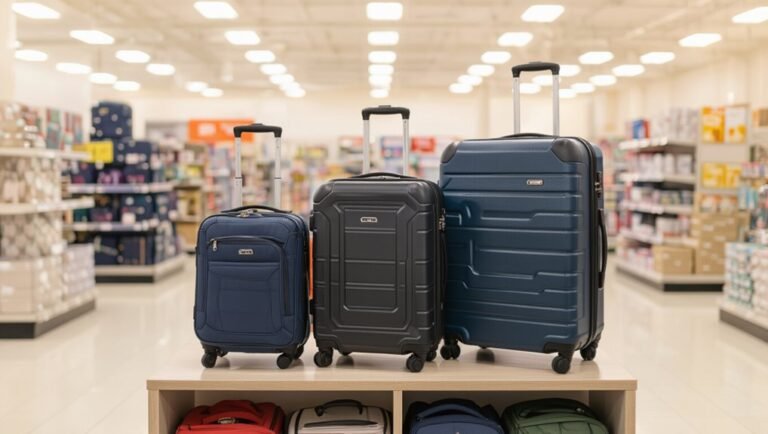
If you want to keep a suit jacket crisp on short trips, a hard-shell carryon gives your clothes a rigid, protective envelope that resists crushing and shifting. You’ll fit a folded jacket flat against the shell, add tissue between folds, and place heavier items away from the jacket. Choose one with a smooth interior and compression straps to stabilize contents. Roll non-jersey items separately to save space. Quick access compartments help avoid rummaging.
| Feature | Benefit |
|---|---|
| Rigid shell | Prevents creasing |
| Smooth lining | Reduces friction |
| Compression straps | Keeps jacket flat |
| Size (carryon) | Fits overhead |
| Lightweight | Meets airline limits |
Garment Bag vs. Suitcase: Which Is Best?
Although both options can carry your suit, a garment bag and a suitcase offer different protections and conveniences depending on your trip. You’ll prefer a garment bag when you want minimal folding and quick access; it drapes your jacket, reducing creases during short trips.
A suitcase works better for longer travel or when you need to pack shoes and extras. You’ll fold carefully and use tissue to cushion seams.
- Garment bag: hanging silhouette, easy access, lighter feel.
- Suitcase: structured protection, more storage, stacks neatly.
- Hybrid: rolling garment case combines both benefits.
Use Compression Straps Without Crushing Your Jacket
You can use compression straps to keep your luggage compact without crushing your suit jacket by placing protective layers between the straps and the garment. Fold your jacket gently, lay it flat, then add a soft barrier — a folded cotton shirt or packing cube — under each strap path. Tighten straps gradually, checking for any pinching. Use straps to compress surrounding items, not the jacket. If your bag has adjustable strap placement, route them around the jacket pocketed area. Unfasten straps as soon as you reach luggage to let the jacket relax before removing it.
| Tip | Action |
|---|---|
| Barrier | Cotton shirt |
| Position | Around jacket edges |
| Tighten | Gradual |
| Avoid | Direct strap over lapel |
| Check | Before closing |
Wear Your Jacket on the Plane Without Overheating
When you plan to wear your suit jacket on the plane without overheating, choose lightweight fabrics and layer smartly so you can shed or add pieces as cabin temperatures change. You’ll stay comfortable and keep your jacket crease-free by planning layers and packing strategically.
Wear a moisture-wicking base layer, add a thin merino or cotton shirt, and keep the jacket buttoned only when needed. Use the aisle to stand and cool down if you get warm.
Wear a moisture-wicking base, a thin breathable shirt, and unbutton your jacket—stand in the aisle to cool off if needed.
Visualize packing light:
- Thin base layer beneath dress shirt
- Breathable shirt, easily unbuttoned
- Lightweight jacket worn loose when warm
Quick Touch-Ups on Arrival: Steam, Iron, Spritz
If your jacket looks a little wrinkled after the trip, take a few minutes to freshen it with simple tools most hotels provide. Hang it in the bathroom, run a hot shower to produce steam, and let the vapor relax fibers for 10–15 minutes.
Smooth seams and lapels with your hands while it’s damp but not soaking. Use the hotel iron on a low setting with a pressing cloth or towel between fabric and plate; press gently, don’t drag.
Lightly spritz wrinkled spots with water from a spray bottle and let the jacket hang to dry fully before wearing.
Fix Stubborn Creases: DIY vs. Professional Pressing
If a couple quick home remedies—steaming in the bathroom, using a damp cloth with a warm iron, or hanging your jacket to let gravity help—don’t erase stubborn creases, you’ll need to weigh time and cost.
A professional press can restore structure and fabric finish faster but will cost you, while DIY fixes are cheaper and more convenient for minor lines.
Decide based on the crease severity, fabric type, and how soon you need the jacket looking sharp.
Quick Home Remedies
Even though stubborn creases can seem permanent, you can tackle most of them at home with a few reliable tricks before resorting to professional pressing. You’ll want gentle heat, moisture, and careful pressure to revive the jacket without harming fabric.
Try these quick remedies:
- Steam over a boiling kettle, then smooth panels with your palm like ironing with air.
- Damp towel press: lay a slightly wet towel over the crease, press with a warm iron through the towel for a few seconds.
- Hang in a humid bathroom after a hot shower, letting gravity and moisture relax fibers overnight.
Test on an inside seam first.
When To Seek Professionals
When home tricks don’t smooth a persistent crease, it’s time to weigh DIY limits against professional pressing—especially for suits made of delicate fabrics, structured linings, or high-value tailoring. You should choose pros when fabric could shrink, seams might distort, or wrinkle patterns refuse to vanish. Tell the cleaner about fabric type and any issues, inspect their work, and ask for a spot test if you’re unsure. Professionals use controlled steam and presses that preserve shape. Use this quick guide:
| Situation | Action |
|---|---|
| Delicate fabric | Professional pressing |
| Structured lining | Professional pressing |
| Minor wrinkle | DIY steaming |
| High-value suit | Professional pressing |
| Unknown fabric | Ask pros first |
Cost Versus Convenience
Having a pro handle stubborn creases will save you time and risk, but you’ll pay for that convenience—and sometimes DIY fixes make more sense. You weigh cost against outcome: quick pressing costs money but guarantees a sharp finish; at-home steaming or ironing costs little but needs care.
Consider travel frequency, garment value, and urgency before deciding. Picture options:
- A modest pressing bill: crisp lapels, ready for meetings.
- A handheld steamer at home: soft recovery, low expense.
- Careful ironing with a cloth: cheap, risky without practice.
Choose the option matching your budget and tolerance for imperfection.
Protect Structured Shoulders and Lapels With Shapers
If you want your jacket to keep its sharp silhouette in transit, use lightweight shoulder and lapel shapers to preserve the contours and prevent creasing. Slip shapers into each shoulder to maintain shape, then tuck thin lapel inserts beneath the front to stop folding lines. They’ll sit unobtrusively under packing layers and won’t add bulk.
| Item | Purpose |
|---|---|
| Shoulder shapers | Maintain shoulder curve |
| Lapel inserts | Prevent lapel roll |
| Lightweight foam | Adds minimal bulk |
| Removable clips | Keep shapers in place |
Place shapers before folding and remove them after hanging to restore fresh structure.
Folding Tips for Sport Coats, Blazers, and Tuxedos
Think about fabric first—you’ll treat lightweight linens and unlined blazers differently from heavy wool or velvet tuxedo jackets.
For softer fabrics you can roll gently to save space, while structured or heavily lined pieces do better folded with shoulder support to keep shape.
Match your method to the garment so you avoid creases and protect tailoring.
Pack By Fabric Type
Because different fabrics crease and recover differently, you’ll want to adjust how you fold each sport coat, blazer, or tuxedo to minimize wrinkles and preserve structure. Match technique to fabric: softer wool can handle gentle folds, linen needs padding, and silk requires minimal pressure.
Use tissue or a lightweight dry-cleaning bag inside shoulders to support shape. Fold along natural seams and smooth lapels flat. Pack in the center of your suitcase, surrounded by softer items.
- Wool: fold once, support shoulders.
- Linen: pad with tissue, avoid sharp creases.
- Silk: lay flat, limit folds.
Roll Versus Fold
Now that you’ve matched folding methods to fabric, decide whether to roll or fold each coat based on material, structure, and how much space you have.
Choose rolling for unstructured, casual sport coats or wrinkle-resistant blends; roll gently from the shoulders, smoothing seams, then secure with a cloth or packing strap.
Fold tailored blazers and tuxedo jackets along natural creases: turn one shoulder inside the other, align lapels, and fold at the waist to preserve shape.
Use garment bags or a layer of tissue for added protection.
When in doubt, err on folding for structure, rolling for space.
Packing Multiple Jackets: Spacing and Separators That Work
When you need to bring more than one suit jacket, arrange them so each has breathing room to avoid pressure points and creases.
Layer jackets alternating shoulder directions so seams don’t press the same spots.
Layer jackets with alternating shoulder directions so seams don’t press the same spots and cause creases.
Slip thin, structured separators—cardboard, plastic garment inserts, or folded cutting boards—between coats to keep silhouettes.
Use soft tissue or packing cloth at shoulders and along lapels to cushion edges.
Compress gently with clothes, not heavy items, and position jackets near suitcase top to avoid bottom compression.
Check after zipping and reshuffle if any bulges show; small tweaks prevent wrinkles on arrival.
- Cardboard panels
- Plastic inserts
- Folding board
Stop Odor & Moisture While Traveling With a Packed Jacket
If you want your jacket to smell fresh and stay dry on the road, pack with moisture barriers and odor absorbers so damp and smells never get a chance to set in.
Start by wrapping the folded jacket in a thin, breathable garment bag or silica-lined pouch to block moisture without trapping humidity.
Add a small sachet of activated charcoal, silica gel packets, or a cedar clip in the suitcase compartment to neutralize odors and absorb dampness.
Keep toiletries sealed and separated, and air out the jacket as soon as you arrive.
Replace absorbents periodically on longer trips to maintain effectiveness.
Common Packing Mistakes and How to Avoid Them
Because packing a suit jacket poorly can undo all your careful folding and odor prevention, it’s worth knowing the common mistakes travelers make and how to fix them. You shouldn’t cram the jacket, ignore layering, or skip protective padding. Spot these pitfalls and correct them quickly:
Because packing a suit jacket poorly undoes careful folding—avoid cramming, heavy layering, and add padding to preserve shape.
- Cramming: forces creases; give the jacket room or use compression bags for other clothes.
- Wrong layering: placing heavy items atop the jacket flattens shoulders; layer soft items over it.
- No padding: leaves lapels vulnerable; tuck tissue or a shirt inside to preserve shape.
Follow these simple adjustments to keep your jacket travel-ready.
Quick Troubleshooting: When Folding Fails
Even with careful packing, your jacket can still crease or lose shape, so it’s good to know quick fixes you can do once you spot a problem. If you find minor wrinkles, hang the jacket in the bathroom during a hot shower—the steam relaxes fibers. Smooth seams and lapels with your hands, supporting shoulders to reshape them.
For deeper creases, lay the jacket flat on a towel, roll the towel gently to press out lines, then unroll and hang. If shoulders are squashed, stuff them with socks or tissue before hanging.
Act fast: the sooner you treat wrinkles, the easier they lift.
Final Packing Checklist for a Wrinkle-Free Jacket
While you finish loading your bag, run through a tight checklist to keep your jacket wrinkle-free. Check seams and shoulders for smoothness, then confirm pockets are empty and lapels lie flat. Tuck the jacket into a protective layer, like a dry-cleaning cover or clean cotton shirt, and position it atop soft items.
- Fold along natural lines so sleeves stack neatly.
- Pad shoulders with tissue or a soft sock to preserve shape.
- Place the jacket in the center of the suitcase, surrounded by softer garments.
Zip the bag gently, avoid over-compressing, and unpack promptly on arrival.
Frequently Asked Questions
Can You Pack a Suit Jacket in a Backpack Without Creasing It?
Yes — you can pack a suit jacket in a backpack without creasing it if you turn it inside out, fold shoulders inward, roll gently with tissue or a plastic dry-cleaner bag inside, and place it atop other items.
How Long Can a Folded Jacket Stay Wrinkle-Free in Luggage?
About 1–3 days if you pack it carefully and avoid heavy compression; you’ll keep it wrinkle-free longer using tissue, a plastic dry-cleaner bag, or a garment bag, and by unpacking promptly when you arrive.
Will Deodorant or Cologne Stain a Packed Jacket?
Yes — deodorant or cologne can stain a packed jacket. You should let sprays dry fully, use solid deodorant sparingly, keep products sealed in a separate pouch, and place tissue or a protective cloth between items.
Can Tailoring Alterations Affect How a Jacket Folds for Travel?
Yes — alterations like tapered waists, added shoulder pads, or shortened sleeves change jacket structure, so it’ll fold differently. You’ll need to adjust folding technique or ask your tailor about press-friendly modifications before travel.
Are Garment Steamers Allowed Through Airport Security?
Yes, you can usually bring a garment steamer in carry-on or checked baggage, but TSA may restrict spare lithium batteries or pressurized components; check airline rules, pack safely, and declare anything unusual at security screening.
Conclusion
You’ve got this—button the jacket, empty the pockets, and pick the folding method that matches the fabric and structure. Use the flat-fold for most jackets and the inside-out fold for delicate or highly tailored ones. Protect the lining, add a thin layer of tissue or a dry dryer sheet to stop odor and moisture, and tuck in lapels to avoid creases. Avoid overstuffing your bag, and run through the quick checklist before you close the suitcase.