How to Protect Luggage Wheels From Damage
You can cut wheel failures by choosing the right wheels for your trips, packing smart, and doing quick checks before and after travel. Match wheel size and material to terrain, avoid overloading, lift over curbs, and steer clear of gravel. Clean grit and salt, tighten fasteners, and lubricate bearings occasionally. Use covers or wheel guards for rough handling and store bags off the wheels. Keep these habits up and you’ll find simple fixes and upgrades that extend wheel life.
Pick Wheels for Your Travel Style: Carry-On, Business, Adventure
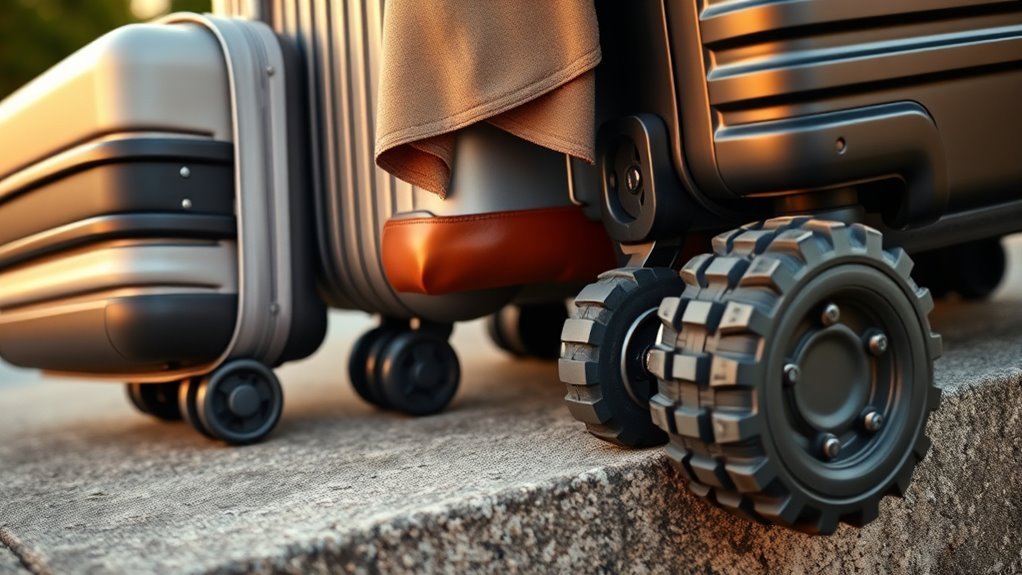
When you pick wheels, match them to how you travel: lightweight spinner wheels suit carry-on users who want nimble, vertical rolling. Choose durable, larger wheels if you haul heavier loads or roll over rough surfaces.
If you commute for work, pick quiet, smooth-rolling casters that fit tight aisles and look professional.
For adventure trips, favor rugged, shock-absorbing wheels with sealed bearings and tougher housings to resist dirt and impacts.
Consider wheel material, mounting strength, and ease of replacement. Match wheel choice to typical terrain and load, and you’ll cut wear and reduce the need for repairs.
Spinner vs. Inline Wheels: Which Rolls Best for You?
Think about how you move through travel hubs: spinners give effortless maneuverability in tight spaces.
Inline wheels offer more control when you need to tow or roll over rough ground.
You’ll also want to evaluate durability and repairability—inline wheels tend to be tougher and easier to fix.
In contrast, spinner casters can be more fragile but are convenient.
Pick the style that matches where you’ll travel most so your wheels last longer and need fewer fixes.
Maneuverability And Control
Wondering which wheel type will make steering through crowded airports and narrow aisles easier? You’ll find spinners glide beside you, offering effortless lateral movement and quick pivots, so you can weave between people without dragging.
Inline wheels trail behind, giving you steadier tracking and simpler control on uneven surfaces; you’ll steer with a pull rather than a push.
Choose spinners if you prioritize tight turns and hands-free maneuvering; pick inline if you want predictable tracking and less chance of unintended drift.
Test both with your typical loads and routes to see which control style fits your travel habits.
Durability And Repairability
Because your wheels take the most abuse, durability and repairability should weigh heavily in your choice. Spinner wheels offer smooth turns but more exposed parts that chip or crack; you’ll replace housings or bearings more often.
Inline wheels are simpler, tougher, and easier to swap or service, so you’ll get longer life with fewer hassles. Look for sealed bearings, metal axles, and replaceable wheel modules regardless of style.
Check manufacturer repair policies and parts availability before you buy. Prioritize rugged construction if you travel rough, but pick spinners only if you can tolerate quicker wear and occasional repairs.
Hard-Shell vs. Soft-Shell: Wheel Trade-Offs
When you choose between hard-shell and soft-shell cases, think about how durability and impact resistance affect wheel longevity.
You’ll also weigh weight and maneuverability—heavier shells can protect wheels but make handling tougher.
Finally, consider repairability and replacement options so you know whether a damaged wheel can be fixed or needs a full case swap.
Durability And Impact Resistance
Although hard-shell suitcases often grab attention for their rugged exteriors, you’ll find hard shells protect contents better from crushing but can transfer more shock to wheels.
While soft shells flex to absorb impacts yet can leave wheels and seams more exposed.
Choose based on how you travel: frequent flyers face rough handling and benefit from reinforced wheel housings and shock-absorbing mounts on hard cases. Casual travelers might prefer soft shells that cushion bumps.
Inspect wheel attachment points, test wheel wobble, and look for replaceable wheels or reinforced stitching. Proper packing and routine maintenance extend wheel life regardless of shell type.
Weight And Maneuverability
If you prioritize easy handling over minimal weight, the shell material will shape how the wheels feel under load.
Hard-shell cases often concentrate weight lower and provide a rigid platform, so wheels track straighter and resist wobble when you tow or roll over curbs.
Soft-shell bags can distribute load unevenly, making steering feel twitchier but they’re lighter overall.
Choose hard-shell if you want predictable wheel behavior with heavier packing; pick soft-shell to keep overall weight down and reduce strain on wheel bearings.
Balance load placement, use packing cubes, and test maneuverability before travel to protect wheel performance.
Repairability And Replacement Options
Because wheel damage is almost inevitable over time, you’ll want luggage whose wheels are easy to repair or replace. Hard-shell cases often use standardized, screw-mounted wheels you can swap solo; parts are widely available and manufacturers list compatible replacements.
Soft-shell bags may integrate wheels into fabric housings, making field repairs trickier but lighter to maneuver. Check whether wheels are modular, tool-accessible, and sold as spare parts.
Keep a small toolkit and spare casters if you travel frequently. When buying, weigh upfront cost versus long-term serviceability: replaceable wheels extend a bag’s life, saving money and reducing waste.
Wheel Materials That Resist Wear and Damage
When you choose luggage with wheels made from durable materials like thermoplastic polyurethane (TPU), polyurethane (PU), or high-grade rubber, you’ll get smoother rolling and far less wear over time.
You’ll want solid-core or reinforced-wheel designs—they resist deformation and handle repeated impacts. Look for sealed bearings and abrasion-resistant treads to keep grit out and preserve rotation.
Choose solid-core, reinforced wheels with sealed bearings and abrasion-resistant treads to resist deformation and keep rolling smoothly.
Harder compounds like TPU resist cuts and chemical wear, while softer rubber variants absorb shocks and reduce vibration.
Consider dual-wheel assemblies for load distribution.
Inspect manufacturer specs for durometer ratings and replaceable modules so you can extend service life without replacing the whole case.
Match Wheel Size to Terrain and Routes
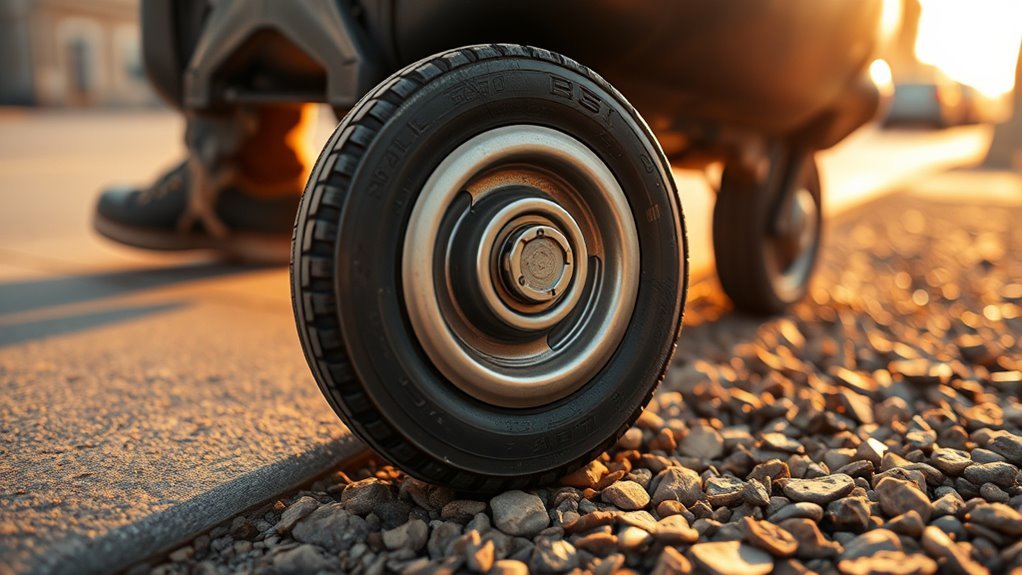
Having the right wheel compound is only part of the story—you also need wheels sized for where you’ll roll.
If you stick to smooth airport floors, small low-profile wheels keep your case compact and maneuverable.
For cobblestones, sidewalks, or gravel, choose larger-diameter wheels so they bridge gaps and roll over obstacles with less jolting.
Wider wheels distribute weight, reducing sink on soft surfaces.
Think about your typical routes—city commutes, rural paths, or frequent transfers—and pick a size that balances clearance, stability, and suitcase dimensions.
Matching size to terrain lowers strain, prevents impacts, and extends wheel life.
Check Wheel Construction Before You Buy
Before you buy a suitcase, inspect the wheel construction closely so you know what’ll actually stand up to your travel habits. Look for solid axle attachment and reinforced housings; flimsy plastic mounts crack under strain.
Turn each wheel to check for smooth bearings and minimal wobble, since rough rotation accelerates wear. Note the material—thermoplastic rubber or polyurethane rolls better and resists abrasion compared with cheap hard plastic.
Check how the wheel interfaces with the shell: recessed or protected wheels take fewer knocks.
Finally, test any swivel mechanism for stiffness and return; reliable movement prevents misalignment and premature failure.
Buying Checklist: Wheel Features to Compare
You’ve already learned what to inspect on an individual wheel; now use a compact checklist to compare models side-by-side so you can pick the best overall package.
Check wheel count and orientation (spinner vs. inline), wheel material (polyurethane, rubber, or hard plastic), bearing type (sealed ball bearings last longer), axle robustness (metal vs. plastic), mounting style (riveted, bolted, or recessed), tread width for stability, wheel diameter for rollability, and shock-absorbent features.
Also compare warranty length, available replacements, and user reviews about real-world durability.
Prioritize the combination that matches your travel style and maintenance willingness.
Inspect Wheels After Every Trip: Quick Routine

After every trip, run a quick wheel check so small problems don’t become costly repairs. Look for loose screws, cracked housings, wobble, and uneven rolling; spin each wheel and listen for grinding or clicking.
Tug gently on the wheel housing and tighten any exposed fasteners with a screwdriver or Allen key. Check axles for bends and make minor adjustments or note when professional repair’s needed.
Verify casters rotate smoothly and locks engage if present. Keep a small toolkit with spare screws and lubricant handy so you can address issues immediately and avoid further damage on your next journey.
Clean Wheels: Remove Grit, Salt, and Debris
Once you’ve tightened loose fasteners and checked for wobble, give the wheels a proper cleaning to remove grit, salt, and trapped debris that’ll wear bearings and finish.
Use a soft brush or toothbrush to dislodge sand and grit from treads and axle housings. Rinse with fresh water if salt exposure occurred, then dry thoroughly with a lint-free cloth to prevent corrosion.
Pick out lodged stones and lint with tweezers or a pick. Spin each wheel while you clean to expose hidden grime.
Repeat as needed after rough travel, and store luggage in a clean, dry place between trips.
Lubrication Basics: What to Use and When
If your wheels are squeaking or feeling rough, a small dab of the right lubricant will restore smooth rolling and protect bearings from wear. Choose a light silicone spray or a dry PTFE (Teflon) lubricant for exterior use; they repel dust and won’t gum up.
For sealed metal bearings, a tiny drop of low-viscosity bearing oil works; avoid heavy greases that attract grime.
Clean wheels first, apply sparingly to axle and bearing openings, spin to distribute, then wipe excess.
Re-lubricate every few months or after wet exposure.
Test roll before travel to ensure no residue transfers to surfaces.
Replace a Broken Wheel: Step-by-Step
When a wheel breaks, you can usually replace it yourself with a few basic tools and a little patience. This section walks you through the exact steps so you get your luggage rolling smoothly again.
First, identify the wheel type and order a matching replacement. Remove fasteners and keep small parts organized.
Detach the old wheel, inspect the axle and housing for damage, then fit the new wheel, ensuring it spins freely. Tighten hardware to the manufacturer’s torque and test movement.
If anything’s bent or stripped, replace the damaged component before reassembly.
- Gather parts and tools
- Keep fasteners labeled
- Test movement and secure parts
Temporary On‑the‑Road Wheel Fixes
When a wheel starts acting up, do a quick inspection to spot loose screws, debris, or flat spots.
If the wheel’s wobbling, secure it with a temporary strap or strong tape so you can keep moving.
Whenever possible, steer your bag over smooth surfaces to reduce stress until you can get a proper repair.
Quick Wheel Inspection
Before you set off, give your wheels a quick hands-and-eyes check so small issues don’t turn into travel-stopping problems. Run your fingers around each wheel, spin them, and listen for rubbing or grinding. Look for cracks, loose screws, and debris lodged in the axle or bearings.
If something’s off, tighten visible fasteners, remove trapped grit, and test spin again. Note any wobble or misalignment and avoid heavy loads until repaired. Keep a compact toolkit handy for fixes and record which wheel needs full service when you reach your destination.
- Check for cracks and loose screws
- Clear debris from axles
- Spin each wheel to hear grinding
Temporary Wheel Strap
If a wheel starts wobbling midtrip, a temporary wheel strap can hold it steady until you reach proper repairs. You’ll loop a strong nylon strap or zip tie around the wheel and chassis to limit play, keeping the wheel aligned and preventing rubbing or detachment.
Tighten just enough to stabilize without binding rotation completely; you still want it to roll. Check straps periodically for chafing and replace if frayed.
Use straps as a deliberate short-term measure, not a permanent fix. Once you reach your destination or a repair shop, remove the strap and have the wheel professionally inspected.
Smooth-Surface Rolling
Because you still need to get where you’re going, focus on fixes that keep wheels rolling smoothly on flat surfaces without forcing a full repair. Inspect quickly: clear debris, realign wobbling wheels, and tighten visible screws or axle nuts with a coin or multi-tool.
If a wheel detaches slightly, shim gaps with folded duct tape to stabilize rotation. For cracked treads, wrap tightly with tape to maintain shape until you reach a shop. Keep movement gentle—avoid stairs or rough terrain.
- Clear debris and test roll.
- Tighten loose fasteners.
- Tape cracks or gaps securely.
Use Luggage Covers to Prevent Wheel Scuffs
When you slip a fitted cover over your suitcase, it creates a simple barrier that keeps wheels from scraping against rough surfaces and each other during transit. You’ll protect the wheel housings and lower shell from scratches, dirt, and abrasions that add up over repeated trips.
Choose a durable, stretchy fabric or hard-shell slip that fits snugly and won’t interfere with wheel rotation or zippers. Look for covers that are washable and lightweight so you can reuse them often.
Using a cover is a low-effort way to extend wheel life and keep your luggage looking newer, longer.
Wheel Guards and Protective Add-Ons That Work
Although a fitted cover helps, you’ll get extra protection by adding wheel guards and aftermarket shields that attach directly to the wheel housings or axles. You’ll reduce scrapes, deflect impacts, and extend wheel life without bulky cases.
Add slim wheel guards and axle shields to deflect impacts, cut scrapes, and extend wheel life without bulky cases
Choose slim, durable guards that bolt on or clip securely; prioritize materials like reinforced plastic or aluminum. Installation should be simple so you’ll swap them when needed. Check clearance to avoid rubbing.
Consider shock-absorbing axle sleeves for rough handling. Maintenance is minimal: inspect fasteners and clean debris.
- Clip-on wheel shields
- Bolt-on aluminum guards
- Axle sleeves with cushioning
Pack to Reduce Wheel Strain: Placement Tips
If you want your wheels to last, distribute weight so the luggage’s center of gravity sits over the axles rather than behind them.
Pack heavy items—shoes, toiletries, electronics—low and close to the wheel end. Use internal compression straps or packing cubes to keep dense items centered and prevent shifting.
Put fragile or lightweight items toward the top and near the handle so they don’t jostle the base. Fill gaps with soft garments to stabilize contents and avoid single heavy items pressing on one wheel.
Before travel, zip and compress fully so load stays compact and balanced over the wheelbase.
Avoid Overloading to Protect Wheels
Because overloaded luggage puts extra stress on axles and casters, you’ll shorten wheel life and raise the chance of breakage if you routinely pack past a suitcase’s designated capacity. Check your bag’s weight limit and distribute items so wheels carry balanced loads. Use compression cubes to avoid bulking heavy items in one corner. Remove nonessentials before travel and consider a lightweight replacement bag when needed.
Regularly inspect wheels for wear after heavy trips and address issues early.
- Weigh luggage before leaving home.
- Keep heavy items near the center, not the edges.
- Replace damaged wheels promptly.
Lift and Carry Luggage to Spare the Wheels
When stairs, curbs, or rough surfaces await, lift and carry your bag instead of dragging it so you don’t strain the wheels and axles.
Pick it up using balanced grips—one hand under the suitcase and the other on the telescoping handle or top carry strap—to distribute weight and reduce torque on wheel housings.
Bend at the knees, keep your back straight, and move deliberately to avoid jostling contents.
For heavier bags, get help or use a luggage strap to secure items before lifting.
Regularly check handles and seams for wear so you’ll know when lifting becomes risky.
Rolling Etiquette: Avoid Curbs and Rough Surfaces
When you come to a curb, lift your bag instead of dragging it up to prevent wheel damage.
Keep an eye out for gravel, broken pavement, and other debris and steer around them whenever possible. A little extra care on rough surfaces will extend your wheels’ life.
Lift Over Curbs
Curious how to keep your suitcase wheels from failing prematurely? Lift your bag over curbs instead of dragging it up; that prevents strain, misalignment, and wheel wear. Use a stable grip on the handle, step close to the obstacle, and lift smoothly—don’t twist or yank.
If the suitcase is heavy, shift it onto one hip before lifting to control weight and reduce jerks that damage casters.
- Check handle locks and height before lifting.
- Brace the suitcase against your thigh for short lifts.
- Ask for help with heavy loads or high curbs to avoid overloading wheels.
Steer Clear Of Debris
If you want your suitcase wheels to last, steer clear of debris and rough surfaces whenever possible. Watch where you roll: avoid gravel, potholes, sidewalk cracks, and loose cobblestones that can snag or chip wheels.
When paths look rough, lift briefly or choose a smoother route. Slow down before uneven spots to reduce shock and swivel strain.
Keep an eye out for curbs, wet leaves, and airport construction zones that hide hazards.
Regularly clear any lodged dirt or small stones from wheel housings.
Simple, consistent vigilance will cut wear and prevent costly repairs.
Airport Handling: What to Expect for Wheels
Because baggage handlers and conveyor systems move your suitcase dozens of times, expect scuffs, dirt, and occasional impacts to the wheels during airport handling. You’ll see abrasions from rough belts, grit lodged in treads, and the occasional hard bump from transfer.
Inspect wheels after each flight, clean out debris, and tighten loose fittings before they worsen. Consider a protective wrap or durable wheel covers for rough routes, and choose maintenance-friendly designs that let you replace parts.
- Check for cracks and uneven wear after pickup.
- Remove lodged stones and fibers promptly.
- Lubricate bearings if wheels squeak or stick.
Choosing Checked vs. Carry-On to Save Wheels
When you’re weighing whether to check a bag or keep it as carry-on, think about how each option affects your wheels. Carry-on use keeps your suitcase with you, avoiding rough conveyor belts and heavy stacking that can crack casters. You’ll roll it through terminals, so choose smoother routes and lighter loads to reduce stress.
Checking reduces rolling but exposes wheels to drop, crushing, and conveyor impacts—use protective covers and sturdy spinner housings if you must check. For fragile wheeled gear, consider a hard case or removing wheels before checking.
Match your choice to trip length, transit conditions, and wheel durability.
Seasonal Care: Salt, Sand, and Wet-Weather Tips
When you travel in salty or sandy conditions, rinse off salt and grit as soon as you can to prevent corrosion.
Brush out trapped sand from wheel housings and axle crevices so the wheels roll smoothly.
After cleaning, dry the wheels thoroughly to stop rust and sticky buildup.
Rinse Off Salt
Noticed white crust on your wheels after a winter trip? Rinse salt off as soon as you can to prevent corrosion and sticky residue. Use fresh water and wipe drying cloths to remove salt from bearings, axles, and wheel housings.
Don’t soak fragile parts; target areas with a gentle spray and follow with a dry cloth to avoid trapped moisture.
- Spray with low-pressure fresh water, aiming at seams and axles
- Wipe exposed metal and plastic with a microfiber cloth
- Let wheels air-dry completely before storing or rolling
Regular rinsing extends wheel life and keeps them rolling smoothly.
Remove Sand Buildup
How often do you shake out sand after a beach trip? Check wheel wells and axles immediately—sand grits cause abrasion and grinding. Use a soft brush or compressed air to dislodge trapped grains, working around bearings and crevices.
For stubborn deposits, loosen them with a toothpick or plastic pry tool, then brush away residue. Avoid driving grains deeper by rolling wheels while you clean so hidden pockets open up.
After removing visible sand, run wheels back and forth on a clean surface to eject remaining particles. Regularly removing buildup keeps rolling smooth and prevents premature wear.
Dry Wheels Thoroughly
Because moisture, salt, and sand speed corrosion and clog bearings, you should dry your luggage wheels thoroughly after wet-weather travel or beach trips. Use a clean towel to wipe wheels, axles, and housings, then let the case air-dry fully in a ventilated spot.
If salt contacted metal parts, rinse with fresh water first, then dry to prevent residue.
- Inspect bearings and hubs for trapped grit.
- Use compressed air to blow out tight spaces.
- Apply a light, corrosion-inhibiting lubricant sparingly to metal parts after drying.
Regular drying prevents rust, maintains smooth rolling, and extends wheel life.
Store Luggage to Prevent Wheel Deformation
When you won’t be using a suitcase for a while, store it so the wheels don’t bear the bag’s full weight—standing it upright on its wheels can flatten the treads and warp bearings over time.
Lay the bag flat on its back or side, supporting it with soft padding under corners to avoid pressure points.
If space is tight, stack lightweight items on top rather than rest the case on a wheel.
Keep temperature stable and out of direct sunlight to prevent rubber hardening.
Rotate stored bags occasionally so any resting pressure shifts, preserving wheel shape without complex upkeep.
Maintenance Schedule for Wheel Longevity
After you’ve set proper storage habits, keep a simple maintenance schedule so wheels stay smooth and reliable. Inspect wheels before and after trips, wiping away dirt and checking for cracks or flat spots.
Lubricate bearings lightly every 3–6 months depending on use, and tighten fasteners if you notice wobble.
Rotate wheels if your case allows to even wear.
- Wipe and inspect: after each trip
- Lubricate bearings: every 3–6 months
- Tighten and rotate: quarterly or as needed
Stick to this routine, and your wheels will last longer and perform consistently.
When to Call a Professional Repair Service
If a wheel keeps wobbling, won’t roll smoothly, or makes grinding noises after basic checks, it’s time to call a professional.
You should also seek help when you spot cracked hubs, bent axles, or torn casings that suggest structural damage.
A technician can diagnose complex wheel problems and recommend repair or replacement to prevent travel headaches.
When To Seek Help
Although many wheel issues you can fix yourself, there are clear signs that you should call a professional repair service. If your wheel makes grinding noises, wobbles despite tightening, or drags, stop and get help—continuing can worsen damage and risk accidents.
A pro can diagnose hidden failures, replace worn bearings, and guarantee alignment.
- Persistent grinding, snapping, or rubbing sounds
- Visible axle play or wheels that won’t spin freely
- Repeated failures after DIY fixes or damaged mounting points
Trust a technician when safety, recurring problems, or hidden structural issues go beyond routine maintenance.
Complex Wheel Damage
What should you do when wheel damage goes beyond loose screws and squeaks? If wheels crack, bearings grind, axles bend, or wobble persists despite basic fixes, you should call a professional repair service.
They’ll assess structural damage, replace bearings or housings, and restore alignment using proper tools. You’ll avoid causing more harm by attempting complex repairs without experience.
Get a cost estimate and ask about warranty on parts and labor. If repair cost nears replacement price, consider buying a new suitcase.
Keep receipts and photos for warranty or insurance claims, and choose a reputable shop with good reviews.
Repair vs. Replace: Cost-Benefit Guide
When you’re weighing whether to fix a wobbly suitcase wheel or just buy a new bag, focus on the practical trade-offs: cost, time, expected lifespan, and how much you value brand or style. You’ll assess damage severity, estimate repair cost versus replacement, and consider upcoming trips.
If a single wheel or bearing is cheap to swap, repair; if frame or multiple wheels are compromised, replace. Also factor sentimental or warranty value.
- Repair when parts are affordable and structural integrity remains.
- Replace when repairs approach replacement cost or reliability is doubtful.
- Use warranties and receipts to guide decisions.
Durable Brands and Models for Reliable Wheels
Look for luggage makers that prioritize wheel engineering and back it with warranties, because reliable wheels save you time and money on repairs and replacements.
You’ll want brands known for sturdy spinner systems and sealed bearings—think names with proven track records in travel durability.
Choose models with reinforced housings, double-wheel setups, and high-quality polyurethane or thermoplastic wheels to resist abrasion and cracking.
Check owner reviews for real-world longevity and manufacturer warranty terms.
Prioritize brands that offer service centers or replaceable wheel assemblies so you can maintain performance without buying new luggage after a single rough trip.
Where to Buy DIY Parts and What to Get
You can find replacement wheels, bearings, and mounting hardware at hardware stores, luggage repair shops, and online retailers like Amazon or specialty travel parts sites.
Pick durable polyurethane wheels, sealed ball bearings, and matching screws or axles to guarantee smooth, long-lasting performance.
If you’re unsure about sizes, measure your current parts before you buy.
Where To Buy
If you want to fix or upgrade your luggage wheels yourself, start by knowing which parts you’ll need and where to buy them—small hardware stores, online marketplaces, and specialty luggage retailers all stock replacement wheels, axles, bearings, and fasteners.
Shop local for quick, compatible fasteners and basic bearings; use major online marketplaces for diverse wheel styles and user reviews; visit brand or luggage specialty sites for OEM parts and fit guides.
Compare sizes, load ratings, and return policies before buying. Check delivery times if you travel soon.
- Local hardware store
- Online marketplaces (search filters)
- Specialty luggage retailers
Essential Parts To Get
Because wheels, axles, bearings, and fasteners each serve a specific role in how your luggage rolls and holds up, pick parts that match your suitcase’s size, weight rating, and mounting style.
Look for replacement wheels (spinner or inline), sealed ball bearings, hardened steel or stainless axles, and grade-appropriate screws, washers, and lock nuts.
Buy from luggage manufacturers, specialty parts retailers, or trusted marketplaces with clear specs and returns.
For DIY, get a basic toolkit: hex keys, pliers, threadlocker, and a torque driver.
Match dimensions, load ratings, and mounting holes; keep originals as templates for fit and function.
Warranty and Insurance Tips for Wheel Damage
When shopping for luggage or filing a claim, check the manufacturer’s warranty and your travel insurer’s policy so you know what wheel damage is covered, what documentation you’ll need, and any time limits for reporting issues.
You’ll want photos, purchase receipts, and any carrier damage reports ready. Note exclusions for wear, misuse, or third-party repairs. Keep serial numbers and register new luggage to simplify claims.
If an insurer denies coverage, ask for a written reason and appeal with extra evidence. Consider extended warranties only if they cover wheels specifically and offer reasonable repair or replacement terms.
- Photos of damage and timestamps
- Proof of purchase and registration
- Carrier report or inspection form
How to Recycle or Dispose of Old Wheels
Wondering what to do with worn or broken luggage wheels? You can’t just toss them in regular trash if local rules restrict bulky or metal items.
First, separate materials: remove rubber, plastic, and metal components. Check municipal recycling guidelines or take metal parts to a scrap yard.
Hard plastics may be accepted at specialized recycling centers; softer rubber usually goes to waste-to-energy or landfill unless a local program collects it.
Consider donating intact wheels to repair shops or community tool libraries.
For hazardous bearings, consult hazardous-waste facilities.
Label parts and call facilities ahead to confirm acceptance, saving you time and effort.
Common Wheel Problems and How to Diagnose Them
If your suitcase drags, wobbles, or squeaks, you’ll want to pinpoint the cause before replacing anything. Start by rolling the bag on smooth and rough surfaces to isolate noise and resistance.
Inspect wheels for cracks, flat spots, embedded debris, and loose fasteners. Spin each wheel to check bearings and alignment; a rough or uneven spin signals wear or dirt.
Test swivels for smooth rotation; stiffness often means corrosion or lost lubricant.
- Look for visible damage and lodged debris.
- Check fasteners and axle tightness.
- Spin wheels to assess bearings and alignment.
Pre-Trip Checklist to Protect Your Wheels
Before you head out, run a quick pre-trip wheel check to prevent problems on the road: clear debris, tighten axles and fasteners, spin each wheel to confirm smooth bearings and alignment, and apply a small amount of lubricant to swivels if they feel stiff. Then follow this checklist to avoid surprises and keep travel calm:
| Check | Action | Feeling |
|---|---|---|
| Debris | Remove stones and threads | Relief |
| Tightness | Secure screws and axles | Confidence |
| Spin | Ensure smooth, quiet roll | Calm |
| Lubricate | Light oil on swivels | Assured |
Do these steps quickly before packing.
Frequently Asked Questions
Can Wheel Size Affect Airline Baggage Fees?
Yes — wheel size can affect baggage fees because larger wheels often mean bigger, heavier suitcases that exceed airline size or weight limits, so you’ll pay oversize or overweight charges if your luggage exceeds the carrier’s permitted dimensions.
Can Wheel Repairs Void My Suitcase Warranty?
Yes — if you repair wheels yourself or use unauthorized services, you’ll often void the warranty. Check the manufacturer’s terms first, contact their approved repair center, and keep receipts to preserve your warranty coverage.
Are Tubeless-Style Wheels Worth the Extra Cost?
Yes — they’re often worth it if you travel frequently or over rough surfaces, because you’ll get smoother, lower-maintenance rolling and fewer punctures; you’ll pay more upfront but save time and repairs long-term.
Can Wheel Noise Indicate Internal Damage?
Yes — wheel noise can indicate internal damage. You’ll hear grinding, clicking, or wobble that suggests worn bearings, loose axles, or debris. Inspect, clean, and tighten promptly; replace parts if noise persists to avoid failure.
How Do Magnetic Trackers Affect Wheel Balance?
Magnetic trackers typically won’t affect wheel balance because they’re lightweight and attach externally; you won’t notice wobble unless the tracker’s heavy, mounted off-center, or glued inside a wheel hub, which could create imbalance and vibration.
Conclusion
You’ve got the tools to keep your luggage wheels rolling smoothly. Pick wheels that match your travel style and terrain, choose durable materials, and weigh spinner versus inline pros and cons. Inspect wheels regularly, follow a pre-trip checklist, use available warranties or insurance, and recycle old wheels responsibly. With a little care and smart choices, you’ll avoid most damage and delays—so your trips stay on track and your baggage keeps moving, hassle-free.