How to Use Motorcycle Luggage Rack Safely
Choose a rack that fits your bike and rated load, mount it to solid frame points, and torque fasteners to spec. Put heavy items low and centered, secure everything with rated straps or cam buckles, and tuck loose ends. Adjust tire pressure and rear preload for the added weight, then test-ride and recheck fasteners. Ride smoother—brake earlier and avoid abrupt inputs. Keep inspecting mounts and gear; continue for step-by-step load, balance, and maintenance tips.
Choose the Right Motorcycle Luggage Rack
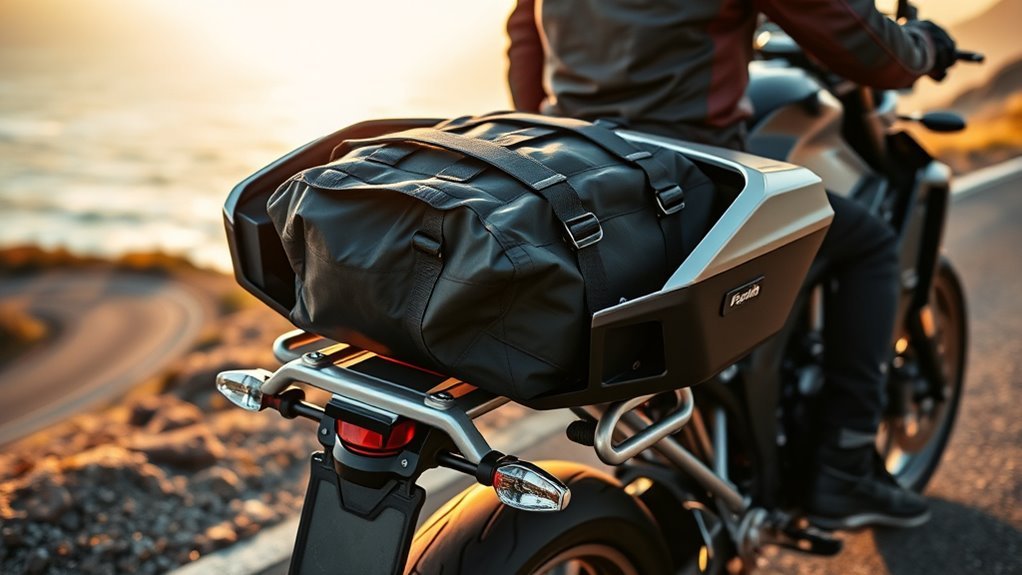
How do you pick a rack that fits your bike and riding style? You’ll assess materials—aluminum for lightness, steel for strength—and pick a design matching your riding: low-profile for sport bikes, sturdy platforms for touring.
Match rack dimensions to your luggage and seat geometry so weight’s centered. Prefer racks with secure attachment points and anti-corrosion finishes for longevity.
Consider quick-release or modular systems if you often switch setups. Check compatibility with aftermarket accessories like top cases or straps.
Finally, balance durability and weight: a well-chosen rack enhances handling, keeps cargo stable, and reduces fatigue on long rides.
Check Rack Capacity and Mounting Points
Before you load anything, check the rack’s weight limit and don’t exceed it.
Inspect all mounting points for cracks, loose bolts, or rust to guarantee they’re secure.
Make sure the rack’s design and attachment points match your bike’s frame so the load is properly supported.
Know Rack Weight Limit
When you load gear, don’t assume the rack can take it — check the manufacturer’s weight rating and the strength of the mounting points first. Know the listed static and dynamic load limits; static is the weight when stationary, dynamic is what holds while riding.
Add the weight of your rack, carriers, and straps to your cargo total. Distribute load evenly and keep heavy items low and centered to avoid altering handling.
If your luggage exceeds the rated limit, use alternative options like panniers or a trailer.
When in doubt, reduce weight — stability and safety matter more than capacity.
Inspect Mounting Integrity
Although the rack may look solid, you should inspect its mounting integrity every time you plan to carry gear. Check bolts, brackets, and welds for cracks, corrosion, looseness, or missing hardware. Verify fasteners are torqued to manufacturer specs and use thread locker where recommended.
Look for bent mounts or stress marks on the frame and rack interfaces. Confirm rubber or insulating pads are intact to prevent metal-on-metal wear.
If you find damage or movement, don’t improvise—repair or replace components before riding. Regular inspections reduce failure risk and keep your load secure on every trip.
Match Rack To Frame
After you’ve confirmed the mounts and fasteners are sound, make sure the rack itself matches your bike’s frame and load needs. You’ll check rated capacity, attachment geometry, and compatibility with frame materials. Don’t assume fit—measure mounting points, note clearance for suspension travel, and confirm weight limits stamped or in the manual.
If your frame is lightweight alloy or a trellis design, pick a rack engineered for it. Improper match risks stress fractures or handling issues. When in doubt, consult the manufacturer or a mechanic to verify that the rack and frame share safe load and mounting characteristics.
- Measure bolt spacing and clearance
- Confirm weight rating
- Match rack design to frame type
Decide What to Carry on the Rack vs. the Bike
Think about weight distribution first: put heavy items low and as close to the bike’s center as possible rather than out on the rack.
Keep weather‑sensitive gear and valuables under the seat or in waterproof, secure bags, and reserve the rack for bulky, nonfragile items.
That way you’ll keep stability and protect things that need extra security or dryness.
Weight Distribution Priority
When you decide what to put on the luggage rack versus what to keep on the bike, prioritize items that won’t upset balance or your center of gravity. Keep heavy, compact gear low and central—tools, spare parts, and dense batteries—so handling stays predictable.
Lighter, bulkier items go higher or in saddlebags. Secure everything to prevent shifting during braking or cornering. Check load limits and adjust suspension for added weight.
Reassess packing before every ride; small shifts change dynamics quickly.
- Heavy, dense items: low and centered
- Bulky, light items: higher or side-mounted
- Frequently accessed: keep within easy reach
Weather And Security Items
Because weather and security needs can change fast, you should decide which items sit on the rack and which stay on the bike before every ride. Keep bulky, weatherproof gear like a rain suit or insulated layers on the rack in dry, sealed bags so you can access them quickly without unpacking saddlebags.
Store smaller, high-value security items—wallet, keys, phone, lock keys—on your person or in a locked tank bag to reduce theft risk. Mount a compact cable lock or alarm within easy reach but off the rack.
Reassess placement for short stops, bad weather, or urban parking.
Distribute Weight for Stable Handling : Quick Steps
If you want predictable handling, pack heavier items low and centered over the bike’s centerline and keep light, bulky gear toward the rear or higher up only when necessary. You’ll balance weight so steering stays responsive and braking remains stable. Check that the load doesn’t shift when you brake or lean. Reassess after each stop and adjust before you ride.
Pack heavy items low and centered, keep bulky light gear rear or high, and check load security after stops.
- Place dense items (toolkit, spare parts) closest to the frame and as low as possible.
- Put gear you might need en route (rain jacket, maps) in accessible, mid-height compartments.
- Use symmetrical placement left-to-right to avoid pull or drift.
Secure Loads: Straps, Nets, Soft vs. Hard Luggage
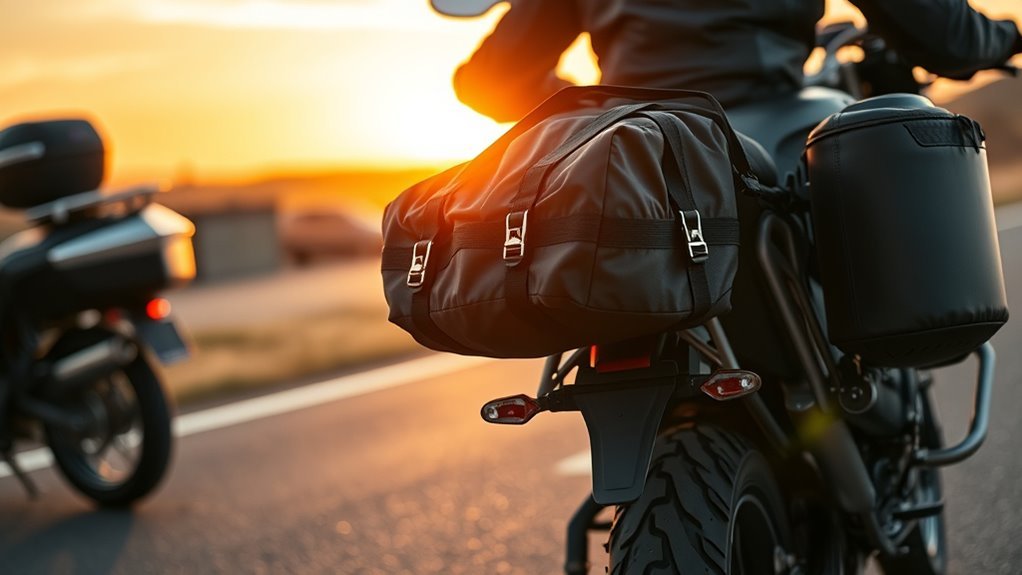
Although packing matters, how you secure that gear makes the biggest difference in safety and handling. Use rated motorcycle straps or cam-buckles—avoid worn elastic cords.
Anchor straps to solid points on the rack or frame, not to bodywork. Add a cargo net for irregular loads and to keep smaller items from shifting.
Choose soft luggage for flexible fitting and lower cost; pick hard cases for weatherproofing and better aerodynamics. Retrofit hard cases with internal tie-downs.
Check fasteners after short rides and retighten if needed. Keep weight low and centered, and inspect straps for chafing or stretch before every trip.
Adjust Tires and Suspension for Luggage Weight
Once your luggage is strapped down and centered, adjust your tires and suspension to match the added weight so the bike handles predictably. Check tire pressures and increase them within the manufacturer’s load range; underinflation makes steering sluggish and increases wear.
Raise rear preload or use stiffer springs if available to prevent sag and maintain ground clearance. Rebalance damping for stability over bumps; too soft causes bottoming, too firm reduces traction.
Test ride slowly and recheck settings after a short trip. Keep tools and a pressure gauge so you can fine-tune on the road.
- Check tire pressure ranges.
- Adjust rear preload.
- Set damping for stability.
Adapt Your Riding Technique With a Loaded Rack
When you ride with a loaded rack, expect the bike to turn, brake, and accelerate differently and adjust your technique accordingly: shorten your braking distances, brake progressively to avoid rear-wheel lockup, and roll on throttle more smoothly to prevent unsettling the load.
You should slow earlier for corners, widen your line slightly, and use gentler lean angles to reduce side forces on luggage. Shift weight forward when braking and sit more upright to maintain balance.
Accelerate gradually out of turns and avoid abrupt inputs. Anticipate bumps and crosswinds, and make small, deliberate steering corrections rather than sudden moves.
Inspect and Maintain Your Luggage Rack
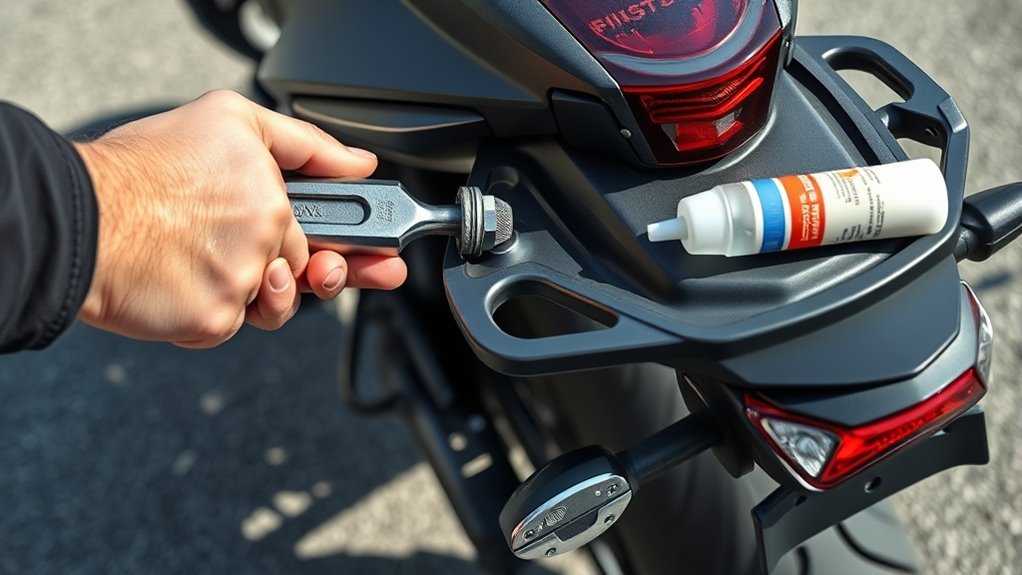
How often do you check your luggage rack? You should inspect it before every trip and after rough roads. Look for loose bolts, cracked welds, and corrosion; fix issues immediately to prevent failure. Clean and lubricate moving parts, and retorque fasteners to manufacturer specs. Replace worn straps and damaged mounts—don’t improvise.
- Check: bolts, welds, mounts for integrity and tightness.
- Maintain: clean, lubricate, and protect metal from rust.
- Replace: straps, fasteners, or racks at first sign of fatigue.
Regular inspections keep your rack reliable and your loads secure.
Common Loading Mistakes and How to Fix Them
Because improper loading changes your bike’s balance and puts parts at risk, you need to spot and correct common mistakes before you ride.
Don’t overload one side; shift heavy items to the center or use pannier balancing to equalize weight.
Avoid high-mounted, unstable bundles—place heavy gear low and forward to keep the center of gravity controlled.
Secure loose straps and compressible items so nothing flaps or shifts.
Check that fastenings won’t rub paint or wiring.
Reassess after short test rides and tighten as needed.
If handling feels off, unpack and redistribute until steering and braking return to normal.
Frequently Asked Questions
Can I Carry Liquids Like Fuel or Pressurized Cans on the Rack?
You shouldn’t carry liquids like fuel or pressurized cans on the rack; they risk leaks, fire, or explosion. Use approved containers, secure them upright in ventilated, crash‑proof boxes, and check local laws before transporting hazardous materials.
Are Aftermarket Top Cases Covered by Motorcycle Warranty?
Generally, aftermarket top cases aren’t covered by your motorcycle’s warranty; they can void parts of it if they cause damage. Check your warranty terms and ask the dealer—get approval or use manufacturer-approved accessories to avoid issues.
Can I Use Soft Luggage in Heavy Rain Without a Cover?
No, you shouldn’t—soft luggage will soak through. You’ll ruin contents unless it’s waterproofed, packed in dry bags, or covered. Use a rain cover or place sensitive items in sealed bags, and check seams and zippers.
How to Store the Rack When Not Using It for Months?
Store the rack indoors in a dry, cool place; you’ll clean and dry it first, apply light corrosion inhibitor, loosen fasteners slightly, cover it with breathable fabric, and check periodically for rust, damage, and secure fittings before reuse.
Can Pets Ride on a Luggage Rack if Properly Secured?
No — you shouldn’t let pets ride on a luggage rack even if secured. Racks lack proper support, restraint, and protection; your pet risks injury, stress, or falling. Use proper pet carriers designed for motorcycle transport instead.
Conclusion
You’ve picked the right rack, checked capacity, and spread weight where it belongs, so now ride smart. Double-check fastenings before every trip, adjust tire pressures and suspension for the load, and keep heavy items low and centered. Use proper straps or hard mounts, inspect attachment points regularly, and tweak your cornering and braking to suit the added mass. With routine maintenance and cautious riding, your luggage rack will stay secure and your trips safer.