Is 22 Inch Luggage Carry On? Airline Size Guide
You can usually bring a 22‑inch suitcase as carry‑on on many legacy carriers, but it depends on the airline, aircraft and whether the bag — including wheels and handles — fits their stated dimensions and weight limits. Low‑cost and some international airlines often have stricter size or weight caps, and narrow‑body jets may force sideways stowage or gate‑check. Measure and weigh your packed bag, and keep a smaller option handy if you want tips on making it fit.
Will My 22-Inch Suitcase Be Allowed as Carry-On?
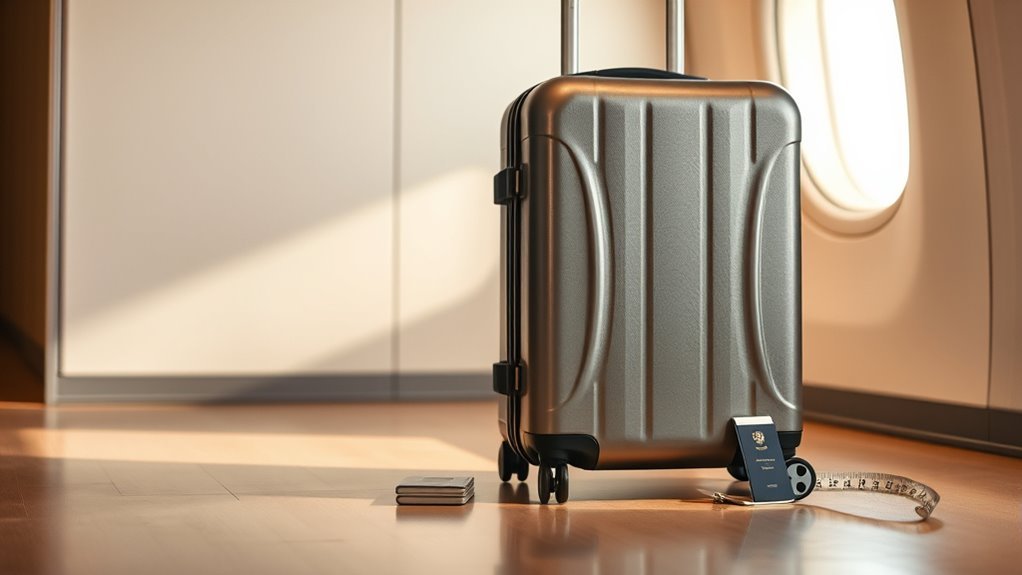
Because airlines set their own size limits, whether a 22‑inch suitcase qualifies as a carry‑on depends on the carrier and sometimes the aircraft, so you should check dimensions rather than just the inch measurement.
You’ll compare length, width, and depth against the airline’s stated maximum; wheels and handles count. If your bag fits the stated cubic envelope and weight rules, you’ll likely bring it onboard.
Budget and regional carriers often use smaller limits, so don’t assume universal acceptance.
At the gate, gate agents make final calls; if they deem it oversized, you’ll gate‑check or pay a fee.
Measure carefully and confirm before travel.
Airline Carry-On Definitions and Size Variation
Carry-on size limits aren’t universal, so you’ll want to check each airline’s specific dimensions. Some carriers measure length + width + height while others focus on linear inches or even just wheel-to-handle length, which explains the variation.
Measure your packed bag (including wheels and handles) to be sure it meets the airline’s stated limits.
Carry-On Size Limits
How big is “standard” carry-on luggage, really? You’ll usually see a 22 x 14 x 9 inch guideline—handles and wheels included—because airlines measure total dimensions. That’s a practical max for many U.S. carriers and international flights, but it’s not universal.
Weight limits can also apply: some low-cost and overseas airlines cap carry-ons by pounds or kilograms. Personal items (briefcases, backpacks) have smaller allowances and should fit under the seat.
You should measure your bag fully packed, confirm limits before travel, and consider a slightly smaller suitcase if you want guaranteed overhead-bin acceptance.
Airline Variations Explained
While many travelers assume a one-size-fits-all rule, airlines actually set their own carry-on dimensions, weight limits, and definitions of personal items—so what fits on one carrier might be too big or heavy for another. You should check each airline before you pack: low-cost carriers often have stricter size and weight caps, legacy carriers may allow slightly larger bags, and international rules vary. Know that “personal item” interpretations differ, too. Use this quick reference to compare typical limits.
| Airline Type | Typical Rule |
|---|---|
| Low-cost | Smaller, strict weight |
| Legacy | Moderate size, weight |
| International | Varies widely |
| Regional | Smaller cabins, strict |
Measuring Your Bag
Because airlines measure differently, you should measure your bag precisely before you fly: include wheels, handles, and any exterior pockets when you record height, width, and depth, and compare those numbers to the carrier’s published dimensions.
Use a rigid tape measure, press soft sides to their fullest extent, and measure from the furthest points. Note any expandable sections and whether the airline counts them expanded.
Record measurements in inches and centimeters. Keep a photo of the measurements for reference.
If your 22-inch case exceeds a carrier’s depth or width limits, consider swapping to a slimmer bag or checking it to avoid gate fees.
Which Dimensions Airlines Actually Measure (And Why)
When airlines check your carry-on, they’re usually looking at three measurements—height, width, and depth—because those determine whether the bag fits in overhead bins and under seats. You’ll find height counts the longest vertical edge, width is the side-to-side span, and depth covers front-to-back thickness, including wheels and handles.
Carriers prioritize total external dimensions to guarantee stowage and safety; some also enforce linear dimensions (sum of height, width, depth).
Cabin layout, bin design, and seat pitch drive these rules, so airlines measure the whole package rather than internal capacity or flexible expansions.
Measuring Your 22-Inch Suitcase the Airline Way
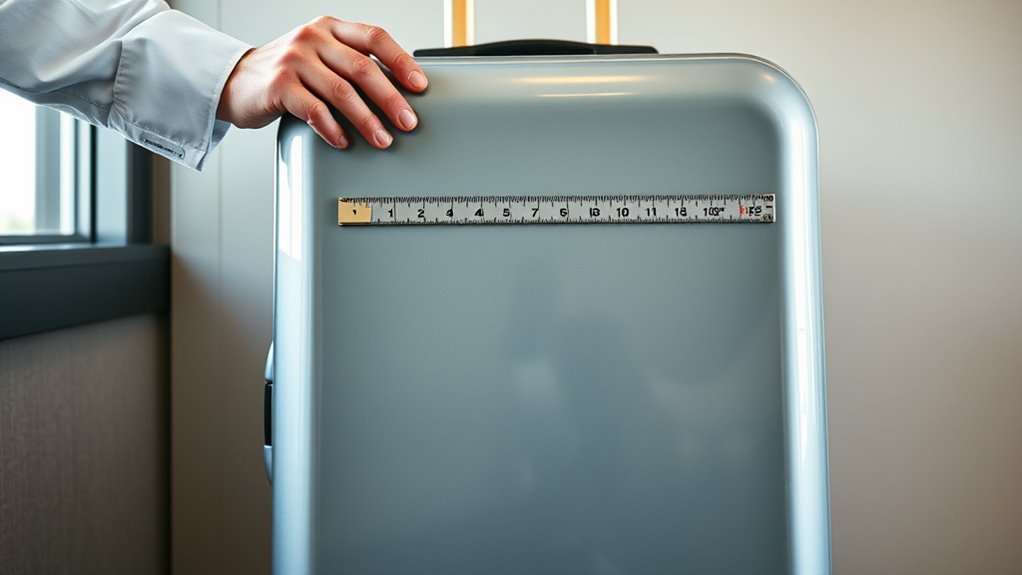
If you want your 22-inch suitcase to clear airline checks, measure it the same way carriers do: tally the external height, width, and depth—wheels and handles included—and compare the sum or individual dimensions to the airline’s limits.
Lay the bag flat for width and depth, extend telescoping handles fully for height, and measure from wheel tip to wheel tip. Use a rigid tape and round up to the nearest whole inch if needed.
Note whether the airline enforces linear dimensions (H+W+D) or separate limits. Record measurements before packing so you can adjust contents or swap bags if required.
Common 22-Inch Size Combos That Fail Checks
You’ll often think a 22-inch case fits the carry-on slot until you stuff it full and the dimensions swell.
Overpacked carry-on bags and models that list exterior sizes but hide protruding wheels or handles are the usual culprits that fail checks.
Before you board, measure the packed bag including wheels and handles to avoid surprises.
Overpacked Carry-On Bags
Though a 22-inch bag meets many airlines’ size rules, stuffing it beyond its designed capacity is the quickest way to fail a gate check. Gate agents will squeeze, measure, and sometimes reject bags that bulge or exceed depth limits.
You should pack strategically: distribute weight, compress clothes with packing cubes, and avoid rigid items like boots or bulky jackets that force seams outward. Know your bag’s true expandable depth and don’t rely on zipper give.
If your carry-on looks overstuffed, gate staff may tag it as checked and charge fees. Keep a slim spare tote for overflow essentials to stay compliant.
Non-Compliant Airline Dimensions
After packing carefully to avoid an overstuffed carry-on, remember that a listed 22-inch height doesn’t guarantee gate approval — airlines vary in how they measure and which dimensions they enforce.
You’ll fail checks when manufacturers list height but ignore depth and wheel or handle protrusions. Typical trouble combos: 22″ H × 15″ W × 10″ D with external wheels or 22″ H × 14″ W × 11″ D where depth includes side pockets.
Measure wheels, handles, and bumps. Compare to airline total linear inches or specific width/depth limits.
When in doubt, choose a slightly smaller profile or collapsible bag to avoid gate fees.
22-Inch Carry-On Rules: American, Delta, United
When you’re picking a 22-inch bag, check each airline’s size and weight limits—American, Delta, and United all allow similar maximum dimensions but differ on enforcement and weight rules.
So what fits one cabin might be measured or weighed differently at another gate. You’ll usually be fine with a standard 22-inch carry-on, but you should confirm specifics before flying.
- American: Typically 22 x 14 x 9 inches; gate agents may enforce rigidly on crowded flights.
- Delta: Similar dimensions; Delta can weigh bags for basic economy.
- United: Comparable size limits; gate checks happen if overheads fill.
22-Inch Carry-On Rules: Spirit, Frontier, Southwest
If American, Delta, and United each have their own quirks, low-cost carriers like Spirit, Frontier, and Southwest push rules differently and you’ll want to check specifics before you pack. You’ll find Spirit enforces smaller free personal items, Frontier charges for most carry-ons unless you buy a bundle, and Southwest includes one larger carry-on plus a personal item with no fee. Measure your 22-inch bag against each policy before heading to the gate.
| Airline | Free Carry-On? | Notes |
|---|---|---|
| Spirit | No (usually) | Personal item only |
| Frontier | No (usually) | Fees common |
| Southwest | Yes | One carry-on + personal item |
International 22-Inch Allowances by Region
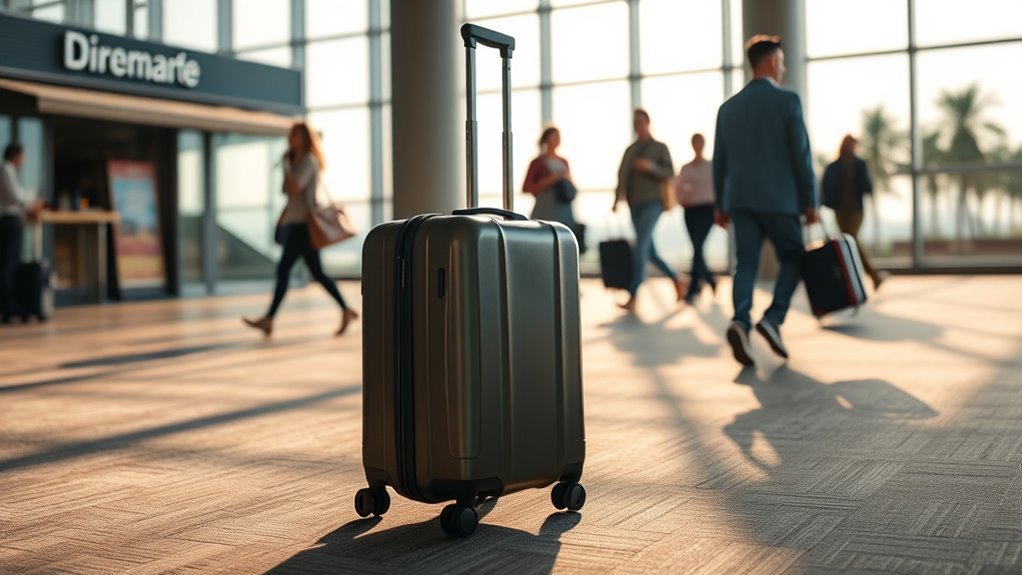
Across regions, airlines and airport authorities treat a 22-inch carry-on differently, so you’ll want to check the specific size and weight limits for your route before packing.
Across regions, carriers treat a 22-inch carry-on differently—always check size and weight limits before you pack.
You’ll often find Europe and North America allow 22-inch bags as carry-ons on legacy carriers, while budget airlines may restrict size or require gate check.
In Asia and the Middle East, allowances vary widely; some carriers have generous size but strict weight limits.
When planning, confirm both linear dimensions and kilogram/pound caps to avoid fees.
- Europe: legacy yes, low-cost varies.
- Asia: size ok, weight strict.
- Middle East: carrier-dependent rules.
Overhead Bin Size and 22-Inch Fit
Though overhead bins differ by aircraft type and carrier, you’ll usually need to match the bag’s linear dimensions to the available bin depth and height to guarantee a 22-inch case fits upright or sideways. Check airline specs and measure your packed bag — wheels and handles add length.
On narrow-body jets, bins can be shallow, forcing you to stow a 22-inch flat or sideways; wide-bodies usually accept upright placement.
Boarding early improves your chance of finding space at eye level. If bins look tight, remove bulky items or collapse handles to save inches.
Always confirm dimensions before travel.
Why Soft-Sided 22-Inch Bags Sometimes Fit Better
Because soft-sided 22-inch bags compress and flex, they often squeeze into cramped overhead bins or under seats where rigid shells won’t. You can adjust placement and squeeze around obstructions like handles or bin ribs.
Soft-sided 22-inch bags compress and flex to squeeze into cramped bins and tuck around obstructions with ease.
You can manipulate fabric to fit tight spaces, tuck odd corners, and slide the bag in at an angle. Soft sides also reduce scuffs from rubbing and let you stash a thin jacket or purchase on top.
Expect less predictable protection than hard shells, though. Consider structure, material stretch, and zipper strength before relying on flexibility for boarding.
- Compressibility
- Adaptability
- Trade-offs
Packing to Make a 22-Inch Bag Compliant
If you want a 22‑inch bag to meet strict carry‑on limits, pack with intention: prioritize essentials, use compression and packing cubes to keep volumes low, and place heavier items near the wheels so the bag sits within airline size and weight tolerances.
Roll clothes to save space, tuck socks and belts into shoes, and limit shoes to one or two pairs. Wear your bulkiest jacket and boots to reduce packed bulk.
Use travel‑size toiletries and a lightweight electronics organizer. Check airline weight limits before you zip, and adjust by removing nonessentials rather than overcompressing fragile items.
When Airlines Will Gate-Check Your 22-Inch Bag
You’ll want to check each airline’s size restrictions because a 22-inch bag can meet some carriers’ limits but exceed others.
If the gate area is crowded or overhead bins fill, airlines will typically gate-check bags at boarding, based on their timing policies.
Know the carrier’s cutoff and arrive early so you can avoid surprises at the gate.
Airline Size Restrictions
When airlines set cabin-bag rules, they’re balancing overhead-bin space, aircraft type, and boarding procedures — and that’s exactly what determines whether your 22-inch suitcase stays with you or gets gate-checked.
You’ll find size limits vary: some carriers allow 22 inches including wheels; others limit height or combined dimensions. Check specific airline dimensions before you travel, because strict enforcement on smaller planes or full flights means your bag may be turned away at the gate.
- Regional jets often have tighter maximums and smaller bins.
- Low-cost carriers may enforce exact measurements.
- International carriers vary by aircraft class.
Gate-Check Timing Policies
Because gate agents balance bin space, flight loads, and turnaround times, they’ll decide to gate-check your 22-inch bag when overheads are full, the aircraft is a regional jet with smaller bins, or boarding needs to speed up for on-time departure.
You’ll also see gate-checks if the flight is oversold for carry-ons, crew requests extra space for priority items, or connection logistics require checked placement.
If you board late, your bag’s risk increases. To avoid gate-checking, stow smaller items under the seat, board early, or choose carry-on priority.
Gate agents tag bags for retrieval at baggage claim or the jetbridge.
How Status, Fare Class, and Aircraft Change Rules
If you’ve got elite status, a flexible fare, or are flying on a larger aircraft, the rules about bringing a 22-inch bag as carry-on can change noticeably. You’ll often get priority boarding and relaxed size enforcement, and flexible fares may include a full-size carry-on even on basic-fare routes.
Have elite status, a flexible fare, or a bigger plane? You’ll often get priority boarding and relaxed carry-on rules.
Larger aircraft like widebodies usually have more overhead space, making a 22-inch bag fit comfortably.
- Elite status: priority boarding and lenient gate checks reduce risk of your bag being checked.
- Fare class: premium tickets typically include full carry-on allowance.
- Aircraft type: widebodies and some narrowbodies offer better overhead capacity.
Airport Tricks: Sizers, Agents, and Disputes
When you face a gate sizer, slide your bag in at the angle that shows it’s within the frame and stay calm if it feels snug.
If an agent says it’s too big, politely ask them to re-check with the bag fully packed as you carry it, or request a supervisor if needed.
Knowing a few clear dispute tactics—like showing measurements or your boarding pass—can save you time and fees.
Gate Sizer Techniques
Ever wondered how gate agents decide which bags actually fit as carry-on? You watch them slide suitcases into rigid sizers and make quick calls. They check dimensions, wheel and handle allowances, and whether the bag compresses under pressure. You can observe and adapt to avoid surprises.
- Measure your packed bag at home, including wheels and handles, to match airline limits.
- Use soft-sided luggage or removable items so it compresses into the sizer.
- Present your bag calmly and empty quick-access pockets if an agent asks to reposition it.
Knowing the routine helps you pass the sizer test.
Agent Dispute Strategies
Because gate agents make quick calls under pressure, you’ll want a calm, practical approach when a carry-on dispute starts. Stay polite, state facts—dimensions, weight, bag model—and show proof like manufacturer specs or a receipt on your phone.
Ask brief clarifying questions: “Is that the measurement limit?” or “Can we remeasure?” If you’re within limits, assert that firmly but respectfully.
Offer to gate-check only if necessary, or suggest placing item in overhead differently. Avoid arguing loudly; request a supervisor if needed.
Keep tone steady, document names or badge numbers, and note any resolution before boarding.
When to Choose a Smaller Carry-On Instead
If your trip includes crowded trains, short connections, or regional flights with strict size limits, pick a smaller carry-on to avoid gate-checking and delays. You’ll move faster through terminals, fit into overhead bins on smaller aircraft, and reduce the chance of last-minute repacking.
Choose compact luggage when you expect lots of walking, tight transfers, or multiple transport modes. Prioritize essentials and easy access.
- Opt for a cabin-size bag that fits airline dimensions and overhead spaces.
- Use a lightweight soft-sided bag to squeeze into tight spots.
- Pack versatile clothing and minimize bulky items to stay flexible.
Alternatives to Checking: Compression, Personal Item, Shipping
When you want to skip checked baggage fees or avoid waiting at baggage claim, consider three practical alternatives: compressing what you pack to save space, maximizing a roomy personal item, or shipping items ahead of time.
Use compression bags or rollers to flatten clothing and free inches in a 22-inch case, letting you fit essentials without checking.
Compress clothes with bags or rollers to free inches in a 22-inch case and skip checked baggage.
Treat your personal item as a second carry-on—choose a structured tote or backpack and pack shoes, electronics, and toiletries smartly.
For bulky or nonessentials, compare shipping vs. airline fees; door-to-door services can be cheaper and spare you airport hassle.
Quick Decision Flow: Will a 22-Inch Fit?
Wondering whether a 22-inch carry-on will work for your trip? Use this quick decision flow to decide: check airline limits, weigh your packed bag, and consider gate-check risks.
If your airline allows 22 x 14 x 9 inches and your bag measures under that, you’re good. If dimensions exceed limits but weight’s fine, expect gate-checking.
Tight on space? Swap items into a personal item or compress clothing. Follow the steps below to act fast.
- Measure exterior dimensions and compare to airline policy.
- Pack, weigh, and re-measure stuffed bag.
- Choose carry, gate-check, or shift items.
Frequently Asked Questions
Can I Gate-Check a 22-Inch Bag for Free on International Flights?
Usually you can gate-check a 22-inch bag for free on international flights if the airline allows it and overhead bins are full, but policies vary by carrier and fare, so check your airline’s rules before you travel.
Does a 22-Inch Backpack Count as a Carry-On or Personal Item?
A 22-inch backpack usually counts as a carry-on if it fits airline size limits and overhead bins; otherwise it’s a personal item if it fits under the seat. Check your airline’s specific dimensions and rules before flying.
Are Hard-Shell 22-Inch Suitcases More Likely to Be Damaged in Overhead Bins?
Yes — hard-shell 22-inch suitcases can crack or scratch in overhead bins if they’re jostled or stacked; you should use padding, avoid overpacking, choose impact-resistant materials, and gate-check when bins look crowded to reduce damage.
Do Low-Cost European Carriers Accept 22-Inch Carry-Ons on Regional Jets?
Mostly no — you’ll often face restrictions. Low-cost European carriers usually limit carry-ons on regional jets; they’ll enforce smaller size/weight rules, charge fees, or require gate-checking, so pack smaller or expect extra costs.
Will TSA Security Measurements Affect Whether My 22-Inch Bag Fits as Carry-On?
Yes — TSA security checks won’t decide carry-on allowance; they’ll screen contents and may measure bulky items. Airlines set size limits, so you’ll still need your 22-inch bag to meet the carrier’s dimensions at gate.
Conclusion
You sometimes will get away with a 22-inch suitcase as a carry-on, but it depends on the airline, aircraft and how strict gate agents are. Measure length, width and depth including wheels and handles, and compare to the carrier’s measured limits — not just the advertised “22-inch” tag. If it looks tight, use a smaller bag, compress clothes, or stow heavier items in a personal item to avoid gate-checking or fees.