Is Tsa Precheck Only for Us Citizens
No — TSA PreCheck isn’t strictly limited to U.S. citizens. You can apply if you’re a U.S. citizen, national, or lawful permanent resident; noncitizens can qualify through Global Entry or other trusted-traveler agreements if their country participates. You’ll need original immigration or passport documents, pass background checks, and attend an enrollment appointment to get a Known Traveler Number. Eligibility hinges on status, bilateral agreements, and correct reservation data, and more details follow if you want to know how to proceed.
Quick Answer: Is TSA PreCheck Only for U.S. Citizens?

Wondering whether TSA PreCheck is limited to U.S. citizens? You aren’t required to be a U.S. citizen to apply. U.S. citizens, U.S. nationals, and lawful permanent residents qualify.
Certain nonimmigrant visa holders from participating countries may also be eligible through partnerships or Global Entry reciprocity programs. You’ll need to meet eligibility criteria, pass a background check, and complete an in-person enrollment appointment.
Approval grants expedited security benefits at participating airports, but enrollment isn’t guaranteed. Check current DHS and TSA guidance before applying, since rules and participating categories can change and specific visa types or countries may affect eligibility.
How TSA PreCheck Works in One Sentence
You apply and enroll by meeting the eligibility requirements and completing a background check and fingerprinting.
Once approved, you’ll get a Known Traveler Number that you add to reservations to access expedited screening lanes.
At security, you’ll keep shoes and light jackets on and can leave laptops and compliant liquids in your bag for faster processing.
Eligibility And Enrollment
How do you get TSA PreCheck? You apply online, complete a short form, then schedule an in-person appointment for fingerprinting and ID verification at an enrollment center.
You’ll need valid identification and proof of citizenship or lawful presence; U.S. citizens, U.S. nationals, and certain lawful permanent residents qualify.
After a background check and fee payment, you receive a Known Traveler Number (KTN) if approved, which you add to reservations to access PreCheck lanes.
Enrollment typically lasts five years, after which you can renew online or in person.
Denials include unresolved criminal issues or incomplete documentation.
Screening Process Overview
After you enroll and get your Known Traveler Number, TSA PreCheck speeds you through a simplified security lane where you keep shoes, belts, and light jackets on and leave laptops and compliant liquids in your bag.
You’ll typically see a dedicated PreCheck line at participating airports; present your boarding pass with the PreCheck indicator, place carry-ons on the belt, and step through the metal detector or advanced imaging scanner.
Officers may conduct random additional screening, but most travelers pass without removing items. The process reduces wait times and stress, letting you move to your gate faster while maintaining security standards.
Who Can Apply Directly to TSA PreCheck?
Although many travelers qualify, only certain people can apply directly to TSA PreCheck: U.S. citizens, U.S. nationals, and lawful permanent residents who meet basic eligibility requirements. You’ll need to complete an online application, schedule an in-person appointment, provide identity documents, and submit fingerprints.
Approval gives you a Known Traveler Number for participating airlines.
- You must be at least 13 (children under 13 travel with eligible adults).
- You’ll undergo a background check and pay the nonrefundable fee.
- Certain criminal histories or immigration issues can disqualify you.
Follow instructions closely to avoid delays and guarantee your application proceeds smoothly.
Why Lawful Permanent Residents Qualify for PreCheck
Lawful permanent residents qualify for TSA PreCheck because they hold a stable, verifiable immigration status that lets the Transportation Security Administration perform the same background checks it runs on U.S. citizens.
You can apply since your green card confirms lawful presence and identity, enabling TSA to verify criminal history and immigration records during vetting. You’ll submit biographic data, fingerprints, and payment, then attend an enrollment appointment.
If cleared, you’ll receive a Known Traveler Number to add to reservations. Renewal follows similar steps.
You should maintain accurate records and report changes, as eligibility depends on ongoing verification of your lawful permanent resident status.
How Global Entry Gives PreCheck to Noncitizens

You can get TSA PreCheck through Global Entry even if you’re not a U.S. citizen, provided you meet the program’s eligibility criteria and international partner agreements.
Check the Global Entry eligibility overview to see if your country is accepted and what documentation you’ll need.
If you qualify, you’ll apply online, attend an in-person interview, and—upon approval—have PreCheck added to your record.
Global Entry Eligibility Overview
Curious how non-U.S. citizens can get TSA PreCheck through Global Entry? You can qualify if your country participates in a trusted traveler arrangement or if U.S. Customs and Border Protection admits you after vetting.
Global Entry grants expedited customs and often includes TSA PreCheck eligibility for air travel within the U.S., so you’ll enjoy shorter security lines.
Eligibility hinges on background checks, passport status, and admissibility under CBP rules. Remember, approval isn’t automatic and can be revoked for violations.
Key points to contemplate:
- Participating countries and reciprocal agreements matter
- Background checks and admissibility criteria
- Trusted traveler benefits beyond PreCheck
How Noncitizens Apply
If your country participates in a trusted-traveler arrangement or CBP approves you after vetting, here’s how to actually apply for Global Entry and gain TSA PreCheck eligibility: start by creating a Trusted Traveler Programs (TTP) account.
Complete the Global Entry application with accurate passport and residency details, pay the nonrefundable fee, and submit to the required background checks and identity verification.
After conditional approval, schedule an enrollment interview at a Global Entry center, bring your passport and any residency documents, answer questions truthfully, and provide fingerprints and a photo.
Once approved, your Known Traveler Number links to airline reservations for PreCheck.
Which Non‑U.S. Nationals Are Eligible for Global Entry?
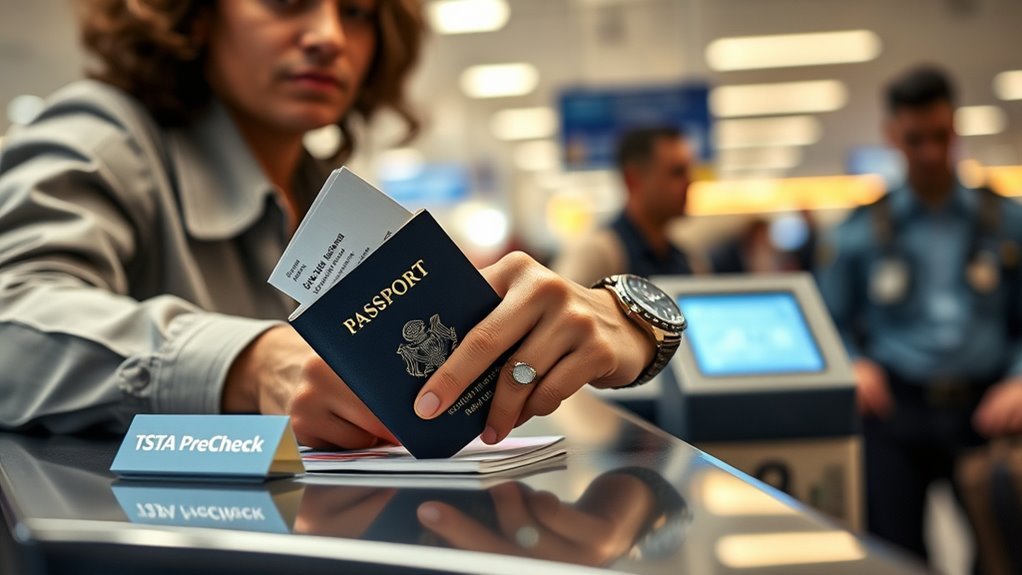
Several non-U.S. nationals can apply for Global Entry through trusted-traveler agreements or U.S. immigration programs. If you’re a lawful permanent resident, citizen of certain partner countries, or hold specific U.S. visas, you may qualify.
Eligibility depends on reciprocity, background checks, and participating countries’ lists. Don’t assume all foreign nationals are eligible; confirm current agreements on the CBP site.
Typical eligible groups include:
- Citizens of participating countries (e.g., UK, Germany, Japan) with program inclusion
- U.S. lawful permanent residents (green card holders)
- Holders of qualifying U.S. visas or status under CBP rules
Check CBP for updates and exact requirements.
How to Apply for Global Entry as a Noncitizen
Now that you know which non‑U.S. nationals may qualify, here’s how to apply for Global Entry as a noncitizen. You’ll create a Trusted Traveler Programs (TTP) account, complete the application, and pay the fee. After conditional approval, schedule an enrollment appointment. Bring required documents proving identity and immigration status.
| Step | Action | Document |
|---|---|---|
| 1 | Create TTP account | Passport |
| 2 | Complete application | Visa/ESTA |
| 3 | Pay fee | Payment proof |
| 4 | Await conditional approval | Email notice |
| 5 | Schedule appointment | Appointment confirmation |
What Happens at the Global Entry Enrollment Appointment?
At your Global Entry enrollment appointment you’ll complete an interview, have your photo taken, and provide fingerprints for a background check.
Bring your passport and any required ID or residency documents to verify your identity.
The officer will confirm your application details and tell you the final steps for approval.
What To Expect
When you arrive for your Global Entry enrollment appointment, expect a short, structured process that verifies your identity, checks your documents, collects fingerprints, and completes a brief interview with a CBP officer.
You’ll walk through steps quickly, so stay focused and answer questions directly. Officers confirm travel history, eligibility, and purpose for enrollment; they may ask about past convictions or customs issues.
You won’t face searches beyond standard procedures unless something flags. Afterward, you’ll get enrollment approval details and instructions for using Global Entry kiosks.
- Fingerprints and photo taken
- Brief interview with eligibility questions
- Timing and kiosk usage explained
Required Documents
Before your Global Entry enrollment appointment, gather the documents you’ll need to prove your identity and eligibility so the check-in goes smoothly.
Bring your passport (passport card if applicable) and a valid driver’s license or state ID.
If you’re a naturalized citizen, include your Certificate of Naturalization.
Noncitizens should bring their passport and permanent resident card or visa documentation.
Have your conditional approval letter or appointment confirmation ready, and copies of any name-change documents if names differ across records.
Original documents are required for verification; photocopies won’t suffice.
Keep everything organized in one folder to save time at the enrollment center.
Documents Noncitizens Must Bring for Global Entry
If you’re a noncitizen applying for Global Entry, bring documents that prove your identity, immigration status, and eligibility for the program. You’ll need originals and copies, and make sure names match across documents.
Present current passports, visa pages if applicable, and your permanent resident card or employment authorization card when relevant.
Bring proof of residency or entry history if requested, like I-94 records or recent U.S. entry stamps.
Electronic confirmations (like your Trusted Traveler appointment) and any application receipts help speed processing.
- Valid passport (current)
- Appropriate U.S. immigration document (e.g., Green Card)
- I-94 or visa/entry evidence
Background Checks and Disqualifying Factors for Noncitizens
Because Global Entry applicants undergo federal background checks, you should expect agents to review your criminal history, immigration records, and any past customs or border violations. You’ll be screened for serious offenses, recent arrests, convictions, deportations, or removals that could bar approval.
Minor infractions mightn’t automatically disqualify you, but honesty on your application matters—misrepresentation is a common reason for denial. Ongoing immigration proceedings, outstanding warrants, or violations of re-entry rules typically prevent enrollment.
If denied, you’ll get a reason and can appeal or reapply after resolving underlying issues; consult legal counsel if records are complex.
How Other Trusted Traveler Programs Link to PreCheck (NEXUS, SENTRI)
Your Global Entry background check and eligibility status directly affect whether you’ll get TSA PreCheck benefits through other trusted-traveler programs like NEXUS and SENTRI. If you’re approved for Global Entry, you often receive PreCheck eligibility automatically.
Global Entry approval often grants automatic TSA PreCheck eligibility, and your background check directly affects benefits across NEXUS and SENTRI.
NEXUS and SENTRI members may also receive PreCheck if their membership is linked and their status is active. Keep your PASSID/Known Traveler Number updated when booking.
Note that enrollment interviews, biometrics, and status renewals all influence access.
- Link memberships by adding your Known Traveler Number to profiles.
- Maintain eligibility by reporting changes and renewing on time.
- Expect checks at enrollment and at kiosk or gate.
Which Visa Holders Might Indirectly Get PreCheck?
If you hold certain visas, you might qualify for Trusted Traveler Programs that include PreCheck benefits. For example, some Global Entry-approved visa holders get expedited processing that can extend to PreCheck.
And certain work visa holders may be eligible to enroll through program-specific pathways. Check eligibility rules for each Trusted Traveler program to see if your visa type lets you apply.
Trusted Traveler Program Eligibility
When you’re exploring whether a visa might indirectly qualify you for TSA PreCheck through a Trusted Traveler Program, focus on which noncitizen statuses are eligible for Global Entry, NEXUS, or SENTRI—since membership in those programs generally gives PreCheck benefits for participating airlines.
You can often qualify if your immigration status allows long-term residency or reciprocal program participation. Eligibility depends on country agreements, lawful permanent residency, or certain visa classes tied to steady U.S. presence.
Check program-specific rules and application requirements before applying.
- Lawful permanent residents (green card holders)
- Citizens of participating foreign countries
- Certain long-term visa holders with program approval
Global Entry Visa Benefits
Many visa holders can get Global Entry—and with it indirect TSA PreCheck—if their status qualifies under program rules or bilateral agreements. You’ll most often see this for lawful permanent residents, nationals of participating countries, and certain long-term visa classes approved by U.S.
If you hold one of those statuses, you can apply for Global Entry, attend an interview, and, if approved, receive Known Traveler Number benefits that include PreCheck on participating airlines.
Check eligibility lists and country agreements before applying. Note that approval hinges on background checks, admissibility, and program discretion—having a visa doesn’t guarantee enrollment.
Work Visa Enrollment Options
Beyond nationals and permanent residents, certain work visa holders may also qualify for Global Entry—and by extension, TSA PreCheck—through specific program rules or bilateral arrangements. If you hold a qualifying work visa, you can apply for Global Entry after confirming eligibility; approval gives you expedited airport screening domestically.
Eligibility often hinges on your country of citizenship, visa classification, and reciprocity agreements. Expect background checks, an interview, and fees. Processing isn’t guaranteed, and status can be revoked for violations.
- Check your visa type and country agreements.
- Prepare documents for background checks and interview.
- Monitor program updates and reciprocity changes.
Which Countries Have PreCheck Partnerships With the U.S.?
About a dozen countries currently have formal arrangements that let some of their citizens use TSA PreCheck lanes when flying to or from the U.S. You’ll find partnerships mainly with trusted allies in Europe, Asia, and the Pacific — think the United Kingdom, Japan, Australia, South Korea, and several EU members.
Eligibility usually depends on each nation’s vetting standards and reciprocal agreements, so not all citizens qualify automatically. If you hold one of these partner-country passports, check your government’s enrollment program and the U.S. Customs and Border Protection guidance to confirm whether you can access PreCheck benefits.
How Bilateral Agreements Affect Noncitizens’ PreCheck Access
You should know that some countries have bilateral agreements with the U.S. that let their vetted travelers use PreCheck lanes. Those agreements set eligibility criteria based on reciprocal security vetting and data-sharing.
Next, we’ll look at which partnerships qualify noncitizens and how to apply if you’re from one of those countries.
Bilateral Agreements Overview
When the United States signs a bilateral security or trusted-traveler agreement, it can open pathways for noncitizens from that partner country to join TSA PreCheck or similar expedited programs. You’ll see formal arrangements outline data-sharing, vetting standards, and reciprocal privileges that let eligible travelers enjoy expedited screening.
These agreements don’t automatically enroll everyone; they create frameworks for cooperation and program access. You should check specific partner-country terms and implementation timelines.
Practical effects vary by agreement scope, mutual requirements, and agency decisions, so stay informed through official announcements before assuming eligibility.
- Data-sharing and vetting alignment
- Reciprocal program privileges
- Implementation timelines and limits
Eligibility Through Partnerships
Although bilateral agreements set the stage, they don’t automatically give every foreign traveler access to TSA PreCheck; instead, they create specific pathways by aligning vetting standards, data-sharing protocols, and eligibility rules between the U.S. and partner countries.
You’ll find that eligibility depends on reciprocal approval: your country must meet security benchmarks and agree to share biometric and criminal-history data. Even then, only travelers enrolled in the partner program or nominated by approved carriers qualify.
You should check whether your passport country participates, what enrollment steps apply, and whether airlines can submit your nomination before assuming PreCheck benefits.
How Diplomatic and Military Travel Interacts With PreCheck
Because diplomatic and military travel often follows its own security protocols, PreCheck eligibility and usage can work differently for service members and diplomats than for typical civilian travelers. You may already have expedited lanes through military ID, diplomatic credentials, or special mission arrangements that bypass standard PreCheck enrollment.
Still, when you’re eligible for Global Entry or TSA PreCheck, you can use those benefits on eligible flights, but procedures vary by status and airport. Confirm with your unit’s travel office or the State Department’s consular services before relying on PreCheck.
- Check credential-based lane access at your departure airport
- Carry proper ID and orders or diplomatic passport
- Verify enrollment and traveler number on reservations
How Airlines Trigger a PreCheck Mark on Boarding Passes
When you book a flight, the airline checks your Known Traveler Number or passenger status against TSA’s systems to confirm eligibility.
If you’re approved, the airline includes a specific code (like “TSAPRECHK” or a PASSENGER DATA field) in the boarding-pass data that signals the checkpoint scanners.
You’ll see the PreCheck indicator on your print or mobile boarding pass when those data triggers are set.
How Airlines Verify Eligibility
If you’re enrolled in TSA PreCheck or have another eligible status, airlines trigger the PreCheck indicator on your boarding pass by matching your Known Traveler Number (KTN) or PASSID to your reservation and transmitting that data to the TSA via the Secure Flight/Passenger Data feed. This verification happens at booking, check‑in, or during reservation updates, so entering your KTN correctly and ensuring your name matches your government ID is essential.
You’ll also need the airline to accept your enrollment—some carriers require the KTN in their system before issuing the mark. Common verification steps include:
- KTN/PASSID entry at booking or check‑in
- Name matching against government ID and Secure Flight data
- Airline systems flagging eligible passengers before boarding pass issuance
Boarding-Pass Data Triggers
Now that you know how airlines verify eligibility using your KTN and name, let’s look at the specific boarding-pass data that actually triggers the PreCheck mark.
When you book, the airline embeds Known Traveler Number, name format, DOB, and TSA-assigned indicator in the reservation.
At check-in, the airline sends a Secure Flight Passenger Data message and a PASSENGER PRESCREENING indicator to the boarding-pass system.
If the match succeeds, the system adds the “TSA PRE✓” marking and barcode flags for expedited lanes.
If data mismatches or fields are missing, you won’t get the mark even if you’re eligible.
When Foreign Airlines Can or Can’t Add PreCheck
Although foreign carriers can’t unilaterally assign PreCheck to passengers, they can include Known Traveler Numbers and PreCheck indicators when operating on U.S.-domestic or U.S.-bound itineraries that participate in the TSA PreCheck program and meet DHS security vetting requirements.
You should know when they can add PreCheck: if the airline participates in the U.S. program, if your reservation contains a valid KTN, and if the flight segment falls under TSA-covered operations.
Airlines also can’t add PreCheck for nonparticipating segments or without vetted traveler data. Check boarding passes and flight details to confirm the indicator before you travel.
- Confirm airline participation
- Verify KTN on reservation
- Inspect boarding pass indicator
How ESTA or Visa Waiver Status Affects Eligibility
Travelers using the Visa Waiver Program with an approved ESTA still need a Known Traveler Number enrolled through a U.S. Trusted Traveler Program to receive TSA PreCheck benefits.
ESTA approval alone doesn’t grant TSA PreCheck—you must join a Trusted Traveler program and add your Known Traveler Number.
If you entered the U.S. under ESTA, that status alone doesn’t grant PreCheck; you must apply to Global Entry, NEXUS, or SENTRI, pass vetting, and add the KTN to reservations.
Nonimmigrant visa holders follow the same path.
Also verify your passport—if passport cards or foreign passports are used—matches the identity in your Trusted Traveler account.
Airlines need the KTN on your booking to transmit PreCheck eligibility at screening.
Why You Might Still See No PreCheck Even With Global Entry
Even with Global Entry, you mightn’t see TSA PreCheck on every boarding pass because several administrative or data-matching steps can fail between your Trusted Traveler profile and the airline’s reservation.
You can still be eligible yet miss the marker if the airline didn’t receive your Known Traveler Number (KTN), your reservation used a different name or frequent-flier account, or the TSA batch check didn’t flag your flight.
Check these common causes:
- Reservation name mismatch or missing KTN when booking.
- Airline systems failing to transmit the PreCheck indicator to TSA.
- Recent enrollment updates not synced across databases.
What to Do If You Unexpectedly Get PreCheck on Your Boarding Pass
If you suddenly see TSA PreCheck on your boarding pass, don’t assume everything’s automatic—confirm a few details before relying on it at the airport.
First, verify the passenger name matches your ID; mismatches can block you from the lane. Check the flight date and carrier code to ensure the pass applies to this trip.
If you’re traveling with minors or unusual items, know that rules still apply and you may be redirected.
Keep your ID and boarding pass handy and be prepared to move to the regular security line if agents deny access.
Contact airline staff promptly if something looks wrong.
How to Find and Check Your Known Traveler Number (KTN)
When you’re unsure why PreCheck showed up unexpectedly, check your Known Traveler Number (KTN) next—it’s the easiest way to verify eligibility on your reservation. Look up your KTN in your TSA PreCheck account or membership documents, and copy it precisely.
Verify the KTN on your airline reservation before travel to avoid surprises.
- Check your TSA.gov account or approval email for the KTN.
- Confirm the KTN on your boarding pass or reservation details.
- Call the airline if the KTN looks missing or incorrect; they can advise.
Keep the number handy and accurate to ensure smooth screening.
Adding Your KTN to Airline Profiles and Reservations
Before booking or as soon as you log into your frequent‑flyer account, add your Known Traveler Number (KTN) to your airline profile and any existing reservations so TSA PreCheck is applied automatically at check‑in.
Update each passenger record with the KTN and verify that name formats match your ID exactly.
When booking, enter the KTN in the designated field or in the traveler’s profile so future trips inherit it.
If you booked through an agent or third‑party site, contact the airline to append your KTN.
Always check boarding passes for the TSA PreCheck indicator; if it’s missing, call the airline before departure.
How Travel Routes and Airports Affect PreCheck Lane Availability
Because TSA PreCheck availability depends on where you fly and which carrier you use, it helps to check your route and airport before you travel. You’ll find PreCheck lanes at many but not all U.S. airports, and some international departures don’t offer them.
Smaller airports or certain terminals may lack dedicated lanes, so confirm during booking or on your airline’s site. Connection airports matter too—your boarding pass must show PreCheck for each checked segment.
- Check airline participation and terminal maps before you book.
- Verify PreCheck on each boarding pass for connections.
- Prefer carriers with consistent PreCheck service.
Cost Comparison: TSA PreCheck vs Global Entry for Noncitizens
If you’re weighing enrollment options as a noncitizen, compare TSA PreCheck and Global Entry on price and what each gives you.
TSA PreCheck costs $78 for five years and speeds domestic security lines, letting you keep shoes and laptops in bags at participating US airports.
Global Entry costs $100 for five years, includes expedited customs reentry into the US, and also grants TSA PreCheck benefits when eligible.
As a noncitizen, eligibility for Global Entry varies by country and may require reciprocal agreements; TSA PreCheck accepts some lawful permanent residents and certain visa holders.
Decide by travel patterns: domestic versus frequent international reentry.
Typical Timelines and Wait Times for Noncitizen Applicants
When you’re a noncitizen applying for TSA PreCheck, expect application processing times to vary by background checks and workload.
Enrollment appointment waits can add days to weeks depending on your location and available slots.
Also plan for possible renewal or transfer delays if records need extra verification.
Application Processing Times
Although processing times can vary, noncitizen applicants usually see straightforward timelines for TSA PreCheck if they’ve submitted complete documentation and attended their enrollment appointment.
You’ll generally get a conditional response within days, and final approval or denial typically arrives within a few weeks to a couple of months, depending on background checks and workload.
Expect email or online status updates; you should monitor the application portal and keep contact info current.
If issues arise, respond promptly to requests for additional documents to avoid delays.
- Typical initial response: 3–7 days
- Common approval window: 2–8 weeks
- Delays: background checks or missing paperwork
Enrollment Appointment Waits
How long will you wait for an enrollment appointment? If you’re a noncitizen, typical waits vary by location and season. Urban centers usually offer appointments within a few days to two weeks; smaller or high-demand centers can push waits to several weeks.
Walk-in availability is limited and unpredictable. You can check appointment slots online and sign up for cancellations to shorten waits. Bring required documents to avoid rescheduling.
If you need faster service, consider alternative enrollment centers in nearby cities. Keep expectations flexible: processing capacity, staffing, and travel seasons drive most delays.
Renewal And Transfer Delays
Wondering how long renewals or transfers take for noncitizens? You’ll often wait longer than citizens because additional document checks and background verifications add steps. Typical timelines range from a few weeks to several months depending on workload and complexity.
You can speed things up by submitting complete, accurate paperwork and responding promptly to requests.
- Expect initial processing of 2–8 weeks for straightforward renewals.
- Transfers or cases needing extra vetting can take 6–12 weeks or longer.
- Delays often stem from identity verification, immigration status checks, or mismatched records.
Plan ahead and monitor status online to avoid surprises.
How CBP and TSA Coordinate on Trusted Traveler Approvals
When you apply for a Trusted Traveler program like Global Entry, CBP and TSA share information and verification steps so approvals move smoothly across systems. You’ll submit biometrics and identity documents to CBP; they vet your background and update enrollment databases.
TSA pulls that verified status to grant PreCheck eligibility for flights, reducing duplicate checks. If CBP flags an issue, TSA won’t finalize PreCheck until it’s resolved, so you may see delays.
You can check your Known Traveler Number and enrollment status online; keep documents current and respond promptly to any CBP requests to avoid interruption.
Common Misconceptions About Citizenship and PreCheck Access
The coordination between CBP and TSA explains why your citizenship and immigration status matter for Trusted Traveler benefits, but it also fuels some misunderstandings. You might assume only U.S. citizens get PreCheck, or that enrollment always depends on CBP referrals.
In reality, eligibility streams vary and documentation matters.
- Noncitizens with certain immigration statuses can qualify through specific programs or vetting.
- Having a passport or visa doesn’t guarantee PreCheck; you must apply and pass background checks.
- KTN inclusion can come from other trusted traveler programs, not exclusively from CBP determinations.
Know the rules, apply correctly, and check program specifics.
Real Examples: Noncitizens Who Used PreCheck
You’ll see that PreCheck isn’t limited to US-born travelers—green card holders routinely use it and can enroll through the same programs you’d use. Some visa holders also qualify when their immigration status or sponsorship places them in trusted-traveler systems.
Even parolees and asylees have examples of enrollment, so we’ll look at how each category gets access and what to expect.
Green Card Holders
Although you’re not a U.S. citizen, having a green card can still make you eligible for TSA PreCheck, and many lawful permanent residents use it regularly to speed through airport security. You can apply, complete background checks, and attend an enrollment appointment just like citizens.
If approved, you’ll get Known Traveler Number (KTN) benefits on domestic and select international flights that partner with PreCheck.
- You enroll online, schedule an in-person appointment, and provide documentation.
- Approval puts your KTN on reservations so you use the dedicated PreCheck lanes.
- Renewals follow the same straightforward process to maintain fast screening.
Visa Holders With Access
If you hold a valid U.S. visa, you might still qualify for TSA PreCheck through programs like Global Entry or other Trusted Traveler enrollments used by noncitizens, and many travelers on work or student visas report smooth PreCheck access after approval.
You’ll apply to programs that accept noncitizens, complete background checks, and attend interviews. Once approved, your Known Traveler Number attaches to reservations and you use the PreCheck lane like citizens.
Real examples include H‑1B and F‑1 visa holders who’ve received Global Entry or NEXUS and enjoyed expedited screening.
Check eligibility lists and follow application instructions carefully to avoid delays.
Parolees And Asylees
Curious whether parolees and asylees can get TSA PreCheck? You might qualify if you hold valid immigration status like parole or asylum and meet TSA or CBP Trusted Traveler program requirements.
Real examples show some noncitizens enrolled through Global Entry or SENTRI, gaining PreCheck benefits when their PASSID links to reservations. You’ll still need background checks and fingerprints, and approval isn’t guaranteed.
- Some parolees used Global Entry after admissibility checks.
- Asylees who obtained lawful permanent status later accessed PreCheck.
- Applications can be denied for security or incomplete documentation; appeal options exist.
Alternatives to PreCheck for Faster Security
When you don’t have TSA PreCheck, several other options can still speed you through security: Global Entry for international travelers, CLEAR for biometric ID verification, airline-specific expedited programs like Delta SkyPriority or CLEAR-combined services, and status-based perks from frequent-flyer tiers or premium cabin tickets.
You can join CLEAR to skip ID lines, buy priority boarding or security access through your airline, or use Global Entry if you travel internationally and want faster reentry plus TSA PreCheck on eligible itineraries.
Also check elite status benefits and credit cards that reimburse expedited program fees to maximize speed.
Tips for Non‑U.S. Nationals Applying for Global Entry
If you’re a non‑U.S. national interested in Global Entry, check whether your country participates and what eligibility rules apply.
Gather required documents like your passport, visa or green card, and any proof of residence before you start the application.
For the interview, arrive prepared with originals, be ready to answer questions about travel history, and schedule at less busy enrollment centers to reduce wait times.
Eligibility For Non‑Citizens
Applying for Global Entry as a non‑U.S. national takes a few extra steps, but you can navigate them smoothly with the right documents and preparation.
You must meet program eligibility: be a citizen of a participating country or lawful permanent resident, have no disqualifying criminal history, and be admissible to the U.S.
You’ll undergo a background check and interview.
Some nationalities face additional restrictions or need advance approval from their home country.
Expect processing times to vary and be ready to show proof of identity and travel documents at your interview.
- Check country participation
- Verify admissibility rules
- Prepare for interview
Application Documentation Needed
Now that you know the eligibility criteria and interview basics, you’ll want to gather the correct documents before starting your Global Entry application. Provide a valid passport (original and photocopy) and your visa or permanent resident card if applicable.
Bring proof of current address—utility bill, lease, or government correspondence. If your legal name differs from travel documents, include court orders or marriage certificates showing the change.
Noncitizens should carry any immigration documents referenced on their application, such as I-94 records. Originals are required at enrollment; photocopies alone won’t suffice.
Organize everything to avoid delays or rescheduling.
Interview And Enrollment Tips
When you arrive for your Global Entry interview, bring originals of all immigration documents listed on your application—passport, visa or green card, and any I-94 or prior status records—so the officer can verify your identity and status.
Be punctual, dress neatly, and have your interview confirmation ready.
Answer questions directly, and don’t volunteer extra unrelated details. Officers focus on admissibility, travel history, and intent.
- Have photocopies and digital backups of documents.
- Know dates and ports of recent entries and exits.
- Be prepared to provide local address and employment information.
Stay calm; clear, consistent answers speed approval.
Checklist: Steps Noncitizens Should Follow to Pursue PreCheck Access
Before you start, gather the documents and information you’ll need so each step goes smoothly: valid passport, current U.S. visa or immigration status evidence, contact details, and payment method for application fees.
Next, confirm your eligibility by checking TSA and Trusted Traveler Program criteria, then create an online account.
Complete the application accurately, paying the fee, and schedule your enrollment appointment.
Bring originals to your in-person interview for ID verification and fingerprinting.
Note processing times and monitor status online.
If denied, review reasons, gather supporting documents, and consider reapplying or seeking legal guidance to address issues.
How Policy or New Agreements Could Expand Eligibility
If the federal government updates eligibility rules or signs reciprocal agreements with other countries, more noncitizen travelers could qualify for TSA PreCheck. You’d see clearer pathways: expanded background-check reciprocity, visa-status accommodations, and streamlined application sharing with trusted partners.
Policy shifts could let vetted lawful permanent residents, certain visa holders, or enrolled foreign nationals join trusted traveler programs.
- Reciprocal vetting: partner countries accept each other’s security checks.
- Visa adjustments: specific visa classes become explicitly eligible.
- Data-sharing: secure transfers reduce duplicate screening and speed approvals.
You’ll need to watch policy announcements and prepare required documents if changes occur.
Key Official Resources and Links to Verify Eligibility
Because eligibility rules can change, check official sources to verify who qualifies for TSA PreCheck and what documents you’ll need. Start with the TSA website (tsa.gov) for program basics, enrollment locations, and application fees.
Use the Department of Homeland Security site for policy updates and reciprocal arrangements.
If you’re a noncitizen, consult U.S. Customs and Border Protection (cbp.gov) for Trusted Traveler program eligibility like Global Entry.
Verify enrollment provider pages for appointment details.
For current travel-document requirements, check your airline’s TSA PreCheck guidance.
Bookmark these pages and review them before applying or traveling to avoid surprises.
Final Checklist: Before You Travel With PreCheck
When you’re heading to the airport with TSA PreCheck, confirm your Known Traveler Number is in your reservation. Check your boarding pass for the PreCheck indicator, pack liquids and electronics per rules, and arrive early to account for security lines.
If your name changed, update your TSA profile before travel.
- Verify KTN and name match your ID and reservation.
- Keep your boarding pass and government ID accessible.
- Review airline updates for gate changes or PreCheck availability.
Following this checklist helps you use PreCheck smoothly, avoid surprises, and speed through security with confidence.
Frequently Asked Questions
Can Minors Born Abroad Use a Parent’s KTN for Precheck?
No — minors born abroad can’t use your KTN; each traveler needs their own KTN tied to their known traveler number. You’ll enroll eligible children individually or include them via family programs when applicable, following TSA rules.
Does Changing My Name Affect Existing Precheck Status?
Yes — changing your name can affect your existing TSA PreCheck status. You’ll need to update your Trusted Traveler enrollment with legal name-change documents so your Known Traveler Number matches your ID; otherwise your PreCheck might not appear.
How Long Does It Take to Update Passport Info Linked to Global Entry?
It usually takes up to 24–72 hours for your updated passport info to sync with your Global Entry profile, though it can sometimes take longer; check your Trusted Traveler Program account and contact CBP if updates haven’t appeared.
Can Dual Citizens Enroll Using Either Passport for Travel?
Yes — you can enroll and use either passport for travel if both are valid; you’ll provide one during enrollment and may show either at checkpoints, but always carry both to prove dual nationality and entry/exit requirements.
Are Precheck Benefits Transferable to Group or Family Bookings?
No, TSA PreCheck benefits don’t transfer automatically to group or family bookings; each traveler needs an individual Known Traveler Number on their reservation, though children under 12 ride with eligible parents without needing their own membership.
Conclusion
TSA PreCheck isn’t limited to U.S. citizens—you’ll find U.S. lawful permanent residents can apply directly, and certain noncitizens who hold Global Entry get PreCheck benefits too. If you’re a noncitizen, apply for Global Entry or check if incoming policy changes expand eligibility. Always verify your status and Known Traveler Number before travel, and review official TSA and CBP guidance to confirm current rules so you don’t assume access at the airport. Safe travels.