Should I Lock My Luggage When Flying Internationally
Yes — you should lock checked luggage when flying internationally to deter casual theft and show you care, but don’t expect locks to block official inspections. Use airport‑accepted locks (TSA where relevant), pack valuables in carry‑on, label bags, and photograph contents and receipts. Know airline and destination customs rules since officers may open or cut locks and will usually reseal or issue an inspection receipt. Keep documents accessible and follow up if items are damaged or missing to learn more.
Quick Decision: Should You Lock Luggage When Flying Internationally?
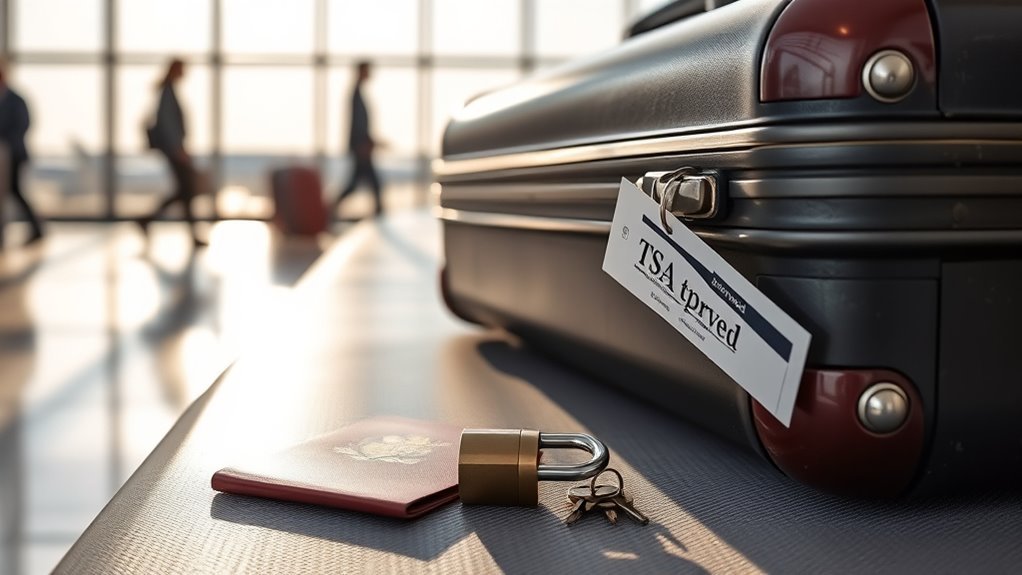
If you want a quick answer: yes, lock your luggage when flying internationally in most cases. You’ll deter casual theft and signal that you care about your belongings.
Use a TSA-approved lock if you want security plus compliance where U.S. or compatible agents might need access.
Use a TSA-approved lock for added security that still lets U.S. (or compatible) agents access your luggage when needed.
For high-risk routes or valuable items, choose sturdier locks and consider tamper-evident straps.
Remember locks don’t stop determined thieves or inspections; they reduce opportunistic access and give you peace of mind.
Balance convenience and protection based on destination, the trip’s length, and what you’re packing.
Airline & Airport Rules That Affect Locked Checked Luggage
You should know that U.S. TSA and a few trusted international partners can open screened bags without your key, which affects whether you use a lock.
Many countries have their own security protocols that may require inspection or specific types of locks.
Also check your airline’s policy—some carriers forbid certain locks or recommend TSA-approved options.
TSA And Trusted Partners
How do TSA and its trusted-partner programs affect whether you should lock checked luggage for international travel? If you’re flying from or through the U.S., TSA may need access to inspected bags. TSA-approved locks (with Travel Sentry or Safe Skies keys) let agents open and relock without breaking your lock.
If your carrier or connection participates in trusted-partner screening, agents use standardized methods to resecure items. Nonapproved locks risk being cut if inspection is required.
Check airline and departure-airport guidance; if your trip starts outside TSA jurisdiction, verify local security programs. Choose a TSA-approved lock when U.S. screening could occur.
International Security Protocols
Because airlines and airports set different security rules worldwide, you’ll need to check specific carrier and departure/arrival requirements before securing checked luggage for international trips.
Many countries let security screeners open bags if needed; they’ll reseal with tamper-evident tape or use official locks. Some airports prohibit padlocks or certain locking mechanisms for customs or explosive detection access.
You should verify whether your destination or transit points require unlocked access, accept approved locks, or mandate declaration of sealed items. When in doubt, choose a lock accepted by international security partners or prepare to comply with on-site inspection procedures.
Airline Specific Lock Policies
Different airlines and airports enforce their own rules for locked checked luggage, so you’ll want to check carrier-specific policies before choosing a lock. Policies influence whether TSA- or local-approved locks are required, if staff may cut locks for inspection, and how claims are handled after forced entry.
Before you travel, verify rules with your airline and departure/arrival airports.
- Confirm accepted lock types and inspection procedures.
- Note carrier liability and documentation steps if a lock is broken.
- Check international airports for non‑TSA standards and local security laws.
Country Rules: Customs Inspections and Unlocked Bags
Remember that customs officers in many countries have the legal right to open and inspect your bags, even if they’re locked. You should check country-specific rules about locks and whether authorities can cut or force them open.
Tampering with inspection seals or refusing an inspection can lead to fines, delays, or confiscation, so plan accordingly.
Customs Authority Rights
When you arrive in a foreign country, customs officers have the legal right to inspect your luggage and may require you to open it for examination; this is standard procedure and not a reflection on you personally. You should expect inspection, comply calmly, and avoid obstructing their duties.
Locks can be cut or bypassed if officers need access. Consider using TSA-accepted locks only where applicable and keep valuables on you.
Know that refusal can lead to delays, fines, or confiscation. Prepare documentation and declare items honestly to minimize issues.
- Cooperate promptly
- Use travel-friendly locks
- Keep important items with you
Country-Specific Lock Laws
Because customs rules vary by country, you should check local regulations before you decide to secure your checked luggage for an international trip. Some nations require accessible bags for inspection and may insist you use TSA-approved or customs-friendly locks; others allow any lock or none at all.
Research the destination and transit countries: embassy websites, airline guidance, and customs pages will say if agents can cut locks or prefer unlocked baggage. If inspections are common where you’re going, consider using a simple cable or measurable tamper-evident seal so officials can examine contents without damaging your lock or suitcase.
Consequences Of Tampering
If customs officers need to inspect your checked luggage and they can’t easily open it, they’ll often force entry—cutting locks or breaking zippers—which can damage or ruin your bag and its contents. You’ll face ruined luggage, lost security seals, and possible delays while officers document findings.
Some countries may fine you if they suspect tampering, while others won’t accept responsibility for destroyed locks. To minimize issues, use TSA-approved locks where allowed, consider tamper-evident straps, or leave checked bags unlocked when local rules permit.
Balance security with compliance to avoid unnecessary damage or legal trouble.
- Document damage
- Use approved locks
- Consider sealing alternatives
Which Locks Do Airports Accept? (TSA vs. International)
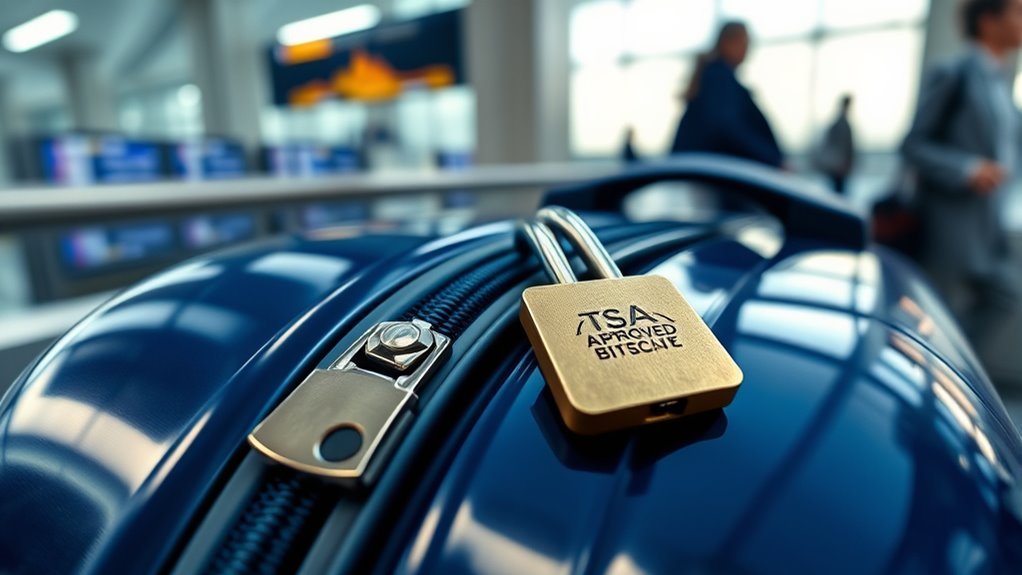
Although many travelers assume all locks are equal, airports and security agencies don’t accept every type of luggage lock. You should know that some countries require security-friendly locks; others may cut anything they can’t open. Look up destination rules before you secure bags. Below is a simple table to make the choice feel real and urgent:
| Lock type | Likely airport reaction |
|---|---|
| TSA-recognized | Opened and relocked — less stress |
| Non-TSA padlock | Possibly cut — sudden violation |
| Cable lock | Often cut — fragile hope |
| Tamper-evident seal | Left intact — bittersweet reassurance |
Best Locks for International Luggage (What to Buy)
When you’re choosing a lock for international travel, pick one that balances security, airport acceptance, and durability—TSA-recognized combination locks and travel-rated cable locks are usually the best starting points.
You want a lock that inspectors can open without damage, that resists casual tampering, and that’s easy to reset.
- TSA-approved combination lock: compact, no keys to lose, widely accepted.
- Travel-rated cable lock: flexible for odd-sized zippers, stronger than thin cords.
- Hardened padlock with TSA keyway: higher security for checked luggage when accepted.
Choose trusted brands, test before travel, and note model limits.
Prepare Checked Bags for Inspection: Packing and Documentation
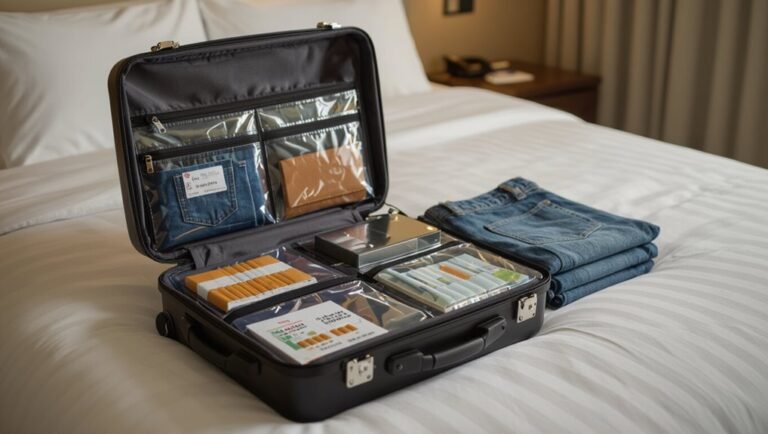
Because airport security may need to inspect checked bags, pack and document them so agents can open, examine, and relock them without damaging your belongings. Use clear packing: place fragile or valuable items in the carry-on, wrap breakables, and group similar items in labeled pouches. Leave a simple inventory and include contact details inside. Use TSA‑approved or easily replaceable locks when allowed. Photograph contents and lock position before checking. At the airport, declare items that need special handling. Keep receipts for high‑value goods to speed resolution if an inspection occurs.
| Item | Action |
|---|---|
| Fragile | Wrap, pouch |
| Inventory | Photo, list |
| Valuables | Carry-on |
| Locks | TSA‑approved |
If Customs or Security Opens Your Locked Bag: What to Expect
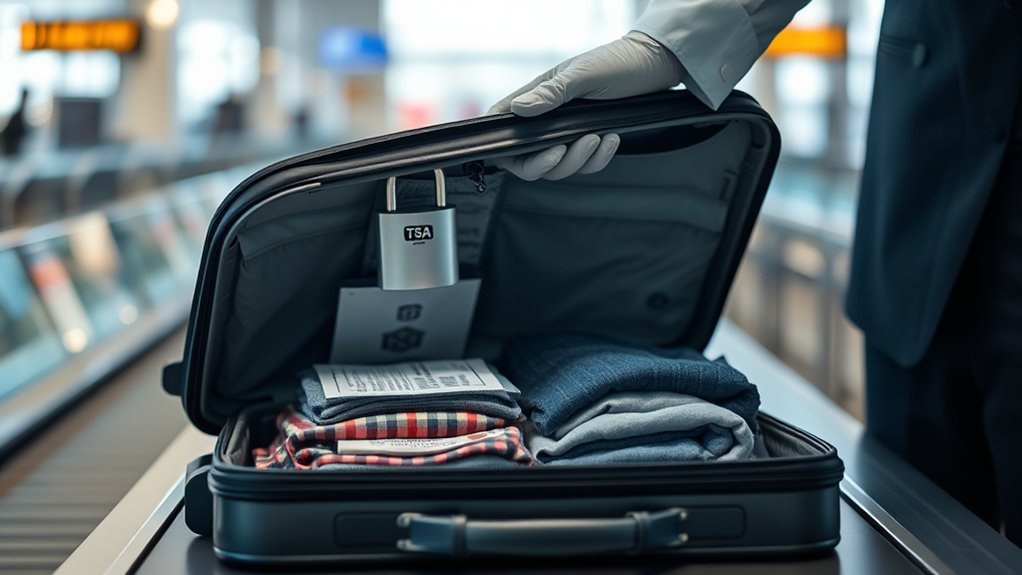
If Customs or security opens your locked bag, expect agents to inspect contents, document their actions, and relock or reseal the bag when possible. You’ll usually be notified and given a receipt or sticker showing the inspection.
You’ll be asked questions if something looks suspicious, but routine checks aim to verify declarations and prohibited items. If items are removed, you’ll get a record and instructions for retrieval or disposal.
Keep serial numbers and photos for valuables. Note damage or tampering before leaving the area and report it promptly.
- Get the inspection receipt.
- Document missing or damaged items.
- Follow recovery instructions.
Balancing Security, Privacy, and Customs Rules for Luggage
Although you want your belongings safe and your privacy respected, you also need to follow security and customs rules that sometimes conflict with those goals. You’ll balance these by knowing regulations: some countries require inspected bags to be accessible, and security officers can open locked luggage.
Use TSA‑accepted locks when flying to or through the U.S., but expect inspections elsewhere. Weigh privacy against compliance—avoid packing prohibited items and separate sensitive documents to carry on.
Document contents and keep receipts for valuables. If an inspection happens, cooperate, note any damage, and file complaints or claims promptly to protect your rights.
Alternatives to Locking Checked Luggage (Insurance, Tamper‑Evident Options)
When you decide not to lock checked luggage, you can still protect your belongings with alternatives like travel insurance, tamper‑evident seals, and proactive packing strategies that reduce loss and damage risks.
You’ll want insurance that covers lost, delayed, or damaged items and check policy limits and claim processes before you travel.
Tamper‑evident options—plastic seals, tamper tape, or numbered cable ties—show if someone opened your bag without preventing inspection.
Pack valuables in your carry‑on, use hard shells for fragile items, and document contents and serial numbers so claims are smoother.
- Travel insurance selection
- Tamper‑evident materials
- Smart packing practices
Pre‑Flight Checklist: Lock, Label, and Document Before You Fly
Before you head to the airport, lock up, label clearly, and document what’s inside so you can travel with confidence and handle problems quickly. Check locks (TSA if needed), attach a visible name tag, and photograph contents and luggage ID. Keep receipts for valuables and store copies of travel documents separately. Email yourself photos and notes so you can access them if luggage’s lost. At security, be ready to open locks if asked. Use tamper-evident tape for extra notice.
| Item | Action | Purpose |
|---|---|---|
| Lock | Set/TSA | Prevent casual access |
| Label | Visible tag | Quick ID |
| Photos | Interior/exterior | Proof |
| Receipts | Scan/email | Value evidence |
| Documents | Copies | Backup access |
Frequently Asked Questions
Can I Lock Carry‑On Luggage Taken Into the Cabin?
Yes — you can lock carry‑on luggage carried into the cabin, but you’ll need to unfasten it if flight crew or security ask. Use TSA‑approved locks for U.S. travel so authorities can open and relock without damaging your bag.
Will Locks Prevent Theft of Valuable Items Inside Checked Bags?
No, locks won’t fully prevent theft; determined thieves or baggage handlers can bypass many locks. You should use TSA‑approved locks, keep valuables in carry‑on, and consider tamper‑evident seals or discreet security pouches.
Do Different Airlines Have Conflicting Lock Policies?
Yes — airlines can vary: some allow TSA-approved locks, others ban locks or require inspection-ready options, and international carriers follow local rules. You’ll check each airline’s policy before travel to avoid delays or forced openings.
Can I Be Fined for Locking a Bag That Customs Needs to Open?
Yes — you can be fined or penalized in some countries if customs must open a locked bag and you prevent access. You should use TSA-approved locks where accepted, or follow local customs’ instructions to avoid trouble.
Are Electronic or Smart Locks Allowed on International Flights?
Yes — you can usually use electronic or smart locks, but you’re responsible for allowing customs or TSA access; if agents need to open your bag and can’t, they may cut the lock, so choose TSA‑approved smart locks when possible.
Conclusion
You should usually lock your checked luggage for security and privacy, but pick a lock customs can open or be prepared for forced entry. Check airline and destination rules before you leave, use a recognized travel or customs‑approved lock if possible, and add tamper‑evident tape plus good labeling. Keep valuables and originals in carry‑on, insure important items, and photograph contents—then you’ll balance protection with the realities of inspections.