What Can I Pack in My Checked Luggage
You can pack clothes, shoes, toiletries (full sizes), nonfragile electronics, books, camping or sports gear, and most liquids in checked luggage, but you must avoid explosives, flammable substances, compressed gases, and other hazardous materials. Installed device batteries are usually allowed if powered off, but spare lithium-ion cells belong in carry-on with terminals protected. Declare firearms and ammunition as required and protect fragile or high-value items. Keep an eye on size, weight, and airline rules for more details.
Quick Start: What to Check Before Packing
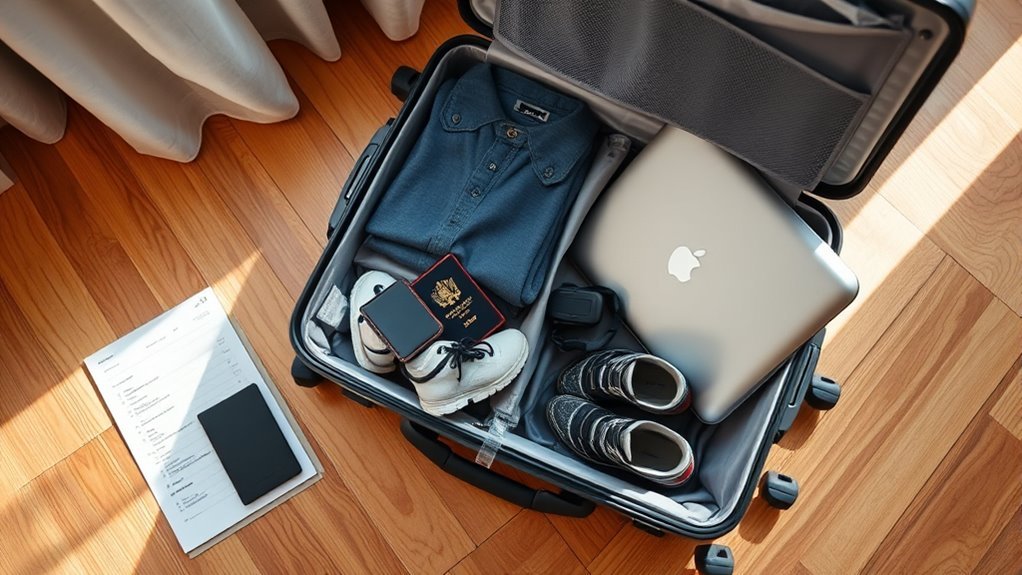
Wondering where to begin? Check airline rules first — size, weight limits, and fees vary, so you’ll avoid surprises at the counter.
Review prohibited and restricted items to keep dangerous goods out.
Consider connecting flights and differing carrier policies.
Note customs rules for international travel and declare regulated items.
Inspect your suitcase for durability and secure zippers; buy a lock approved by authorities if needed.
Pack valuables and essentials in carry-on instead.
Think about liquids: follow limits and use leakproof bags.
Finally, photograph contents and label your bag with contact info in case it’s lost.
Quick Answer: What’s Allowed in Checked Baggage
If you need a quick rundown, most everyday items—clothes, shoes, toiletries (in checked sizes), books, and nonfragile electronics—are fine in checked baggage, but you should keep valuables, important documents, medications, and fragile or irreplaceable items in your carry-on. Pack bulky items, shoes, and spare chargers in checked bags to save space. Check airline and country rules for batteries, sports gear, and liquids. Label your bag and use TSA‑approved locks. Consider insurance for high-value items.
| Category | Examples | Tip |
|---|---|---|
| Clothing | Jackets, shoes | Roll to save space |
| Toiletries | Full-size bottles | Seal leaks |
| Gear | Camping, golf | Check airline rules |
| Electronics | Cameras, laptops | Battery rules apply |
Items Strictly Prohibited From Checked Baggage
Because checked bags go out of your control once they’re handed over, airlines and regulators ban items that could cause fire, explosion, poisoning, or serious harm during transit.
You mustn’t pack explosives, fireworks, flammable liquids or solids, compressed gas canisters, toxic chemicals, or corrosives.
Weapons and parts that can be readily assembled into a firearm are prohibited, as are stun guns and realistic replicas.
Perishable biological agents, infectious substances, and improperly packaged sharp objects that can injure handlers are also banned.
Always check your carrier’s list and declare unusual items; violations can lead to fines, delays, or criminal charges.
Batteries in Checked Baggage: What’s Allowed
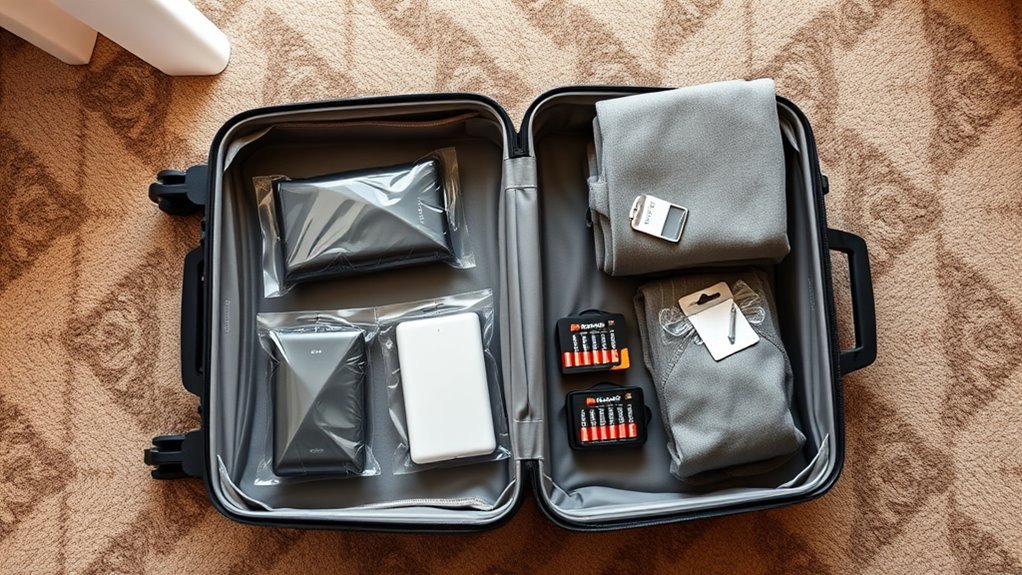
You’ll need to follow rules for lithium batteries, which are often restricted by capacity and quantity in checked bags.
Batteries that are installed in devices are generally allowed, but spare lithium batteries usually must go in your carry‑on.
Check airline and TSA guidelines before packing to avoid surprises at the airport.
Lithium Battery Restrictions
When packing batteries in checked luggage, know that airlines and regulators restrict most lithium cells because they can overheat and catch fire during flight.
You can’t stash loose lithium-ion or lithium-metal batteries in checked bags unless approved exceptions apply. Spare batteries must go in carry-on, with terminals taped or in original packaging to prevent short circuits.
Airlines limit battery capacity—typically under 100 Wh allowed, 100–160 Wh may need airline approval, and over 160 Wh is usually prohibited.
Check specific carrier and country rules before travel. Follow packaging, quantity, and declaration requirements to avoid delays or confiscation.
Installed Device Batteries
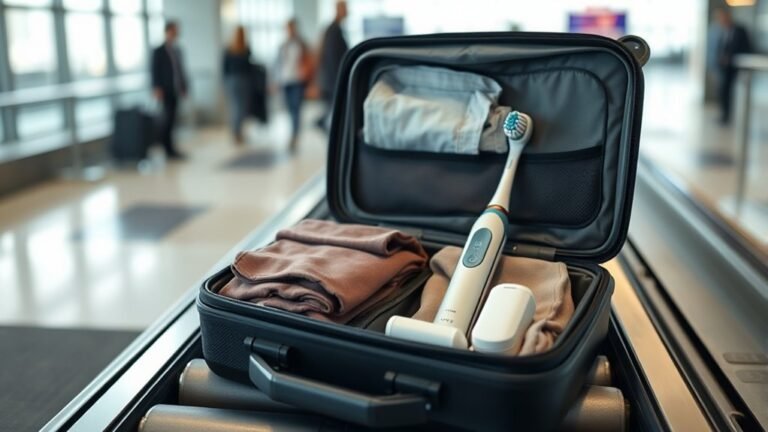
If a battery is built into a device—like a laptop, camera, or electric toothbrush—you can usually pack that device in checked baggage, but there are rules to follow. You should power devices off, protect against accidental activation, and consider keeping high-capacity batteries with you.
Airlines and regulators may limit watt-hours or battery types; check before you fly. Damaged or recalled batteries aren’t allowed.
Below are practical steps:
- Power off and disable auto-start features.
- Insulate terminals or use original packaging if removable.
- Declare devices with large lithium batteries at check-in.
- Keep proof of battery capacity or manufacturer specs.
Packing Spare Lithium-Ion Batteries: Carry-On vs Checked
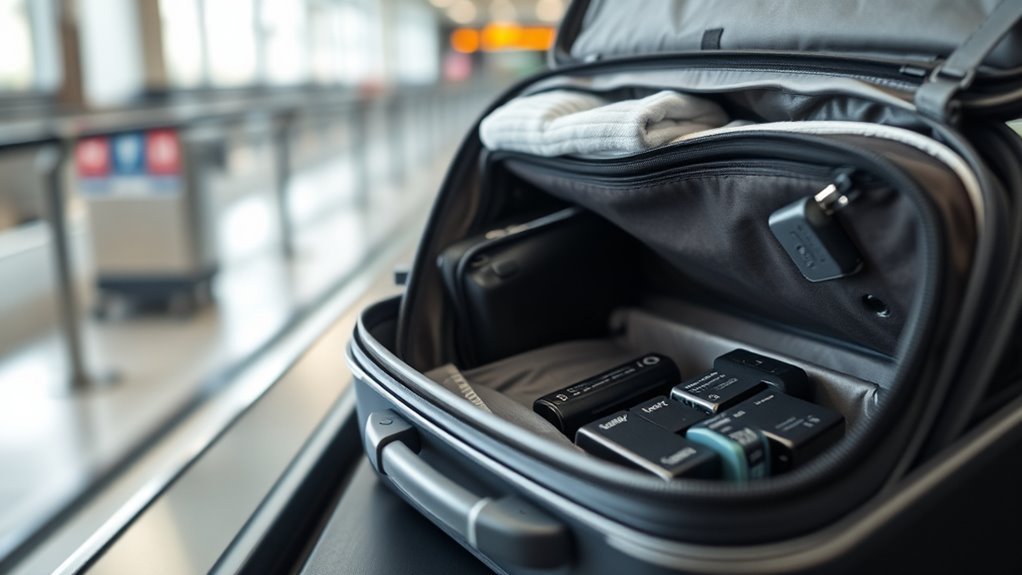
You’ll need to keep spare lithium-ion batteries in your carry-on, not checked baggage, to meet safety rules.
Protect each battery from short circuits by keeping them in original packaging or covering terminals and placing them in separate pouches.
Also check airline limits on watt-hours and quantity so you don’t exceed allowed capacity.
Battery Carry-On Requirement
Most airlines and safety regulators require that spare lithium-ion batteries travel in your carry-on rather than checked baggage, because they can short-circuit and start a fire that’s easier to manage in the cabin. You should check airline policies and pack only allowed capacities. Keep batteries accessible for inspection and declare large-capacity cells if requested. Don’t rely on checked baggage for containment or suppression.
- Verify watt-hour (Wh) limits for spare batteries.
- Follow airline quantity restrictions per passenger.
- Store batteries where you can reach them during flight.
- Expect screening and possible additional rules at departure.
Spare Battery Protection
Having spare lithium‑ion batteries in your carry‑on is only the first step; you also need to protect those cells against damage and short circuits while you travel. Keep terminals covered with original caps, tape, or individual plastic pouches to prevent contact with metal.
Store each battery in a separate protective case or a padded pouch so they can’t bang together. Don’t toss loose batteries into pockets or alongside keys.
If you carry spare power banks, switch them off and use protective sleeves. Inspect batteries for swelling or damage before departure and dispose of faulty units—airlines won’t accept compromised cells.
Airline Capacity Limits
Airlines set strict capacity limits for lithium‑ion batteries, and you’ll need to follow different rules for carry‑on versus checked baggage. You should carry spare batteries in your carry‑on only; most carriers forbid looser, high‑capacity cells in checked bags.
Check each battery’s watt‑hour (Wh) rating: under 100 Wh is usually fine, 100–160 Wh needs airline approval, and over 160 Wh is typically prohibited. Protect terminals and keep spares in original packaging or individual pouches.
- Verify Wh rating stamped on the battery.
- Limit quantity per airline policy.
- Request airline approval if 100–160 Wh.
- Never pack spares in checked luggage.
Liquids, Gels, and Aerosols: Checked Baggage Rules
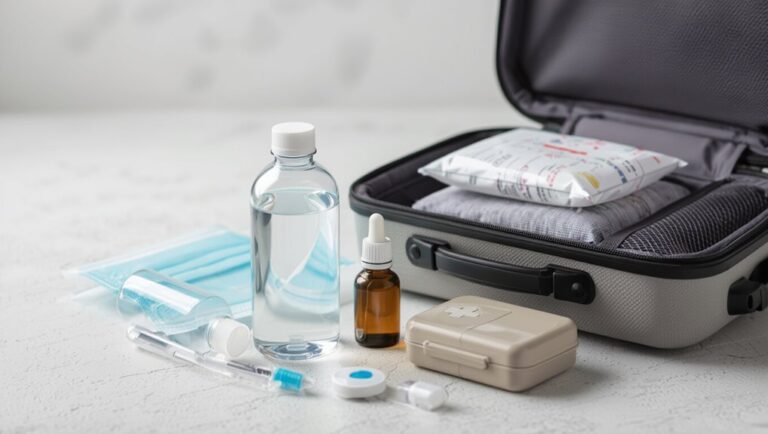
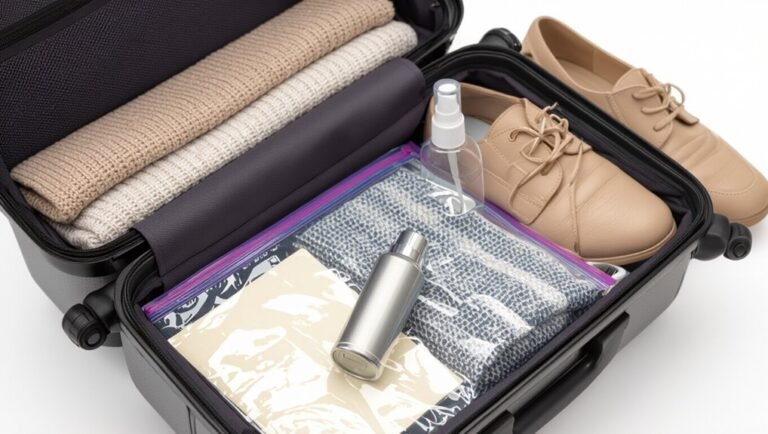
You can pack larger quantities of liquids, gels, and aerosols in checked baggage than in carry-ons, but there are still limits and safety rules you’ll need to follow. Pack toiletries, cosmetics, and canned aerosols securely, sealing lids and placing items in plastic bags or original packaging to prevent leaks.
Flammable aerosols, fuel, and certain pressurized containers are prohibited; check airline and TSA guidelines for exceptions. Label hazardous materials clearly and declare anything unusual.
If you’re carrying alcohol, note concentration limits and duty-free rules. Inspect bottles for damage and cushion them to avoid spills during handling.
Medications and Medical Devices: Checked Baggage Tips
Besides toiletries and aerosols, medications and medical devices deserve special attention when packed in checked luggage because mishandled or damaged items can affect your health. You should carry prescription meds in original labeled containers when possible and pack a copy of prescriptions and a doctor’s letter.
Besides toiletries, pack prescription meds in labeled containers with copies of prescriptions and your doctor’s letter for safety.
Cushion fragile devices and keep batteries with devices or isolated in carry-on if required. Consider temperature sensitivity; use insulated pouches or cold packs allowed by airline rules.
Declare controlled substances if asked and check airline policies for oversized equipment. Plan for delays and pack extras or prescriptions accessible at your destination.
- Originals and documentation
- Cushioning and secure placement
- Temperature control measures
- Battery and airline compliance
Sharp Objects, Tools, and Sports Gear: Packing Rules
When packing sharp objects, tools, or sports gear in checked luggage, make sure each item is secured, sheathed, and clearly compliant with airline and TSA rules so it won’t injure handlers or be confiscated.
Wrap blades, screwdrivers, and sharp-edged tools in protective sheaths and hard cases; tape loose parts. Place clubs, bats, and poles inside rigid cases or between clothing to prevent movement. Pad delicate equipment to avoid damage.
Check size and weight limits for oversized gear and declare large items if required by your carrier.
Prohibited items, like certain knives with automatic opening mechanisms, must stay out of checked bags.
Firearms and Ammunition: Declaration and Packing Steps
Handling sharp gear safely leads naturally to addressing firearms and ammunition, since these items pose greater legal and safety obligations in checked luggage. You must declare firearms to the airline, lock them in a hard, locked case, and comply with destination and transit laws.
Ammunition needs secure packaging and often has quantity limits. Check airline and TSA rules before travel.
- Declare firearms at check-in and show permits or licenses.
- Use a locked, hard-sided container; key or combination only you control.
- Store ammunition in original packaging or secure boxes.
- Verify quantity limits and local regulations before packing.
Alcohol, Wine, and Beverages: Limits and Rules
If you’re packing alcohol in checked baggage, know that quantity, proof, and packaging rules vary by airline and country, so check them before you go.
You can usually pack wine and beer under 24% alcohol freely; 24–70% spirits are often limited to a specific volume per passenger (commonly 5 liters) and must be in retail packaging. Above 70% is typically prohibited.
Secure bottles in leakproof, cushioned containers and declare them if required.
Be aware of customs limits and duty-free allowances at your destination.
When in doubt, contact your carrier and inspect local import rules to avoid fines.
Fragile Items & Electronics in Checked Baggage
Alongside alcohol, fragile items and electronics need special attention because they can be damaged or cause safety issues if packed poorly. You should pack fragile items in padded cases, wrap them in clothing, and place them in the center of your bag. Remove lithium batteries from devices when possible and carry them in carry-on if airline rules require. Label fragile items and consider hard-shell luggage.
Handle fragile items and electronics with care: padded cases, clothing wraps, batteries in carry-on, and labeled, centered packing.
- Wrap glass, ceramics, and lenses individually.
- Use original cases for cameras and headphones.
- Protect screens with screen protectors and cardboard inserts.
- Keep spare batteries accessible in your carry-on.
Flammable, Corrosive, and Hazardous Materials: Safe Handling
You shouldn’t pack flammable items like lighters, fuel, or aerosol paints in checked luggage because they’re generally prohibited.
Corrosive substances—such as acids, bleach, or certain batteries—have strict restrictions or must be packed and declared according to airline rules.
If you’re carrying any hazardous materials, declare them beforehand and follow carrier and regulatory guidelines to avoid fines or confiscation.
Flammable Items Prohibited
Wondering what flammable items you can’t pack in checked luggage? You shouldn’t pack anything that can ignite, explode, or fuel a fire. Airlines and regulators ban common household and hobby items that pose risk during transport. Pack safer alternatives or ship dangerous goods separately with proper documentation.
- Aerosol cans with flammable propellants (spray paints, some deodorants)
- Gasoline, kerosene, lighter fluid, and camping fuel
- Matches and lighter refills containing fuel (strike-anywhere matches often banned)
- Portable gas canisters and butane/propane cartridges
Always check your airline’s rules before you travel.
Corrosive Substances Restrictions
Flammable items pose obvious fire risks, but corrosive substances create different dangers that can damage luggage, harm handlers, and eat through aircraft components if they leak. You shouldn’t pack strong acids, alkalis, bleach, or battery electrolyte in checked bags.
Small sealed consumer products like sealed car batteries or certain household cleaners are usually prohibited or restricted; check airline rules. If a substance is essential, use manufacturer-sealed packaging, vapor-proof containers, and place them in a secondary sealed bag with absorbent material.
Declare items when required and follow airline or regulatory guidance. Never improvise containment — leaks cause serious safety and legal consequences.
Hazardous Materials Declaration
When you pack items that are flammable, corrosive, or otherwise hazardous, declare them before check-in so airline staff can assess risks and advise on proper containment or prohibitions. You’ll protect the aircraft and other passengers by being upfront. Provide Material Safety Data Sheets or manufacturer labels when requested, and follow guidance on packaging, quantity limits, and forbidden items. Expect inspection or refusal if rules aren’t met.
- List chemicals, batteries, aerosols, and fuel containers.
- Label contents, hazards, and contact info clearly.
- Use original packaging or UN-approved containers where required.
- Get written approval for unusual or commercial quantities.
Food, Perishables, and Frozen Goods: Transport Tips
Because perishables can spoil quickly and frozen items may thaw, you should plan packing and timing carefully to keep food safe and compliant with airline rules.
Pack commercially sealed, nonperishable snacks for reliability.
For perishables, use insulated containers and gel ice packs approved by airlines; frozen goods should be hard-frozen and wrapped to limit leaks.
Label contents and arrival time; place perishables toward the center of your bag to reduce temperature swings.
Check destination regulations for fresh produce, meats, and dairy—some countries restrict or prohibit import.
On long trips, consider shipping via refrigerated courier instead of checked baggage for sensitive items.
Jewelry, Cash, and Other High-Value Items: Where to Stow Them
Although checked bags can hold a lot, you shouldn’t pack jewelry, large amounts of cash, or other irreplaceable valuables in them; instead keep these items on your person or in carry-on luggage where you can monitor them. You risk loss, theft, or damage if you bury valuables in checked luggage.
Use discreet pouches, travel belts, or a locked carry-on compartment. For added security, photograph items and note serial numbers. Consider hotel safe deposit boxes at your destination.
- Keep jewelry on you or in carry-on.
- Limit cash carried; use cards.
- Insure high-value items.
- Document and photograph valuables.
Weight Limits, Oversized Items, and Avoiding Extra Fees
If you want to avoid surprise fees and hassles at the gate, know your airline’s weight and size limits before you pack and weigh your bag at home so you can redistribute or remove items as needed. Check dimensions, note weight caps (often 23–32 kg), and prepay oversize or overweight if cheaper online. Use a scale and pack dense items near the wheels. Consider shipping bulky gear. At the airport, staff enforce limits strictly — you’ll pay per kilo or a flat oversize fee.
| Item type | Typical limit |
|---|---|
| Checked bag | 23–32 kg |
| Oversize | Varies |
| Extra bag | Fee applies |
| Sporting gear | Special rules |
Labeling, Locks, and Protecting Checked Luggage
Once you’ve got weight and size under control, make sure your bag’s identity and contents stay secure en route. Tag both inside and outside with your name, phone, and email; use a business card or luggage tag pouch.
Once weight and size are set, secure your bag—label inside and out with contact info using a card or tag pouch.
Use TSA-approved locks so agents can inspect without damage.
Wrap fragile items in clothing and place them near the center; consider a hard-shell case for extra protection.
Photograph contents and the packed bag before check-in for reference.
- External and internal identification
- TSA-approved locking mechanisms
- Strategic cushioning and hard cases
- Photographic inventory for proof
If Items Are Confiscated, Delayed, or Lost: What to Do
When your checked items are confiscated, delayed, or lost, act quickly and calmly to increase the chance of recovery or compensation.
First, report the issue at the airline’s baggage service desk before leaving the airport; get a written report and reference number. Photograph damaged or empty luggage. Keep receipts for checked fees and for urgent replacements—you’ll need them for claims.
File a claim online and follow up in writing, noting deadlines. For confiscated items, ask for documentation explaining why and appeal if appropriate.
Track claim status, persist politely, and escalate to consumer protection or credit disputes if unresolved.
Check Airline and Country Rules Before You Pack
After you’ve documented problems with lost or confiscated bags and started claims, check airline and country rules before you pack for your next trip. You’ll avoid surprises by confirming prohibited items, weight limits, and declaration requirements. Rules vary: airlines restrict batteries, liquids, and sporting gear; countries bar foods, plants, and certain medicines.
Review official airline policies and the destination’s customs website, and contact customer service when unclear. Prepare documentation for prescriptions and high-value items, and consider shipping restricted goods separately.
Follow these steps:
- Check airline baggage and hazardous materials policies.
- Read destination customs and import rules.
- Gather prescriptions and receipts.
- Contact airline or embassy for clarifications.
Frequently Asked Questions
Can I Pack Live Plants or Flowers in Checked Luggage?
You generally shouldn’t pack live plants or flowers in checked luggage because many countries and airlines restrict them; you’ll want to check airline rules and destination agricultural laws, and consider carrying them in the cabin if allowed and declared.
Are Pets Allowed in Checked Baggage on International Flights?
No, you generally can’t put pets in checked baggage on international flights; airlines usually require pets to travel in-cabin or via specialized cargo, and rules, health certificates, and country import restrictions will apply, so check airline policies.
Can I Pack Prescription Contact Lenses Solution in Checked Bags?
Yes — you can pack prescription contact lens solution in checked bags, but airlines and security may limit large liquid volumes. You’ll want to seal bottles tightly, pack them in a leak-proof bag, and check airline-specific rules first.
Is Duty-Free Tobacco Allowed in Checked Luggage Across Borders?
Yes — you can usually pack duty-free tobacco in checked luggage, but you’ll need to follow each country’s import limits, declare purchases if required, and avoid transporting to places that prohibit tobacco entirely. Check local rules.
Can Wrapped Gifts Be Placed in Checked Baggage Without Inspection?
No, you can’t assume wrapped gifts will bypass inspection; security or customs may open them if needed. You should pack with that expectation, avoid hiding prohibited items, and be ready to reseal or repack after an inspection.
Conclusion
You’ve got the essentials: check airline and country rules, follow weight and size limits, and pack prohibited items—like loose lithium batteries, flammables, and explosives—out of checked bags. Put allowed batteries and devices in carry-on when possible, label and lock your suitcase, and use padding for fragile items. If something’s confiscated or lost, contact the airline and file a report quickly. Stay informed before you travel to avoid delays, fees, or surprises.