What Is the Most Durable Luggage
You want luggage that survives years of rough handling, so pick materials and construction that match your travel. For checked bags, hard-shell polycarbonate or aluminum gives the best impact protection; for carry-ons and adventure gear, 1680D ballistic nylon or TPU-coated fabrics resist tears and abrasion. Look for sealed bearings on spinner wheels, metal-reinforced handles, YKK zippers, reinforced seams, and good warranties. Keep it maintained, and below you’ll find how to match options to your trips.
What “Most Durable Luggage” Really Means : Quick Decision Criteria
What makes luggage “most durable”? You look for gear that resists daily wear, survives rough handling, and keeps contents safe. Focus on materials known for abrasion and impact resistance, reliable zippers and handles that won’t fail, and protective designs that limit stress points.
Consider weight-to-strength balance so it’s sturdy without being a burden. Check user reviews for long-term performance and warranty terms that reflect manufacturer confidence.
Think about how you travel: frequent flyers need tougher builds; occasional travelers can prioritize lighter options. Prioritize proven durability indicators rather than marketing claims to make a quick, smart choice.
Construction Elements That Determine Durability (Frames, Seams, Reinforcements)
Check the frame — telescoping aluminum and molded polycarbonate behave very differently under stress, so you’ll want one that matches how rough you travel.
Inspect seam construction for tight, reinforced stitching and taped or sealed joins that keep fabric from ripping.
Finally, look for corner and edge reinforcements (bumpers, molded corners, or extra layers) since those take the brunt of impacts.
Frame Types And Strength
How sturdy is your suitcase largely comes down to the frame: hard-sided shells, internal frames, and semi-rigid constructions each handle impact and load differently.
You’ll find hard shells (polycarbonate, ABS, aluminum) resist punctures and compressive forces best, spreading shocks across the surface.
Internal frames, often aluminum or composite, keep soft-sided bags square and protect contents from crushing, while offering structural support for handles and wheels.
Semi-rigid designs blend flexibility and strength, absorbing impacts without cracking.
Check frame attachment points, corner reinforcements, and how the frame integrates with zippers and handles—those interfaces determine real-world resilience.
Seam Construction Quality
Because seams join every panel and bear the stress of movement, their construction largely dictates whether a bag will hold up to repeated use. You should inspect stitch count, thread type, and seam type: tight, even stitches reduce gap risk; bonded or reinforced thread resists abrasion and UV; and double-stitched or bartacked seams at stress points stop tears from propagating.
Seam allowances sealed with tape or backed with fabric prevent fraying and water ingress. Avoid loose, widely spaced stitching and cheap single-needle seams. Proper seam construction keeps fabric aligned, transfers loads to supports, and extends service life without relying on external reinforcement.
Corner And Edge Reinforcements
Corners and edges take the brunt of bumps, drops, and abrasive contact, so you should look for visible reinforcements where panels meet. You’ll want molded corner guards, metal caps, or double-layer fabric at stress points. Reinforcements keep structure, prevent tearing, and extend service life, especially with hard-shell or high-use soft-sided bags.
Inspect attachment methods—rivets, reinforced stitching, or bonded joints—and prefer replaceable parts. Strong edges also help maintain zipper alignment and wheel integrity, reducing cascade failures that ruin otherwise good luggage.
- Molded or metal corners resist impact better than stitched fabric alone.
- Reinforced seams distribute stress across panels.
- Replaceable caps save the bag from early discard.
Best Materials for Long‑Lasting Luggage: Polycarbonate, Aluminum, Ballistic Nylon
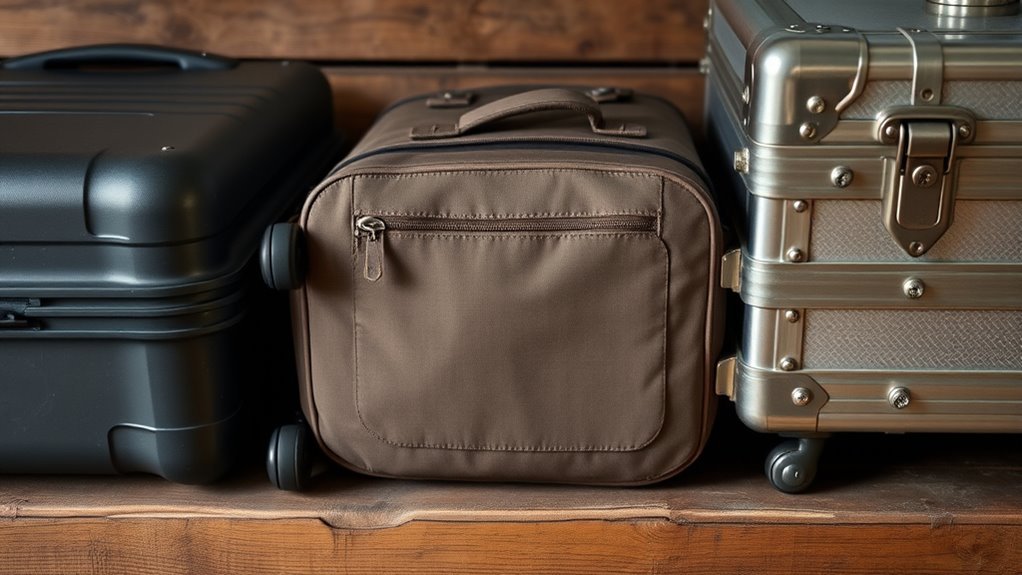
Choosing the right material determines how well your luggage will hold up trip after trip, and three standouts—polycarbonate, aluminum, and ballistic nylon—cover most durability needs. You want something light, tough, and reassuring. Polycarbonate absorbs impacts and stays sleek; aluminum feels invincible and ages characterfully; ballistic nylon resists tears and scuffs while forgiving rough handling. Match material to how you travel: frequent flyers may favor polycarbonate or aluminum, while adventure seekers pick ballistic nylon. Below is a simple table to reflect feelings each evokes.
| Material | Feeling |
|---|---|
| Polycarbonate | Confidence |
| Aluminum | Pride |
| Ballistic Nylon | Comfort |
Hard‑Sided vs Soft‑Sided: Durability Tradeoffs and Real‑World Use
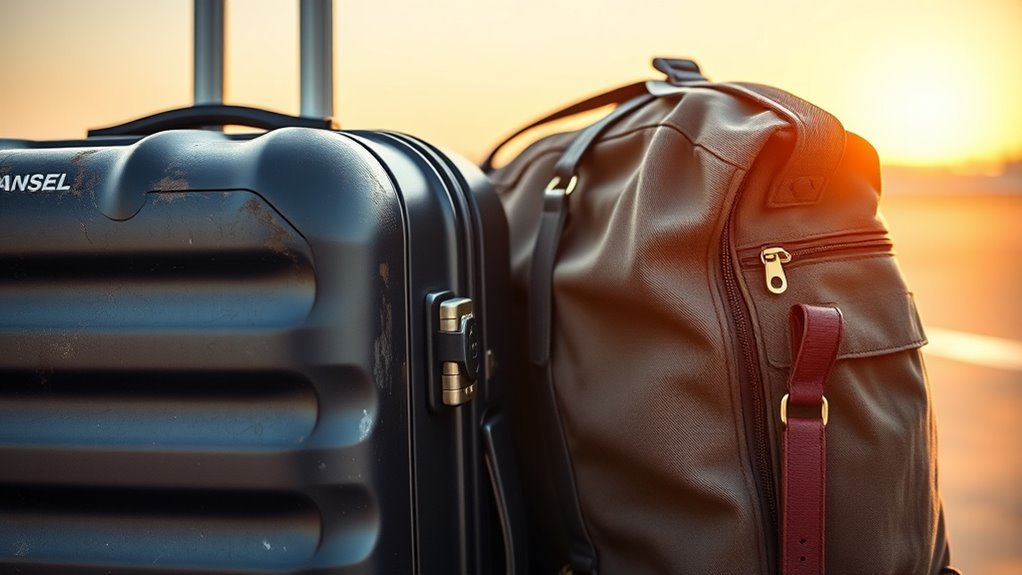
When you’re choosing between hard‑sided and soft‑sided luggage, consider impact resistance first—hard shells shrug off knocks better while soft shells flex.
Think about flexibility and tear resistance next, since fabrics can absorb pressure but may rip where rigid cases won’t.
Finally, weigh repairability and longevity: soft bags are often easier and cheaper to fix, but a dented polycarbonate or scratched aluminum shell can still keep protecting your gear for years.
Impact Resistance Comparison
How tough does your luggage need to be against drops, bumps, and rough handling? You choose luggage based on impact scenarios: hard-sided shells distribute force over a rigid surface, resisting punctures and crushing, while soft-sided bags absorb and localize shocks, reducing transferred energy to contents.
You’ll want hard shells for fragile gear and heavy impacts; pick soft-sided if you value slightly better compression resilience and external pockets. Consider hinges, corners, and zipper quality—these fail first. Balance weight and repairability for your trips.
- Hard shells: rigid protection, predictable failure modes
- Soft shells: energy absorption, localized damage
- Reinforcements: hinge and corner durability
Flexibility And Tear Resistance
Because luggage faces bending, stretching, and sharp abrasion on every trip, you should weigh flexibility and tear resistance together rather than separately.
Hard-sided shells resist punctures and maintain shape, protecting fragile items, but they can crack under concentrated stress and don’t flex around protrusions.
Soft-sided bags flex to absorb twists and fit odd spaces, reducing stress points, yet their fabrics and seams risk abrasion and zipper failure.
Look for high-denier fabrics, reinforced stitching, and abrasion-resistant coatings on soft luggage, or impact-mitigating polymers and reinforced corners on hard cases, so you balance give with resistance for real-world travel.
Repairability And Longevity
Although hard shells often shrug off dents, you’ll find that repairability and long-term service differ sharply between hard‑sided and soft‑sided luggage.
You can often patch or resew soft fabric, replace wheels or handles, and adapt interiors. Hard shells resist impact but crack, and shell-specific repairs cost more.
Choose based on how you travel: frequent flyers benefit from robust shells if you accept occasional expensive fixes. Occasional travelers favor soft bags for easy DIY fixes and modular repairs.
- Soft: easy local repairs, modular zippers, flexible seams
- Hard: durable exterior, specialized fixes, potential brittle failure
- Consider service networks and spare parts availability
Wheels, Handles, and Zippers: Hardware That Makes or Breaks a Bag
When you shop for durable luggage, the small hardware—wheels, handles, and zippers—often determines whether a bag lasts or fails, so inspect them as closely as you do the shell.
You’ll want smooth-rolling, double-spinner wheels with sealed bearings; single wheels or exposed axles wear fast.
Telescoping handles should lock firmly at multiple heights and be metal-reinforced where they meet the case.
Choose molded rubber grips over thin plastic.
For zippers, go with YKK or equivalent heavy-duty coils and metal sliders; consider double-pull zippers with lockable heads.
Reinforced stitching and bar-tacks at stress points prevent premature detachment.
Testing Durability Before You Buy (In‑Store Checks and Online Red Flags)
If you want luggage that survives real travel, test it before you buy and watch for online warning signs.
In store, lift and roll the bag, extend handles, and open compartments to feel build quality. Tug seams, check wheel wobble, and listen for creaks.
Online, scan reviews for repeated failures, short warranty notes, and seller return policies.
- Inspect for consistent reports of zipper or wheel failure.
- Prioritize clear warranty terms and responsive seller feedback.
- Favor detailed photos and videos showing real-world wear.
Those quick checks help you avoid costly replacements and choose luggage that lasts.
Top Brands for Durable Luggage With Proven Track Records
Now let’s look at brands that consistently stand up to rough travel so you can pick luggage backed by proven histories.
Compare how their materials perform—hard shells, polycarbonate blends, ballistic nylon—and note real-world longevity.
Also check warranties and support policies so you know how each brand handles repairs and replacements.
Proven Brand Histories
Because you want luggage that lasts trip after trip, it’s worth looking at brands with decades of real-world testing behind them. You’ll learn from makers who refined designs through constant travel feedback, warranty claims, and evolving standards. Check histories to see how companies handled durability issues, improved hardware, and supported customers after failures. That tells you more than marketing copy.
- Samsonite: pioneered lightweight, resilient suitcases and expanded repair networks.
- Tumi: focused on premium hardware, serial-numbered tracking, and concierge service.
- Rimowa: advanced aluminum and polycarbonate shells with rigorous quality control.
Material Performance Comparison
When you’re comparing materials—aluminum, polycarbonate, ballistic nylon and hybrid composites—focus on impact resistance, weight, scratch resistance and repairability, since those traits determine how a bag performs trip after trip.
You’ll find aluminum excels at structure and crush protection but adds weight and shows dents. Polycarbonate offers excellent impact flex, lightness and fewer visible scratches. Ballistic nylon resists abrasion, tears and scuffs, and you can often patch or stitch it.
Hybrids blend hard-shell protection with fabric resilience for balanced performance. Match material strengths to your travel style: frequent flyers may favor polycarbonate or hybrids, rough handlers might pick aluminum or heavy-duty nylon.
Warranty And Support
If you want luggage that lasts, the warranty and after-sales support a brand offers matter as much as material and build quality. You’ll want clear coverage, prompt repairs, and accessible customer service so a scuff or broken wheel doesn’t become a write-off.
Brands with multiyear or lifetime warranties show confidence; check exclusions, transferability, and how claims are handled. Also note whether repair centers are local or require shipping. Prioritize companies that publish repair turnaround times and offer loaner options during long fixes.
- Warranty scope: parts, labor, and wear considerations
- Service speed: repair turnaround and communication
- Claims ease: online processing and proof requirements
Most Durable Models by Use Case: Carry‑On, Checked, and Adventure Bags
Pick the right bag for how you travel: carry-on, checked, and adventure luggage each face different stresses, so durability means different things depending on use.
Pick a bag for how you travel—carry-on, checked, or adventure—because durability depends on the journey.
For carry-on, you’ll want hard-shell polycarbonate or tightly woven ballistic nylon with reinforced corners and a reliable spinner system—lightweight but impact-resistant.
For checked bags, prioritize thicker shells or high-denier fabrics, sturdy handles, oversized wheels, and metal-reinforced frames to survive rough handling.
For adventure bags—duffels, backpacks, bike or kayak packs—look for TPU-coated fabrics, welded seams, YKK waterproof zippers, and modular attachment points.
Choose proven models with serviceable parts so you can repair rather than replace.
Budget vs Premium: Where to Compromise and Where to Invest
Although budget bags can look fine for a few trips, you’ll want to invest in certain premium features that actually extend a bag’s life and save money long-term. You should buy solid wheels, a reinforced frame, and quality zippers if you travel often; save on cosmetics, extra pockets, and trendy colors.
Balance weight and durability: lighter premium shells often outlast flimsy cheap totes. Think about warranty and replacement parts—those reduce lifetime cost. Choose based on how rough your trips are and how long you keep luggage.
Prioritize structural components; compromise on aesthetics and nonessential extras.
- Reinforced frame
- Durable wheels
- High-quality zippers
Maintenance & Repair for Durable Luggage (Cleaning, Parts, Simple Fixes)
Maintenance and repair keep your luggage reliable trip after trip, and you don’t need a toolbox or pro skills for most jobs.
Maintenance and repair keep luggage reliable—most fixes are simple and don’t require pro skills or special tools.
Clean fabric with gentle soap and a soft brush; wipe polycarbonate shells with a microfiber cloth and mild detergent.
Lubricate telescoping handles and wheels with silicone spray sparingly.
Replace worn wheels, zippers, or handles—many brands sell OEM parts or affordable aftermarket options.
Reinforce seams with heavy-duty thread or fabric glue for small tears.
Store luggage dry and loosely packed to prevent deformation.
Regular checks and timely fixes extend lifespan, keeping durable luggage performing well without costly replacements.
Choosing the Most Durable Luggage for Your Travel Style
Start by matching luggage construction to how you travel: if you check bags often, choose hard-shell polycarbonate or aluminum for impact resistance. If you carry on, pick lightweight ballistic nylon or Cordura to resist abrasions.
Consider capacity, weight limits, and organization to avoid overpacking.
Wheels and handles matter—spinner wheels are ideal for smooth terminals, while two-wheelers are better for rough surfaces.
Match locks and security features to trip risk.
Balance durability with weight so you don’t incur fees.
- Pick materials that suit transit conditions.
- Prioritize repairable designs and replaceable parts.
- Choose features that reduce handling strain and damage.
Frequently Asked Questions
Is Luggage Longevity Affected by Airport Baggage Handlers’ Techniques?
Yes — you’ll see luggage lifespan shorten when handlers toss, cram, or stack roughly; repeated rough handling stresses zippers, wheels, and shells. You should choose sturdy designs, reinforce weak points, and use protective covers routinely.
Can Baggage Insurance Cover Wear-And-Tear Failures?
No, baggage insurance typically won’t cover wear-and-tear failures; you’ll need to check your policy, but standard airline liability and most travel insurers exclude gradual deterioration, cosmetic damage, and normal aging, so don’t expect coverage for that.
Do Extreme Temperatures Affect Different Luggage Materials?
Yes — extreme temperatures affect luggage materials. You’ll find hard-shell polycarbonate warps less in heat, ABS softens, aluminum contracts and dents, and leather cracks in cold or dries in heat, so store and treat accordingly.
How Do Airline Size/Weight Limits Impact Durability Choices?
They’ll force you to balance size versus sturdiness: you’ll pick lighter, tougher shells or reinforced soft bags to avoid overweight fees while protecting contents; choose materials and design that withstand compression without exceeding airline size/weight limits.
Are Eco-Friendly Materials as Durable as Traditional Ones?
Yes — eco-friendly materials can be as durable as traditional ones. You’ll find recycled polycarbonates, recycled PET fabrics, and bio-based composites that resist impact and abrasion, but verify construction quality, zippers, and warranties before buying.
Conclusion
You want luggage that lasts, so focus on strong materials, solid construction, and replaceable hardware. Choose polycarbonate or aluminum for shells and ballistic nylon for soft bags, check reinforced seams, robust zippers, spinner-quality wheels, and retractable handles. Match the model to your travel: compact hard-sided carry-ons for flights, heavy-duty checked suitcases for rough handling, and adventure bags for off-road trips. Maintain and repair parts to extend life—invest where failure’s costly, compromise elsewhere.