What Size Suitcase Does a Child Need
Pick a suitcase by your child’s age, trip length, and who’ll lift it. For weekends or toddlers, choose an 18–22″ carry-on; for 3–5 day trips a 20–22″ works well; a 24″ fits weeklong family vacations; teens or longer stays can use 26–28″. Look for lightweight, spinner wheels, and an adjustable handle. Pack smart with cubes and roll clothes to save space. Keep airline limits and fees in mind, and you’ll find more practical tips below.
Quick Answer: Best Suitcase Size by Age and Trip Length
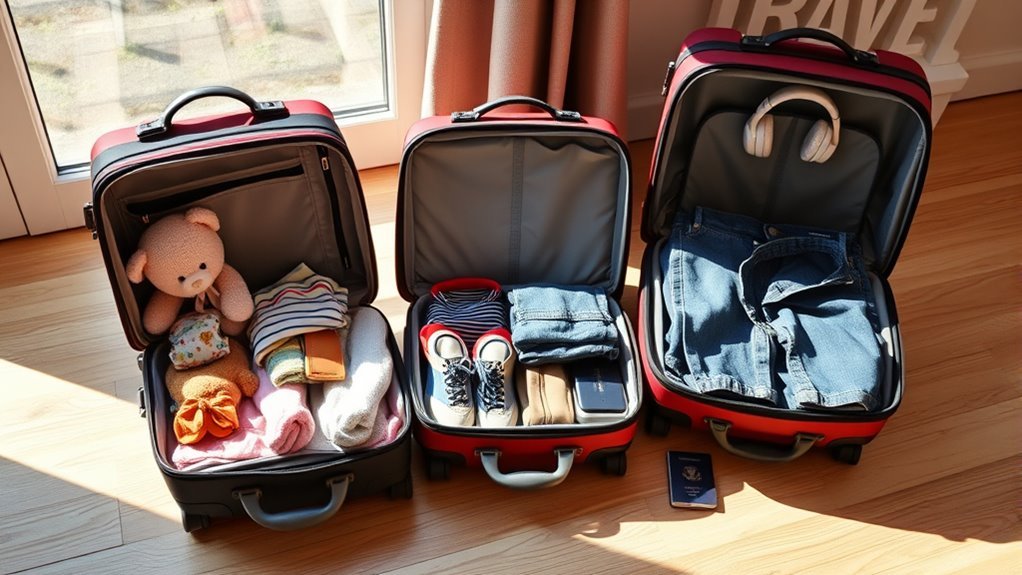
Wondering what suitcase size to grab for your child? Pick a small 18–20 inch case for weekend stays or sleepovers; it fits a few outfits, pajamas, and shoes.
For 3–5 day trips, choose 20–22 inches so clothes, a jacket, and toiletries pack without bulking.
For weeklong family vacations, go with 24 inches if they’ll carry or 28 inches if adults handle luggage; that holds extra layers and souvenirs.
For babies, a soft duffel or diaper bag often beats a hard suitcase.
Match size to trip length, who’ll lift it, and how much you’ll realistically pack.
Suitcase Sizes Explained: Carry-On, Cabin, Medium, Large
Because suitcase labels like “carry-on” or “medium” can mean different dimensions depending on the airline or brand, it’s helpful to know the typical size ranges and how they translate to real-world use.
Because labels vary by airline or brand, know typical size ranges and how they affect real-world packing.
Carry-on/cabin: about 18–22 inches tall, fits under or in overhead, best for short trips and kids who can pack light.
Small checked/medium: roughly 23–25 inches, holds a few extra outfits, shoes, and souvenirs for weeklong travel.
Large: 26–30 inches, bulky but useful for family trips or long stays.
Choose based on trip length, checked-bag allowance, and how much your child can manage.
Measure Your Child for the Right Suitcase Size
Start by measuring your child’s height and weight so you can match them to suitcase dimensions and weight limits.
Leave a little extra room for growth and added items like layers or souvenirs.
That way you won’t need to replace the bag after one trip.
Measure Height And Weight
How tall and heavy is your child right now? Measure them barefoot, standing straight against a wall for height, and use a reliable scale for weight. Record height in centimeters or inches and weight in pounds or kilograms.
These figures determine suitcase height, wheel stability, and handle reach, plus weight limits when packed. Compare measurements to manufacturer size charts and age recommendations to find a comfortable fit.
If you’re buying a wheeled carry-on, make certain the handle height won’t force bending. Keep measurements handy when shopping online or in-store so you choose a suitcase that matches their current body size.
Account For Growth Space
Now that you’ve measured your child’s current height and weight, think ahead and leave room for growth so the suitcase stays useful for several trips. Choose a case that accommodates extra clothes, shoes, and souvenirs without being oversized for current needs. Aim for a modest buffer—enough for one clothing size up or a growth spurt.
Consider adjustable packing: roll clothes, use compression cubes, and reserve a collapsible bag for overflow.
Check weight limits so your child can handle the luggage. Balance capacity with manageability by planning for gradual growth rather than one-time use.
- Allow one size up
- Reserve 20–30% extra volume
- Use packing cubes
- Add a collapsible bag
- Verify weight limit
Match Ages and Trip Length to Suitcase Sizes
Think about your child’s age and how long you’ll be away when picking a suitcase size. For toddlers and preschoolers, a small carry-on works for weekend trips.
While school-age kids may need medium or large suitcases for weeklong stays. Match packing needs to trip length so you don’t overpack or leave essentials behind.
Age-Based Size Guide
What suitcase should you pick for a child depends on their age and how long you’ll be gone. You’ll match size to growth, mobility, and how much they can carry.
For quick reference, consider typical age ranges and suitcase types:
- 0–2 years: diaper bag plus small tote for essentials.
- 3–5 years: soft-sided 18–20 inch carry bag for outfits and toys.
- 6–8 years: 20–22 inch spinner with bright design; room for extras.
- 9–12 years: 22–24 inch checked or larger carry-on for independence.
- Teens: adult carry-on or checked bag based on trip and clothes.
Choose light, durable options that fit car or cabin space.
Trip-Length Recommendations
Because trip length changes what you need to pack, match suitcase size to both the child’s age and how many days you’ll be away.
For day trips or overnight stays, a small carry-on or backpack suits toddlers and preschoolers—one outfit, pajamas, diapers or pull-ups, a change of shoes, and snacks.
For weekends, choose a medium spinner for elementary kids to hold two to three outfits, toiletries, and a small toy.
For weeklong trips, pick a large checked bag for older children to fit seven outfits, shoes, swimwear, and extras.
Adjust for laundry access and activities to avoid overpacking.
Best Size for Infants and Toddlers (0–3)
While your infant won’t need a large suitcase, choosing one that balances compactness and room for essentials makes trips smoother. Pick a carry-on or small cabin bag (20–24 inches) so you can stash diapers, spare outfits, and a blanket without hauling extra luggage.
Choose a compact 20–24-inch carry-on so you can neatly pack diapers, spare outfits, and a blanket.
Choose lightweight, durable material and easy-open compartments. Roll clothes to save space and use packing cubes for quick changes.
Consider wheels and a handle you can manage while holding your child.
- Diapers and wipes
- Two to three outfits
- Lightweight blanket
- Small first-aid kit
- Portable changing pad
Best Size for Preschoolers (4–6)
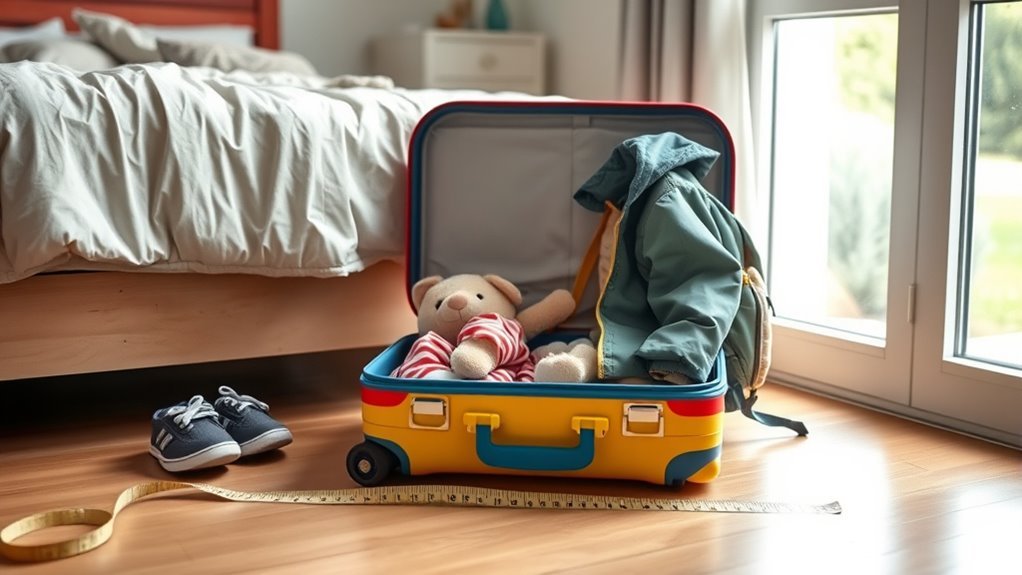
How much space will your preschooler really need? You’ll want a carry-on or small checked bag that fits outfits, a favorite toy, shoes, and a few extras. Choose lightweight, durable luggage with easy wheels and a handle kids can manage. Aim for 18–22 inches if you pack more than basics; 14–18 inches works for short trips.
| Trip length | Suggested size | Packed items |
|---|---|---|
| Weekend | 14–16 in | 2 outfits, PJs, small toy |
| 3–5 days | 16–18 in | 4 outfits, shoes, snacks |
| Longer | 18–22 in | Extra layers, toiletries |
Best Size for School-Age Kids (7–11)
As kids get older and start packing for sleepovers, school trips, or longer family vacations, you’ll want luggage that balances capacity with maneuverability—typically a 20–24 inch carry-on or small checked bag fits the bill for most 7–11-year-olds.
For 7–11-year-olds, pick a 20–24″ carry-on or small checked bag that balances capacity with easy maneuverability.
You’ll need something light, durable, and easy for them to handle. Choose wheels that roll smoothly and a handle they can reach.
Look for compartments to keep outfits, shoes, and toiletries organized so mornings are quicker.
- Lightweight shell
- Smooth spinner wheels
- Telescoping handle
- Internal dividers/pockets
- Durable zippers and locks
Best Size for Tweens and Teens (12+)
Because tweens and teens often pack bulkier clothes, electronics, and shoes, a larger carry-on or mid-size checked bag—typically 24–28 inches—works best to give them room without being unwieldy.
Choose a durable, lightweight suitcase with organized compartments and a padded laptop sleeve so their devices stay protected and chargers stay tidy.
Look for spinner wheels and a telescoping handle for easy maneuvering through airports and streets.
If they help pack, they learn weight limits and essentials.
Pick a neutral or personalized design so they can spot it quickly, and opt for expandable models for flexibility.
Packing Volume: Weekend, Week, Extended Trips
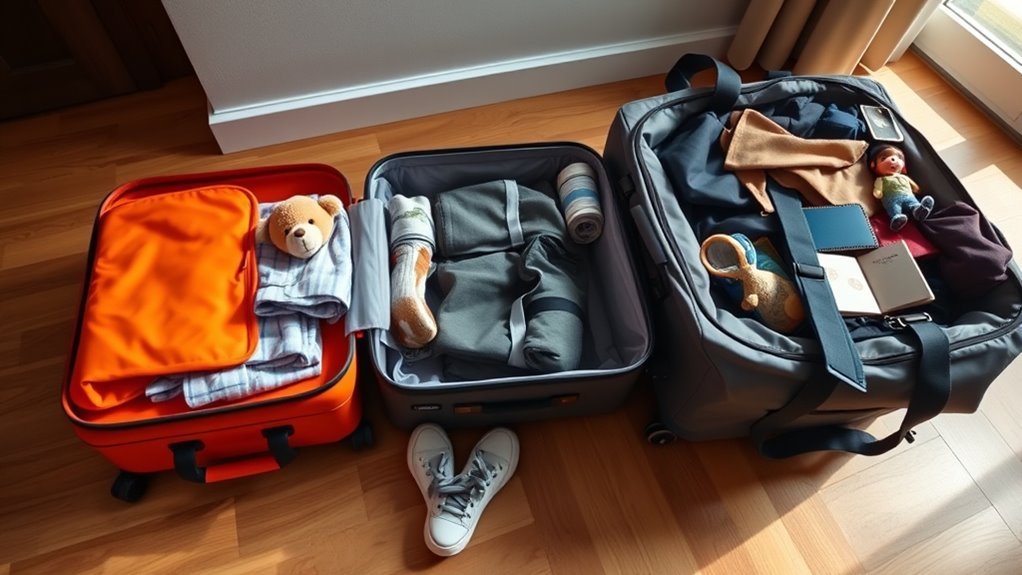
For a weekend trip you’ll usually want a compact carry-on or large backpack that fits two to three outfits, a pair of shoes, and toiletries.
For a week you’ll need something larger—around 40–60 liters—to hold more clothes, shoes, and perhaps a small laundry kit.
If you’re planning extended trips, think about expandable bags or checked luggage that give 70+ liters and room for extras.
Weekend Packing Size
Heading out for a weekend with a child? You’ll want a compact suitcase—around 20–24 liters or a small cabin bag—that fits two outfits, pajamas, a lightweight jacket, toiletries, and a modest toy. Pick something easy to carry and easy to access.
- Two daytime outfits plus sleepwear
- Small toiletry kit (travel sizes)
- One lightweight jacket or sweater
- One pair of extra shoes or sandals
- A favorite small toy or activity
You’ll avoid overpacking by sticking to essentials, using packing cubes, and planning laundry or quick outfit refreshes during the trip.
Week-Long Capacity
When you’re packing for a week with a child, aim for a medium-sized suitcase or a large carry-on around 35–45 liters so you can fit 5–7 days’ worth of clothes, a fuller toiletry kit, spare shoes, and a few comfort items without scrambling for space. Pack outfits by day, roll clothes to save room, use packing cubes, and reserve a small soft bag for laundry. Bring a compact first-aid kit and favorite sleep item. Plan for weather and activities so you won’t overpack.
| Item | Quantity | Tip |
|---|---|---|
| Clothes | 5–7 outfits | Roll/cube |
| Shoes | 2 pairs | One wear-on |
| Toiletries | Travel sizes | Refillable bottles |
Kid-Friendly Features: Wheels, Handles, Weight, Durability
Because a child’s suitcase needs to be easy to move and tough enough to last, look closely at wheels, handles, weight, and durability before you buy. Choose smooth-rolling wheels, a sturdy telescoping handle, and a light frame so your kid can pull or lift without strain.
Hard-shell vs. soft-shell matters for rough travel; reinforced corners help. Test zippers and seams for resilience.
- 360-degree spinner wheels for easy steering
- Height-adjustable handle for growing kids
- Lightweight materials to reduce lifting effort
- Durable fabric or polycarbonate shell
- Strong zippers and reinforced seams
Pack Smart for Your Suitcase Size (Space-Saving Tips)
Once you’ve picked a suitcase with the right wheels, handle, and durability, you’ll want to pack it so every inch counts. Roll clothes, use packing cubes, and layer heavy items at the base. Limit shoes to two pairs, wear the bulkiest. Use pockets for socks and chargers, and compress toiletries in leak-proof bags. Pack a lightweight laundry bag to separate dirty items. Foldable toys and flat books save space.
| Strategy | Why it helps | Quick tip |
|---|---|---|
| Rolling | Minimizes wrinkles, saves space | Roll tightly |
| Cubes | Organizes, compresses | Label by outfit |
| Layers | Balances weight | Heavy lowest |
Airline Size Limits and Fees for Kids’ Luggage
Although kids’ luggage often looks small, airlines treat it according to strict size and weight rules, so check carrier policies before you pack. You’ll face varied carry-on and checked limits, and fees can apply even for child-sized bags. Measure and weigh bags at home to avoid surprises.
Kids’ luggage may look small, but airlines enforce strict size and weight rules—measure, weigh, and check policies beforehand.
Remember that some low-cost carriers charge for all checked items, while major airlines may allow a small personal item free.
- Confirm carry-on dimensions for each airline
- Weigh checked bags to meet limits
- Note infant/child baggage allowances
- Check fee waivers for loyalty status
- Prepay fees online to save money
Checklist: Pick the Right Kid’s Suitcase Before You Buy
Now that you know how airlines handle kids’ bags and fees, pick a suitcase that fits both travel rules and your child’s needs. Check size and weight limits for your carriers, then choose a model that stays within them when packed.
Prioritize durability: hard or reinforced shells and sturdy zippers. Look for easy handles, smooth wheels, and a manageable weight so your child can pull or carry it.
Add organizational pockets and a name tag. Consider fun design to encourage responsibility.
Finally, test it packed at home to confirm closure, weight, and comfort before you buy.
Frequently Asked Questions
Can a Child Use a Rolling Backpack Instead of a Suitcase?
Yes — you can use a rolling backpack instead of a suitcase. It’s lighter, easier to maneuver, and doubles as a school bag, but make sure it fits airline size limits and has enough capacity for clothes and essentials for your child.
How Do I Sanitize a Used Kids’ Suitcase?
You should sanitize a used kids’ suitcase by emptying it, vacuuming debris, wiping interior and exterior with a mild detergent solution, disinfecting handles and zippers with alcohol wipes, and letting it air-dry fully in sunlight if possible.
Are Soft-Sided or Hard-Sided Suitcases Better for Kids?
Soft-sided suitcases are usually better for kids because they’re lighter, more flexible, and easier to stuff into tight spaces; hard-sided ones protect fragile items more, so choose based on weight needs and durability preferences.
Can Two Children Share One Suitcase on a Trip?
Yes, you can have two children share one suitcase for short trips, but you’ll need to plan outfits, divide items, use packing cubes, and limit extras so everyone’s essentials fit and stay organized without arguing or overpacking.
What Insurance or Warranty Should I Look for on Kids’ Luggage?
Look for durable-build warranties, covering frame, wheels, and handles for at least one year; check accidental-damage or loss protection, easy claim processes, and optional travel insurance for theft/delay. Read exclusions closely before you buy.
Conclusion
You’ve got the tools to pick a suitcase that actually works for your child: match the size to their age and trip length, measure them and the bag, prioritize lightweight, durable materials, easy-grip handles and smooth wheels, and use space-saving packing tricks. Check airline limits and fees ahead of time so you’re not surprised at the airport. With the right size and features, travel becomes easier, less stressful, and way more fun for both of you.