What Size Suitcase Holds 23KG
You’ll comfortably fit 23 kg in a 28–30 inch (75–80 cm) checked suitcase that offers roughly 60–100 liters of usable volume; choose a flat-walled hard or sturdy fabric case to maximize interior space. Pack dense items low and centered near the wheels, use compression cubes, and weigh as you go to avoid fees. Reinforced frames, durable wheels, and smooth zippers help with heavy loads — keep going to learn practical packing and gate-time fixes.
Quick Answer: Suitcase Size That Fits 23 Kg
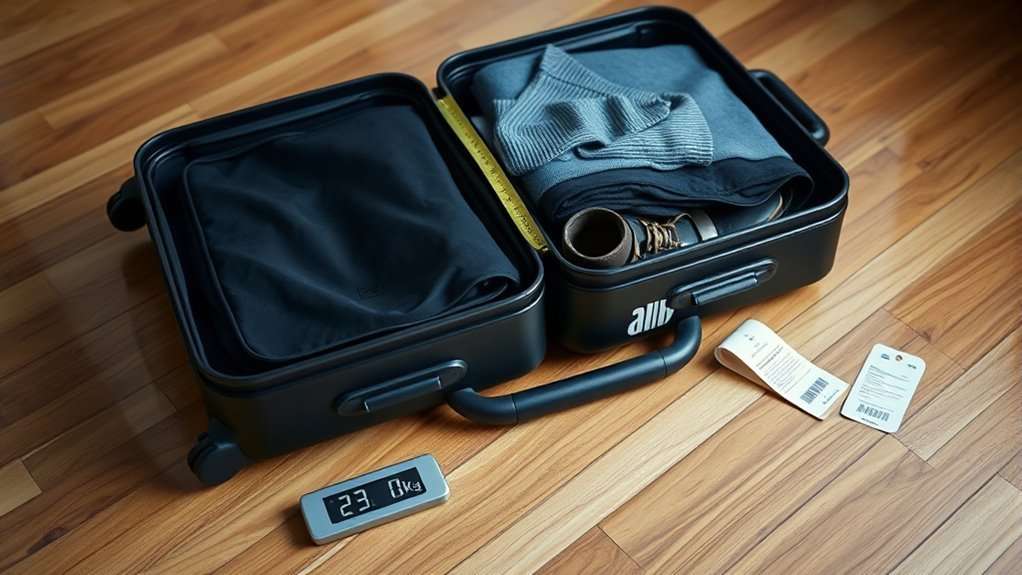
If you need to pack 23 kg, choose a large checked suitcase—typically 28 to 30 inches (about 75–80 cm) in height—because that size usually holds 60–100 liters and will accommodate 23 kg without overstuffing.
For 23 kg, opt for a 28–30-inch checked suitcase (75–80 cm) for comfortable packing.
You’ll want a durable shell or reinforced fabric, smooth wheels, and a reliable zipper or lock.
Aim for a suitcase with internal compression straps and multiple compartments to distribute weight evenly.
Check the tare (empty) weight so your packed total stays under limits.
If you’ll check bags frequently, pick one with a slightly larger volume to avoid tight packing and strain on seams.
Why Litres, Dimensions, and Weight Don’t Match
Because suitcase capacity is expressed in liters, exterior dimensions, and weight limits, you might expect those numbers to line up—but they measure different things, so they often don’t.
You’ll find liters describe internal usable volume, not the odd shapes or padding that reduce real space.
Exterior dimensions include wheels and handles, so a “large” case might offer less packing room than its size implies.
Weight limits are about how heavy airlines allow your bag to be, not how much it can hold.
Fabric thickness, frame structure, and packing efficiency change how volume converts to weight, so don’t equate the three.
Typical Airline Rule: The 23 Kg Checked-Bag Standard
When you check a bag on most international and many domestic flights, airlines commonly cap the standard checked allowance at 23 kg (about 50 lb), a limit designed to balance passenger safety, handling efficiency, and baggage-fee structures.
You should weigh packed luggage before travel to avoid overweight charges and last-minute repacking. Carriers enforce that cap per piece, and exceeding it often triggers higher fees or transfer to cargo.
Note that weight matters more than nominal suitcase size: a roomy case can still hit 23 kg quickly. Plan contents, distribute weight across suitcases, and use a reliable scale for certainty.
Measuring Internal Dimensions to Confirm Usable Volume
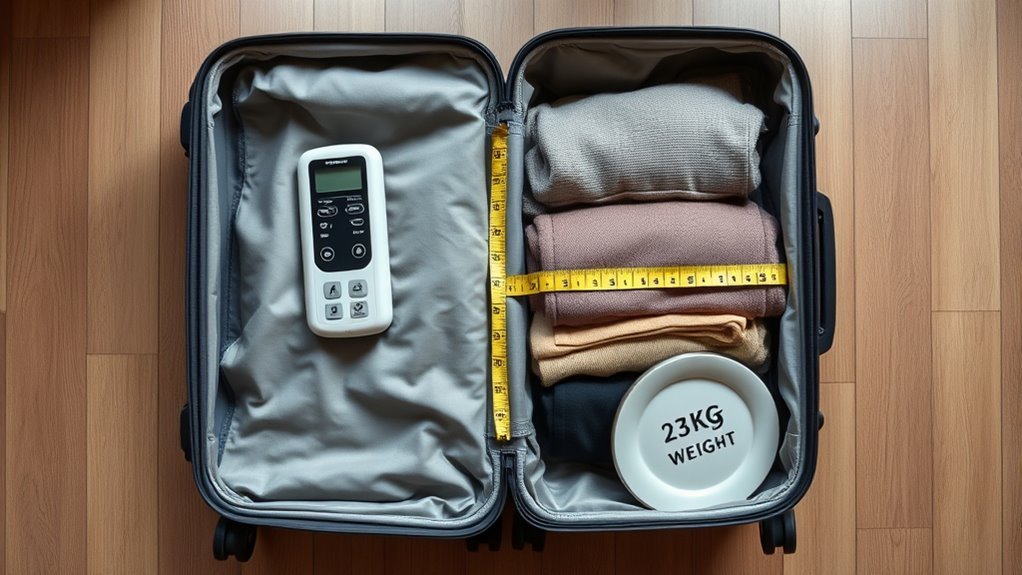
Knowing your bag’s weight limit is only part of packing smart—you also need to confirm how much you can actually fit inside. Measure internal length, width and depth at the widest usable points, ignoring pockets or awkward curves that won’t hold bulk.
Multiply those measurements to get internal litres (L = cm × cm × cm / 1000) and compare to the manufacturer’s stated capacity. Note zip gussets or removable dividers that change usable space, and account for compression from soft items.
Record measurements for each suitcase you own so you can match capacity to a 23 kg target without guesswork.
How Shape and Shell Thickness Reduce Usable Litres
When you check a suitcase’s capacity, remember the external shell and wall thickness eat into the claimed litres.
You’ll also lose usable space to curved corners, tapered tops, and internal ribs that make pockets shallower.
External Shell Impact
Because the shell’s shape and thickness determine how much of the suitcase’s stated volume you can actually use, you’ll often lose litres to curved walls and reinforced edges. You should assess external contours, corner guards, and rim overlaps since they shrink usable space even when capacity looks ample. Thicker shells add protection but cut internal width; tapered designs hide dead zones near top and bottom. Compare profiles before buying and weigh protection versus packing needs.
| Feature | Effect on Litres | What to Check |
|---|---|---|
| Curved walls | Moderate loss | Measure internal width |
| Reinforced edges | Small loss | Look for flat seams |
| Thick shell | Significant loss | Consider shell material |
Internal Shape Loss
Although a suitcase may advertise a generous litre capacity, the internal contours and shell thickness often cut into the space you can actually use. You’ll find wheel housings, corner reinforcements, and molded linings create voids that stop you fitting items snugly.
Rounded edges and tapered sides waste volume compared with boxy interiors. Thicker shells add durability but steal litres, especially in small carry-ons where every centimetre counts.
When packing for a 23kg limit, measure usable interior dimensions or test with your typical items. Choose designs with flat walls, minimal internal protrusions, and removable liners to maximize real-world capacity.
Common Suitcase Capacities and Litre Ranges
You’ll usually find carry-on suitcases range from about 30 to 45 litres, which fits essentials and a few clothing changes.
Checked bags commonly span 60 to 120 litres, with larger sizes approaching 140 litres for extended trips.
Knowing these ranges helps you match suitcase size to a 23kg target without overpacking.
Typical Carry-On Volumes
When you shop for carry-ons, think in litres rather than inches—most cabin bags fall between about 30 and 45 litres, with smaller under-seat options around 20–25 litres and roomy 45-litre rollers packing more clothing and extras.
Airlines often limit dimensions more strictly than weight, so matching litre capacity to your packing style helps you hit typical 7–10 kg carry-on loads without surprises.
Pick ~20–25 L for essentials and tech, 30–35 L for weekend trips, and 40–45 L if you want more outfits or souvenirs.
Check internal compartment design: compression straps, pockets and removable toiletry kits change practical capacity.
Checked Luggage Capacities
Carry-on litres tell you what you can take onboard, but checked luggage is where you’ll fit the bulk of a 23 kg allowance. You’ll find suitcases commonly range from 50–90 litres:
50–60L are compact checked bags, good if you pack efficiently;
60–75L suitcases suit most travelers aiming for 23 kg without overstuffing;
75–90L are roomy and risk exceeding weight limits if you pack heavy items.
Hardshell and softshell designs affect weight and usable volume.
Measure dimensions and weigh your bag empty, then estimate clothing and gear weight to choose a size that hits, but doesn’t exceed, 23 kg.
Why 70–90 L Is the Baseline for 23 Kg
Because most travelers pack a mix of clothing, shoes, and toiletries plus a few extras, a 70–90 L suitcase hits the sweet spot for staying within a 23 kg checked-bag limit without overstuffing.
You’ll get enough volume to layer outfits, include heavier shoes, and carry a toiletry kit while leaving margin for souvenirs. That range balances fabric compression and weight distribution so you’re less likely to exceed airline scales.
It also lets you choose durable, moderately weighted luggage without sacrificing load capacity. Pick a bag in this range and you’ll manage typical trip needs while minimizing weight-related fees.
Example: 23 Kg in a 75 L Soft Suitcase
If you pack smart, a 75 L soft suitcase can comfortably hold about 23 kg of clothing and gear.
Prioritize denser items like shoes and toiletries at the bottom and use compression bags to increase usable space.
Distribute weight evenly across the case and keep heavier items near the wheels to improve balance and handling.
Packing Capacity Estimate
Wondering how 23 kg fits into a 75 L soft suitcase? You’ll pack roughly 18–22 litres of clothing by volume if you aim for 23 kg, since dense items like shoes and toiletries weigh more than fabric.
Prioritize heavier pieces—boots, jackets, electronics—near the base to keep usable space above. Roll lighter garments and use compression bags to squeeze volume without adding weight.
Expect about 8–10 outfit combinations plus toiletries, a pair of shoes, and accessories if you pack efficiently.
Check fabric weight: a wool sweater can equal several T-shirts in kilos, so balance bulk versus mass.
Weight Distribution Tips
When you’re aiming for 23 kg in a 75 L soft suitcase, distribute weight low and centered to keep the bag stable and easy to roll. Place dense items like shoes and toiletries near the base, close to the wheels, and lighter clothing toward the top. Use compression cubes to lock layers and prevent shifting. Balance left and right so handles don’t pull unevenly.
- Pack heavy items along the spine and near the wheels for stability.
- Fill gaps with soft items to prevent movement and cushion contents.
- Keep essentials accessible in a top or front pocket for quick access.
Example: 23 Kg in an 80 L Hard Suitcase
Because hard-shell suitcases pack more efficiently, an 80‑liter hard suitcase can comfortably hold 23 kg if you distribute dense items near the base and use compression packing for clothing.
You’ll fit shoes, toiletries, a toiletry kit, and heavier electronics low and centered to keep the suitcase stable.
Roll or use compression bags for garments to maximize volume and prevent shifting.
Place fragile items in the middle, cushioned by clothing.
Use external pockets for small, light items.
Weigh as you pack and adjust layers to meet airline limits while keeping balance and accessibility for checkpoints and transfers.
Carry‑On Vs Checked: Why Carry‑Ons Rarely Reach 23 Kg
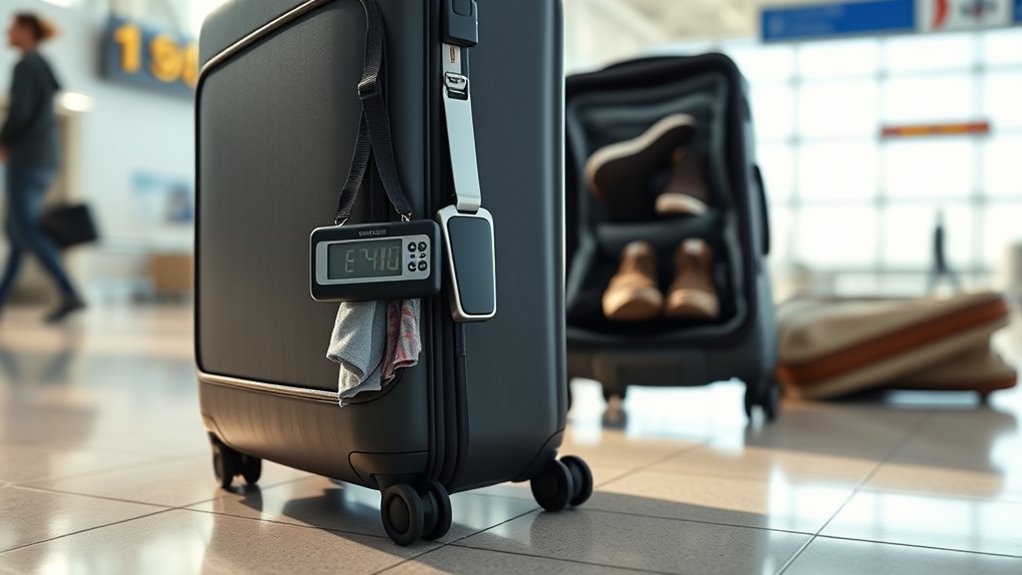
Although you can pack tightly, carry‑on bags rarely hit 23 kg because airlines set size and weight limits that prioritize ease of handling and cabin safety. You’ll find limits typically 7–10 kg for personal items and 8–12 kg for carry‑on, so weight piles up fast.
Although you can pack tightly, carry‑ons rarely reach 23 kg due to strict size and weight limits.
You also face space constraints and the need to lift bags into overhead bins.
- Cabin rules force lighter packing and fewer dense items.
- You’ll avoid bulk to fit dimensions and keep maneuverability.
- Staff may gate‑check oversized or overweight carry‑ons, so you can’t rely on reaching 23 kg.
How Clothing, Shoes, and Gear Affect Weight Per Litre
When you pack, remember that fabrics and bulk change how much mass fits per litre: a sweater takes more space but may weigh less than a compact, dense down jacket.
Shoes and gear are often heavy for their size, so a pair of sneakers or a camera can eat your weight allowance quickly.
Think in terms of weight per litre—soft clothing fills volume, hard items push up kilograms.
Clothing Weight Density
Clothing, shoes, and gear pack into your suitcase unevenly, so understanding their weight per litre helps you predict how much space a 23 kg allowance will actually hold. You’ll notice fabrics differ: denim and knits are dense, silks and synthetics are light. That changes how many outfits fit into the same volume.
- Dense items like jeans and sweaters raise weight quickly, cutting volume efficiency.
- Lightweight layers and compressed items stretch litre value, letting you carry more pieces for the same kilos.
- Packing method and compression influence measured density as much as fabric choice, so test combinations before travel.
Shoes And Gear
You’ll notice boots and trainers pack bulky volumes yet concentrate weight in small spots; place them near the case frame to stabilize and avoid wasted space. Roll socks into shoes to use voids, and choose lightweight sandals over heavy hiking boots when possible.
Tech chargers, toiletries, and belts are dense—group them in external pockets or a compression cube to control distribution. Thoughtful placement boosts usable litres before you hit 23kg.
Estimating Garment Weight Per Litre for Typical Trips
Because garments pack differently depending on fabric and folding, it’s useful to estimate an average weight per litre so you can translate suitcase volume into a likely 23 kg load.
Think about your wardrobe mix: lightweight summer pieces, midweight daily wear, and heavier items like jackets or denim.
Estimate liters needed by multiplying average kg/l by suitcase litres, adjusting for shoes and toiletries.
- Summer/light fabrics: ~0.15–0.25 kg per litre
- Mixed daily wear: ~0.25–0.35 kg per litre
- Heavy items or bulk: ~0.35–0.5 kg per litre
Use these bands to pick a suitcase volume that reaches 23 kg.
When to Choose Expandable Luggage to Hit 23 Kg
Now that you’ve estimated how many litres your garments will occupy, think about whether expandable luggage can help you reliably reach a 23 kg allowance. Choose expandable when your baseline pack leaves unused volume but you expect heavier items or souvenirs later.
Use expansion to gain 5–15% extra capacity without oversizing at check-in. Don’t rely on expansion for structural support; soft expansion can shift weight and stress zips.
Weigh packed and expanded configurations at home to confirm you hit but don’t exceed 23 kg. If you need consistent, heavy-duty loading, consider a non-expandable rigid case instead.
Best Suitcase Frames for Repeated 23 Kg Loads
When you plan to routinely pack up to 23 kg, choose frames that prioritize load-bearing strength and durable wheel/handle systems to avoid failure over time. You’ll want a structure that resists flexing, keeps shape, and transfers weight evenly so seams and zips don’t give out. Look for tested materials and reinforced joints.
For routine 23 kg loads, choose rigid, reinforced frames and durable wheels/handles to prevent wear and failure.
- Aluminum or reinforced polycarbonate frames for rigidity and lightness
- Internal cross-bracing and stitched reinforcements at stress points
- Simple, serviceable frame designs that you can repair or replace parts on
Pick frames rated for frequent heavy use and inspect them regularly for wear.
Wheel and Handle Strength for Heavy Repeated Use
When you’re packing 23 kg regularly, reinforced wheel assemblies make a big difference in longevity and smooth rolling. You should check for double-bolted axles and sealed bearings that resist wear and grit.
Also inspect the telescopic handle for solid locking points and metal uprights so it won’t bend or wobble under repeated stress.
Reinforced Wheel Assemblies
One of the most important features to check when you’re packing a 23 kg load is the suitcase’s wheel and handle assembly, since weak components fail quickly under repeated stress. You’ll want reinforced wheel assemblies that distribute weight, resist impact, and roll smoothly across surfaces.
Look for solid axles, sealed bearings, and molded housings that tie into the frame.
- Solid metal axles reduce wobble and shear risk.
- Sealed ball bearings keep grit out and rotation consistent.
- Molded housings anchor wheels to the shell, preventing cracks.
Choose assemblies rated for heavy cycles and inspect mounts regularly.
Telescopic Handle Durability
After checking reinforced wheel assemblies, you’ll want a telescopic handle that can stand up to frequent pulls, jerks, and the weight shift of a 23 kg load.
You should test materials—aluminum alloys resist bending, while stainless steel adds weight but boosts toughness.
Look for multi-stage shafts with snug locking detents to prevent wobble; loose handles strain joints and fabric.
Ergonomic grips reduce impulse yanking, and reinforced base plates distribute stress where the handle meets the shell.
Inspect connection points for rivets or bolts rather than thin stitching.
Prefer warranties covering handle failure, since repeated heavy use reveals weaknesses fast.
Zippers and Seams: Avoid Breakage at 23 Kg
Zippers and seams face real stress at 23 kg, so pick luggage with reinforced stitching and heavy-duty coil or metal zippers to prevent splits and snags. You’ll want features that endure repeated loading and rough handling without bulging or thread pull.
Zippers and seams take real strain at 23 kg—choose reinforced stitching and heavy-duty zippers to avoid splits and snags.
- Look for double-stitched seams and bartack reinforcements at strain points.
- Choose YKK or equivalent zippers with sturdy sliders and protective flaps.
- Inspect zipper tape attachment and seam allowance for consistent overlap.
You should test closure smoothness and feel for any weak spots before buying, and prefer models with replaceable zipper components to extend service life.
Internal Weight Distribution to Protect the Structure
Reinforcing seams and reliable closures helps, but how you pack inside will determine whether the suitcase frame survives that 23 kg load. You should place the heaviest items closest to the suitcase spine and near the wheels so weight sits over the strongest supports.
Balance weight side-to-side to prevent twisting and stress on zippers and handles. Use rigid organizers or packing cubes to keep dense items from shifting and to distribute force evenly.
Fill gaps with softer items to cushion edges. Check by lifting and rolling; if it feels lopsided, redistribute until the case tracks smoothly and seams stay flat.
Packing Techniques to Maximize Space: Roll, Fold, Compress
When you’re trying to squeeze 23 kg of gear into a limited shell, packing technique matters as much as suitcase size. You’ll optimize volume and protect items by choosing the right method for each piece. Rotate between rolling, folding, and targeted compression to fit more without creating chaos.
- Roll soft items to reduce gaps and keep wrinkles minimal.
- Fold structured garments along seams so they stack neatly and preserve shape.
- Compress bulk selectively, using gentle pressure for down or knitwear and avoiding crushing delicate fabrics.
Practice mixing methods by layer: heavy flat, rolled soft, folded structured, then fill voids.
Using Packing Cubes and Compression Bags Efficiently
After you’ve mixed rolling, folding, and selective compression, packing cubes and compression bags help you organize and increase usable space without undoing your careful layering. You’ll group items by outfit, fabric, or function so you find things fast. Use thin cubes for shirts, thicker ones for sweaters, and a compression bag for bulky coats. Place cubes flat to maintain balance and slide compressed bags to the suitcase base. Check weight distribution after packing. Clean, labeled cubes calm travel stress and let you adjust contents without a full repack.
| Calm | Control |
|---|---|
| Order | Ease |
| Lightness | Confidence |
What to Pack First When Aiming for Exactly 23 Kg
Start by placing your heaviest items—shoes, toiletry kit, and any electronics—near the suitcase base to keep weight balanced.
Then pack essentials like a change of clothes and travel documents so they’re easy to access.
Finally, use socks, belts, and other small accessories to fill gaps and fine-tune the weight.
Start With Heaviest Items
Because heavy items set the baseline for your suitcase weight, put them in first so you can build around them and hit 23 kg precisely. Place dense items low and centered to keep the case stable and make weighing easier. Handle fragile heavies last so they sit snugly against soft layers.
- Shoes, boots, and packed toiletries in sealed bags
- Electronics with chargers and power bricks, protected and centralized
- Small gear or weights that you won’t need en route
Weigh after this foundation, note remaining allowance, then add lighter pieces to reach — but not exceed — 23 kg.
Pack Essentials Next
Once you’ve laid in the heavy items, pack your essentials next so you control the remaining weight and guarantee immediate access to what you’ll need first. Choose items you’ll need upon arrival: a change of clothes, toiletries, documents, chargers, medication. Place them toward the top or in an external compartment to avoid unpacking the whole bag. Weigh as you go to hit 23 kg precisely; swap heavier non-essentials if needed. Prioritize efficient layout to prevent shifting and easy retrieval.
| Item | Where |
|---|---|
| Change of clothes | Top compartment |
| Toiletries | Toiletry bag |
| Documents | Front pocket |
| Chargers/meds | Small pouch |
Use Filling Accessories
After you’ve packed your essentials where they’re easy to reach, use filling accessories to fine-tune weight and keep everything snug. You’ll add small items that both fill gaps and adjust kilos without bulking up. Choose lightweight, dense pieces to raise weight subtly or compressible items to save space. Try pockets and corners first, then layer to balance.
- Pack belts, socks, and underwear in shoes to add solid grams.
- Slip a toiletry kit or charger bundle into crevices to stabilize the load.
- Use a travel pillow or folded jacket to fill larger voids and protect fragile gear.
Smart Swaps to Reduce Bulk but Retain Weight
If you want to hit a 23 kg baggage limit without bulking up your case, swap heavy, space-hogging items for denser, compact alternatives that keep weight but free up room. Choose a small metal toolkit over loose bulky tools, replace bottles with sealed travel-sized containers filled to capacity, and pack a dense paperback instead of several magazines.
Swap fluffy sweaters for a single weighted knit and trade oversized toiletry kits for compressed pouches. Use packing cubes to compress clothing and tuck shoes with socks inside them to consolidate mass. These swaps preserve weight while maximizing usable space.
Packing Fragile Items While Filling to 23 Kg
You’ve learned how to swap bulky items for dense ones to hit 23 kg—now apply that same mindset to fragile pieces so they arrive intact. Wrap each fragile in soft layers, then place heavier, denser items around them to cushion and stabilize. Distribute weight so nothing shifts during transit.
Treat fragile items like weight—wrap them, nest in soft layers, and surround with dense pieces to prevent shifting.
- Nest fragile items in clothing or bubble wrap, avoiding empty space.
- Use hard-sided compartments or a rigid box inside the suitcase for extra protection.
- Pack fragile items centrally, away from seams and wheels, with heavier items on the outside.
Check seams and compression straps; tighten to minimize movement.
Balancing Weight for Airline Scales and Ground Handlers
How will you make the scale—and the baggage handlers—see your suitcase as easy to manage? Center heavy items low and near the wheels to keep the case stable and compact.
Distribute weight evenly across compartments so no side bulges or tips. Use clothing as padding to prevent shifting, and lock dense items toward the middle to avoid uneven pressure on handles.
Keep heavier pieces away from top corners where handlers grab. Don’t overpack exterior pockets that add awkward bulk.
Tools to Weigh Luggage Before You Leave
Once your bag is packed for stability and handler-friendly lifting, check its weight with the right tools before you leave. You’ll avoid surprises at the airport by using simple, reliable devices and quick methods that fit any trip.
- A digital luggage scale: clip the handle, lift, and read; it’s accurate and portable.
- A bathroom scale: weigh yourself, then weigh holding the bag; subtract for the bag’s weight.
- A hanging bathroom hook or spring scale: low-tech, handheld, good for odd-shaped bags.
Carry the tool in your bag or keep one near the door for last-minute checks.
Top Mistakes That Push Bags Over 23 Kg (And Fixes)
Because airlines cap checked baggage around 23 kg, common packing habits can quickly push your bag over the limit — and that’s what leads to surprise fees or forced repacking at the counter.
You cram heavy shoes and toiletries at the bottom; fix it by packing dense items near the wheelbase to balance weight and saving lighter clothes for the top.
You bring duplicate outfits; fix it by planning mixes and using packing cubes.
You forget to weigh after souvenirs; fix it by reserving a pocket for purchases.
You ignore fabric choices; fix it by swapping bulky sweaters for lightweight layers.
What to Expect at Check‑In With a 23 Kg Bag
Curious what happens when you wheel up to check‑in with a bag at 23 kg? You’ll step to the counter, place it on the scale, and watch the display settle — right on the typical allowance.
Staff will glance, scan your tag, and usually tag it through without fuss. Expect polite confirmation and routing instructions.
- Keep your ID and boarding pass ready for a quick check.
- Be prepared to open the bag if an agent asks for a security look.
- If your bag fits the airline’s dimensions and weight, it’ll be accepted and directed to baggage handling.
You’re set to proceed to security.
Airline Exceptions and Fees Beyond 23 Kg
Airlines set a 23 kg (50 lb) checked-bag benchmark, but policies vary and you can expect exceptions or extra charges if your bag exceeds that limit.
You’ll find weight thresholds (often 23 kg, 32 kg) tied to fees; overweight past 23 kg usually incurs a surcharge, and bags over 32 kg may be refused or require cargo handling.
Premium fares, elite status, or certain credit cards can waive fees or raise limits.
International routes, low-cost carriers, and charters differ, so check the airline’s website before packing.
If you’re over, redistribute, pay the fee, or ship items separately.
Recommended Suitcase Models That Reliably Hold 23 Kg
When you’re packing to hit the 23 kg mark, pick a suitcase built to handle the weight without strain—sturdy shell or reinforced fabric, reliable wheels, and a solid zipper or lock make the difference between a smooth trip and a damaged bag.
Pack smart for 23 kg: choose a sturdy, well-built suitcase—reinforced shell or fabric, reliable wheels and secure zippers.
You’ll want models known for durability and balanced capacity. Consider choices with reinforced frames, double-spinner wheels, and tested weight limits so you won’t worry at check-in.
- Hard-shell 26–28″ spinner with reinforced corners for even load distribution.
- Hybrid fabric case with internal frame and heavy-duty zippers.
- Airline-approved 23–25 kg rated checked suitcase with replaceable wheels.
Choose what matches your travel style.
Budget Suitcases That Handle a 23 Kg Load
When you’re shopping on a budget, focus on suitcases made from tough materials and solid construction so seams, zippers, and handles won’t fail under a 23 kg load.
Check the bag’s tare weight and stated capacity to guarantee you can pack up to 23 kg without exceeding airline limits.
Compare value-focused brands that balance durability and cost to get the most reliable option for your trips.
Durable Materials And Construction
Because a 23 kg load stresses seams, wheels, and zippers, you’ll want a budget suitcase built from tough materials and smart construction. You’ll look for reinforced stitching, abrasion-resistant fabric, and solid frame support so the bag won’t sag or split. Check hardware quality and wheel attachment points; those fail first under heavy use. Prefer designs that distribute load evenly and allow easy repairs.
- Ballistic nylon or polyester blends resist tears and scuffs.
- Double-stitched seams and taped interior seams prevent seam failure.
- Replaceable wheels and exterior bumpers extend usable life.
Weight And Capacity Limits
If you’re packing up to 23 kg, check a budget suitcase’s stated weight capacity and internal volume to make sure it can carry the load without stressing zippers or wheels.
You’ll want to compare the empty weight of the case plus 23 kg against airline limits and the bag’s max load rating.
Look for reinforced handles, dual-wheel spinners, and strong zipper tapes—specs that indicate real-world capacity.
Also confirm interior dimensions and compartment layout so your items fit without awkward compression.
Test reviews and user photos often reveal whether a budget model truly handles repeated 23 kg trips.
Value-Focused Brand Options
While shopping on a budget, you can still find suitcases built to handle a 23 kg load without falling apart or blowing your luggage allowance. You’ll want brands that balance materials, warranty, and design so your bag stays light but strong. Look for reinforced corners, sturdy zippers, and reliable wheels in affordable lines. Compare specs and reviews to avoid surprises.
- Hard-shell polycarbonate options that resist dents
- Soft-shell polyester with reinforced frames and compartments
- Hybrid models offering structured support and expandable capacity
Choose models with clear weight ratings and a decent return policy to protect your purchase.
Premium Suitcases Built for Repeated 23 Kg Use
When you need a suitcase that can reliably take 23 kg trip after trip, choose a premium model built with reinforced frames, high-denier shells, and heavy-duty hardware.
Choose a premium suitcase with reinforced frames, high-denier shell, and heavy-duty hardware for reliable 23 kg trips.
You’ll want wheels rated for thousands of miles, dual-stage handles with solid locking points, and corrosion-resistant zippers or TSA locks.
Look for structured interiors with compression panels and reinforced base plates to prevent sagging under weight.
Hard-shell polycarbonate or ballistic nylon exterior options resist dents and tears.
Expect higher warranty coverage and repair networks.
Investing in these features means your case will maintain form, protect contents, and roll smoothly under repeated 23 kg loads.
Luggage Picks by Trip Length: Week, Two‑Week, Long‑Haul
Because trip length shapes how much you pack and what features matter most, pick luggage that matches a week, two‑week, or long‑haul itinerary. You’ll choose size, wheels, and organization based on duration and airport handling.
For a week, go light and mobile; for two weeks, prioritize capacity and compression; for long‑haul, durability and expandability matter. Consider weight limits and ease of transport so you’re not scrambling at check‑in.
- Week: carry‑on or 40–45L spinner, easy to stash and roll.
- Two‑week: 60–75L medium checked bag with compression straps.
- Long‑haul: 80–110L robust checked trunk with reinforced corners.
Splitting 23 Kg Across Two Bags: When and How
If you’re trying to stay under a 23 kg limit, splitting your weight across two bags can save you fees and stress at check‑in. Decide based on airline rules: some allow two checked pieces, others charge per item.
Use one larger main bag for clothes and bulk items, and a second smaller bag for shoes, toiletries, and valuables. Weigh each bag as you pack, aiming for an even split to avoid one overweight piece.
Distribute dense items—shoes, chargers—across both bags. Label both clearly, lock valuables in carry‑on if allowed, and review transfer limits for connecting flights.
Packing Heavy Equipment Into a 23 Kg Allowance
Although you’ve only got 23 kg to work with, you can still bring bulky gear by prioritizing essentials, choosing compact or split-friendly versions, and weighing as you go. You’ll need to audit gear, pick multipurpose items, and avoid duplicates.
Use padding-smart packing and external straps for odd shapes, and place dense items near wheels to stabilize.
- Choose lighter models or remove nonessentials (tripod legs, extra batteries)
- Pack heavy parts in carry-on or distributed pockets to balance checked weight
- Weigh incrementally and reconfigure until you hit the limit without sacrificing critical functionality
Handling Souvenirs and Shopping on the Return Trip
When you’re buying souvenirs on the return trip, plan for weight and fragile items from the start: leave room in your checked bag, carry breakables in your hand luggage, and set a running tally of purchases so you don’t exceed 23 kg at the airport. You’ll prioritize dense items in checked luggage and small, fragile pieces in your carry-on. Weigh periodically, redistribute if needed, and use compression packing cubes. Consider postage for bulky buys. Below is a simple checklist:
| Item type | Storage | Action |
|---|---|---|
| Ceramics | Carry-on | Wrap, cushion |
| Clothes | Checked | Compress |
| Jewelry | Carry-on | Secure |
| Books | Checked | Weigh |
Maintenance Tips to Keep a 23 Kg Suitcase Roadworthy
Since you’re relying on that suitcase to safely carry up to 23 kg trip after trip, keep its wheels, handles, zippers, and shell in good shape with a few quick checks. Inspect wheels for debris and wobble; lubricate bearings lightly. Test telescoping handles for smooth extension and tighten loose screws. Run zippers along their tracks and treat stiff teeth with zipper lubricant.
- Wipe and dry the shell after trips to prevent grime buildup.
- Store it partially open in a cool, dry place to avoid odors.
- Reinforce seams with fabric tape before long journeys.
When to Replace a Suitcase That Can’t Handle 23 Kg
If your suitcase shows persistent structural damage, failing wheels, or weakened seams that keep it from safely carrying 23 kg, it’s time to replace it rather than keep repairing it. You should also swap it when repairs become frequent, costs approach replacement, or when safety is uncertain. Choose a sturdier model rated for checked baggage, test handles and locks before travel, and pick materials suited to your trips.
| Indicator | Action |
|---|---|
| Repeated repairs | Replace |
| Cost > 50% of new | Replace |
| Safety concerns | Replace |
Quick Troubleshooting at the Gate: Stuck Zipper, Failed Wheel
You’ve decided to replace a suitcase rather than risk damage or delays, but sometimes problems pop up at the gate even with a solid bag—like a stuck zipper or a failed wheel. Act fast, stay calm, and use simple fixes to avoid missed flights.
- Lubricate zippers with a pencil tip or soap and gently work them; don’t force metal.
- Swap to a carry tote for fragile items if a wheel quits; secure straps to prevent shifting.
- Ask gate agents for tape, zip ties, or a luggage cart; airlines often help with minor repairs.
Prioritize safety and boarding time.
Preparing for Airport Scales: Tips and Staging
When you’re getting ready to step on the scale, stage your bag and carry-ons so weight is obvious and easy to adjust. Lay heavy items near the zipper, keep valuables in a removable pouch, and place removable shoes or jackets on top. Use a portable scale beforehand and transfer items between checked and carry-on while watching totals. Stay calm and cooperative with staff if adjustments are needed.
| Action | Item Type | Quick Tip |
|---|---|---|
| Weigh | Checked | Use luggage scale |
| Shift | Carry-on | Move dense items |
| Remove | Personal | Pocket lighter items |
Checklist to Hit But Not Exceed 23 Kg
Start by picking a suitcase and packing gear made from lightweight materials so you’ve got margin for essentials.
Prioritize items you’ll actually use—layerable clothes, travel-size toiletries, and versatile shoes—so nothing bulky takes unnecessary weight.
Use a simple checklist to add must-haves first, then fill remaining allowance with optional items.
Choose Lightweight Materials
Because every gram counts when you’re targeting a 23 kg checked limit, pick suitcase materials that cut weight without sacrificing durability. You’ll want a case that stays light so you can pack more essentials while staying under the limit. Focus on strength-to-weight ratio and practical features that reduce unnecessary mass.
- Hard shell polycarbonate: rigid protection, surprisingly light, resists dents.
- Durable nylon or ballistic fabric: flexible, repairable, often lighter than leather.
- Lightweight frames and wheels: aluminum or composite reduces base weight without losing stability.
Choose proven brands, check tare weight, and compare before you buy.
Prioritize Essential Items
How do you pack smarter to hit—but not exceed—the 23 kg limit? Start with a clear essentials checklist: travel documents, medications, one versatile outfit per day, underwear, socks, toiletries in travel sizes, chargers, and a compact first-aid kit.
Prioritize multipurpose items—a scarf that’s a blanket, shoes that suit day and night. Lay items out and weigh them mentally; remove duplicates. Use a small digital scale during packing and swap heavy items for lighter alternatives when necessary.
Keep nonessentials in your carry-on or opt to buy basics at your destination to stay within the limit.
Final Checklist: Choose Size, Pack Smart, Avoid Overweight Fees
When you’re finalizing luggage, pick the suitcase that matches your airline allowance and pack with intention so you don’t get slapped with overweight fees. You’ll weigh, redistribute, and remove extras before you leave.
Use these quick checks to lock in compliance and peace of mind:
- Weigh your packed bag at home and compare to the airline limit; shift items to hand luggage if needed.
- Pack dense or heavy items near the wheels to balance and avoid bulky clothing that adds bulk but little value.
- Use compression cubes, limit shoes, and wear the heaviest layers to reduce checked weight.
Frequently Asked Questions
Can I Bring Liquids Exceeding 100ML Inside a 23 Kg Checked Suitcase?
Yes — you can pack liquids over 100ml in a 23 kg checked suitcase; airlines allow larger containers in checked baggage, but you should seal them well, follow airline rules, and check dangerous goods restrictions to avoid confiscation.
Do International Airlines Vary the 23 Kg Allowance by Route or Fare Class?
Yes — airlines often vary the 23 kg allowance by route and fare class. You’ll find differing limits, fees, and included allowances depending on ticket type, frequent-flyer status, and regional or international route policies.
How Does Humidity or Moisture Affect Suitcase Weight During Travel?
Humidity can add weight because your suitcase and contents absorb moisture; wet clothes, damp leather, or swollen cardboard pack increase mass. You’ll notice heavier baggage after rain, humid flights, or storing items in damp environments.
Can I Insure My Suitcase Contents Specifically for Checked-Bag Weight Claims?
Yes — you can insure checked-bag contents specifically for weight-related claims through travel insurance or baggage-specific policies; check coverage limits, documentation requirements, and airline liability exclusions, and keep receipts and weighed baggage proof to support any claim.
Are There Rules for Transporting Batteries or Lithium Devices Within a 23 Kg Bag?
Yes — you must follow airline and IATA rules: you’ll pack spare lithium batteries in carry-on, limit capacity, protect terminals, and declare damaged or large batteries; check specific airline rules before flying to avoid confiscation or fines.
Conclusion
You’ll want a medium suitcase around 60–75 liters (typically 24–26 inches) to comfortably hold 23 kg when packed sensibly. Remember litres, dimensions and shell thickness affect usable space, and airlines measure weight, not volume. Stage items, use packing cubes, weigh at home and keep a soft foldable bag for overflow. At the gate, zip and wheel issues can cost time — so balance heavy items close to the wheels and follow the checklist to avoid surprise fees.