Which Type of Luggage Is Better
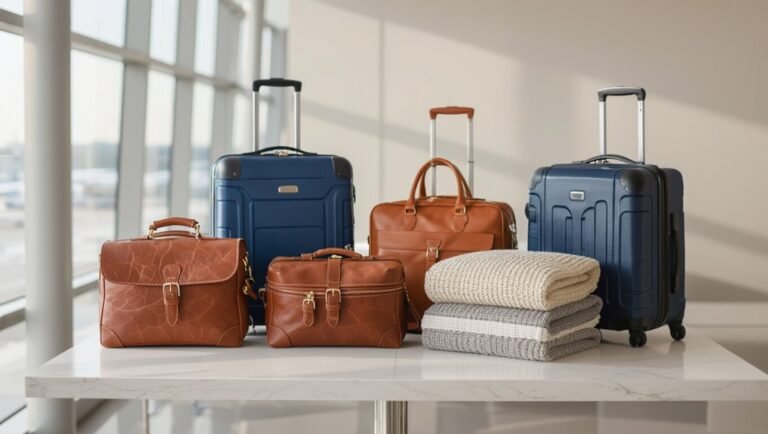
There’s no one “better” luggage—you should pick what matches how, where, and how often you travel. For short urban or multi‑stop trips, a compact soft carry‑on with external pockets and lightweight fabric works best. For checked or international travel, choose a durable hard‑shell or rugged spinner with quality wheels and organized compartments. Prioritize weight, handle smoothness, repairability, and warranty. Keep size and airline limits in mind, and keep going to see practical matching tips and tests.
Quick Luggage Decision Guide
When you’re choosing luggage fast, focus on size, weight, and durability—pick the smallest bag that fits your trip’s needs.
Decide if you’ll check bags or carry on, then weigh items you plan to pack.
Decide whether to check luggage or carry it on, and weigh what you plan to pack.
Prioritize lightweight shells or soft fabric that compresses when needed.
Check wheel quality and handle sturdiness; cheap wheels slow you down.
Look for organized interiors and external pockets for quick access.
Consider security features like TSA locks and reinforced zippers.
If you’ll move frequently, prioritize maneuverability over maximum capacity.
Test how it feels when loaded before you commit to buying.
Which Traveler Are You?
Are you a light-pack minimalist who prefers a carry-on and versatile outfits, or a gear-heavy adventurer hauling equipment for every activity?
Your travel style should guide whether you choose sleek, lightweight luggage or rugged, spacious bags.
Think about how much you pack and what you need to bring before picking a suitcase.
Light-Pack Minimalist
If you like moving fast and carrying only essentials, you’re a light-pack minimalist: someone who trims toiletries, outfits, and extras down to one compact bag so travel stays effortless and flexible.
You choose versatile clothing, neutral pieces that layer, and quick-dry fabrics to cut outfit counts. You rely on multipurpose toiletries, small chargers, and a slim first-aid kit.
You prefer a carry-on or daypack that fits overhead compartments and city transit. You accept occasional laundry, limited souvenir space, and stricter weather choices in exchange for speed, lower baggage fees, and the freedom to change plans on a whim.
Gear-Heavy Adventurer
Ever need gear for every eventuality and hate leaving anything behind? You pack like it’s a mission: layers, tools, backup batteries, and specialized kit.
You need luggage that’s rugged, spacious, and organized—think hard-shell checked bags or roomy adventure duffels with compression straps and external pockets.
Look for reinforced handles, smooth zippers, and padding for fragile items. Wheels that handle rough terrain and a detachable daypack make changeovers easier.
Balance weight with durability; prioritize modular packing cubes and waterproof compartments.
You’ll want gear that protects investments and keeps essentials accessible so you’re ready when opportunity or challenge appears.
Key Decision Criteria: Durability, Weight, Organization, Cost
You’ll want to weigh durability versus flexibility to decide if a hard shell or soft bag fits your trips.
Consider how weight affects fees, mobility, and how much you can pack.
Think about organization—compartments and pockets can save time and stress on the road.
Durability Versus Flexibility
Wondering whether a hard-shell suitcase or a soft-sided bag better suits your trips? You’ll weigh durability against flexibility: hard shells resist impacts, water, and crushing, protecting fragile items and keeping organized packing intact.
Soft-sided bags flex into tight spaces, compress when needed, and often offer external pockets for quick access. Choose hard if you prioritize item protection and longevity; pick soft if you need adaptable storage, expandable capacity, and easier stowing.
Consider repairability and material quality—zippers and seams matter. Balance initial cost with expected lifespan and how you pack; that clarity guides the smarter choice for your travel style.
Weight Impact On Travel
Durability and flexibility affect more than protection—they also shape how much you’ll lug through airports, taxis, and hotel rooms. Lighter luggage reduces strain, lets you carry souvenirs, and can lower checked-bag fees. Heavy-but-rugged pieces protect fragile items but make transfers harder and slow you down. You’ll weigh durability against how much you’ll physically handle: choose lighter shells if you move constantly; pick sturdier cases for rough trips. Budget options may save money but add weight. Consider weight limits, your strength, and trip pace to balance durability, cost, and ease.
| Emotion | Image | Decision |
|---|---|---|
| Relief | 🕊 | Light choice |
| Confidence | 🛡 | Sturdy choice |
Organization And Compartmentalization
How do you want to find things on the road? You want compartments that match your routines: zippered pockets for documents, mesh for toiletries, and a dedicated shoe or tech section.
Hard-shell bags offer structured organizers that protect gear and resist crushing, boosting durability but adding weight and sometimes cost.
Soft-sided cases and backpacks bend to odd items, stay lighter, and often include external pockets for quick access, though they may wear sooner.
Prioritize organization if you value quick retrieval and careful packing; choose based on how much weight and expense you’ll accept to keep things orderly.
How to Match Luggage to Trip Style
Whether you’re heading out for a weekend city break, a two-week international trip, or a rugged camping weekend, matching your luggage to the trip style makes packing and travel smoother.
For quick urban trips, choose a compact carry-on or weekender with easy access pockets so you move fast.
For extended international travel, pick a larger spinner or checked bag with organized compartments and sturdy handles to handle transfers.
For active or outdoor trips, use durable duffels or backpacks with weather resistance and external attachment points.
Consider weight limits, mobility, and how often you’ll need to access items while traveling.
Hard-Shell vs Soft-Sided Luggage: Main Differences
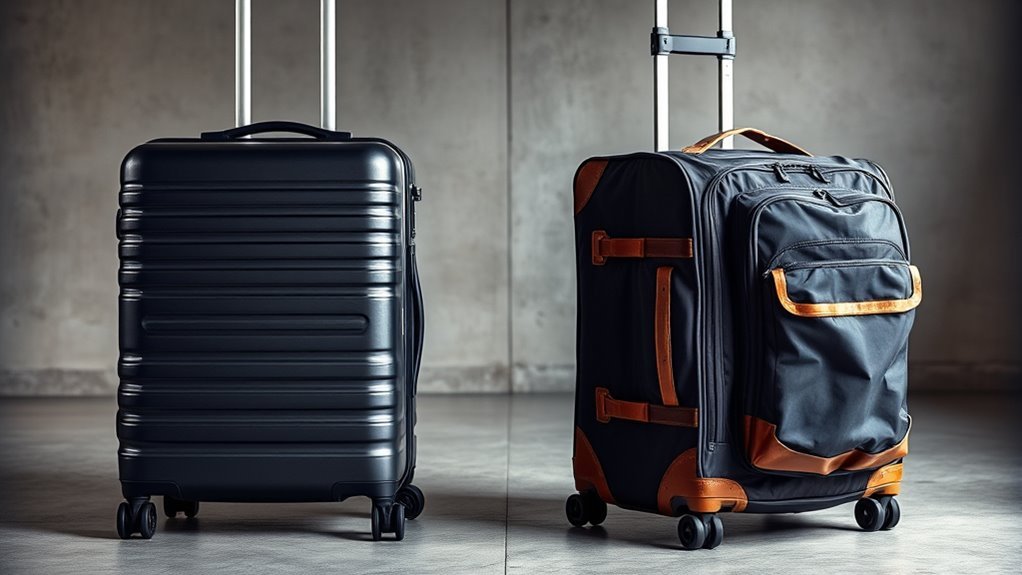
Matching luggage to trip style also means choosing the right shell type, since the outer material affects protection, weight, and flexibility. You’ll notice hard-shell cases resist impact, shed moisture, and keep shape, protecting fragile items but sometimes adding weight and limiting external pockets.
Soft-sided bags compress into tight spaces, weigh less, and offer expandable pockets for shoes or documents, yet they’re more vulnerable to snags and spills.
Consider handling differences: hard shells glide and stack, soft sides squish and fit irregular trunks. Both come in various sizes and budgets, so balance durability, storage needs, and convenience for your travel habits.
When to Choose Hard-Shell Luggage
If you pack fragile items, travel in wet climates, or want a case that stacks neatly for checked flights, choose a hard-shell suitcase.
You’ll get rigid protection against impacts, water resistance during rainy transfers, and a smooth exterior that wipes clean.
Hard shells resist crushing, keep oddly shaped contents stable, and often include integrated locks for security.
Pick polycarbonate for lightweight strength or ABS for budget trips.
They’re ideal when you need reliable protection, want durable wheels and handles, or frequently gate-check gear.
Avoid assuming they’re lighter or more flexible; use them when protection and structure matter most.
When to Choose Soft-Sided Luggage
If you value light weight and flexibility for schlepping through crowded streets or tight overhead bins, soft-sided luggage is a smart pick.
You’ll appreciate its expandable packing capacity when you bring home extra souvenirs or need to compress layers on the way out.
It also makes storage and handling easier—you can tuck it into closets or squeeze it into car trunks with less hassle.
Light Weight And Flexibility
Because soft-sided luggage weighs less and bends to fit tight spaces, it’s the smart choice when you want easy handling and more packing flexibility.
You’ll lift and wheel lighter bags with less strain, ideal for stairs, buses, and tight overhead bins. The fabric gives as you shove a bag into a crowded trunk, and external pockets let you grab essentials fast.
You won’t need bulky rigid items that waste space; instead, you can layer clothing, compress items, and adjust load distribution on the fly.
Choose soft-sided when mobility, quick access, and minimal lifting effort matter most.
Expandable Packing Capacity
Want to bring home souvenirs or need extra room for last-minute items? Choose soft-sided luggage when you want expandable packing capacity. Its zip-expand sections let you increase volume without buying a larger bag, so you can pack gifts, bulky sweaters, or items picked up en route.
Soft-sided fabrics flex around odd shapes and compress slightly to fit into tight spaces. You’ll appreciate the ability to adjust capacity for return trips or unpredictable packing needs.
If you value adaptable space and occasional overpacking, soft-sided bags give you that practical breathing room without forcing you to overhaul your entire luggage setup.
Easy Storage And Handling
You’ll also notice soft-sided luggage makes life easier before and after travel: its flexible fabric lets you squeeze bags into tight closets, car trunks, or overhead bins.
Lighter construction means you can lift and maneuver them with less effort. You’ll appreciate handles and external pockets that let you grab essentials without opening the main compartment, and removable straps or compression panels that stabilize odd loads.
If you store bags in small spaces or often rearrange gear, soft-sided cases slide into gaps and adapt to uneven stacks.
Choose them when convenience, weight savings, and adaptable storage matter most to you.
Spinner (Four-Wheel) vs Two-Wheel: Overview
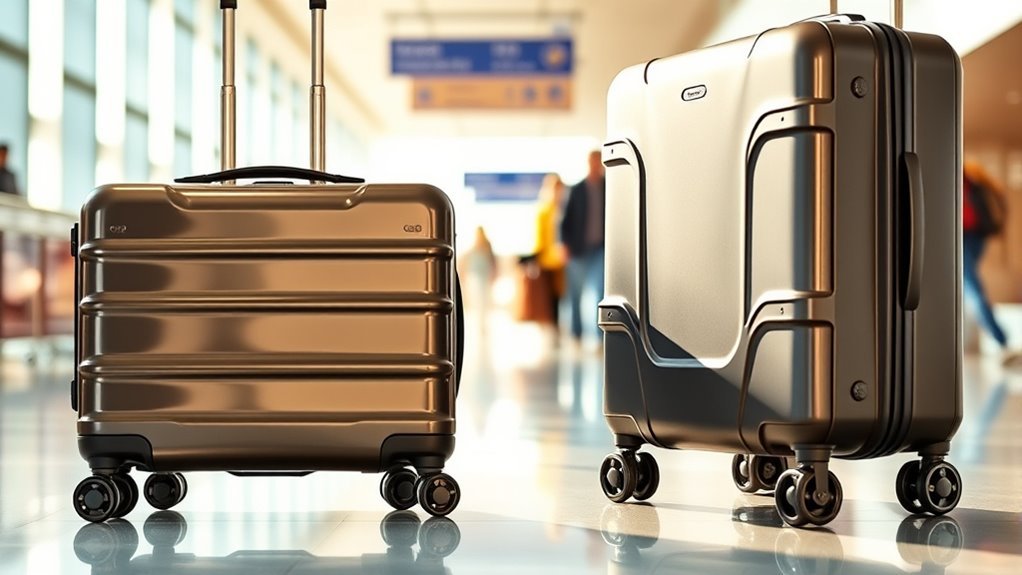
Curious which wheel layout suits your travel style? You’ll weigh maneuverability, stability, and durability when choosing between spinner and two-wheel suitcases.
Spinners roll upright on four casters; two-wheel bags tilt and roll on recessed wheels. Each has trade-offs: spinners glide in flat, crowded spaces; two-wheel options handle rough ground and curbs better.
You’ll also consider weight, packability, and repairability. Choose based on where you travel most, how much you lift, and whether you prefer steering or pulling.
- Maneuverability differences
- Surface and terrain performance
- Weight and packing impact
- Maintenance and durability
Why Spinners Are Easier in Airports and Aisles
One key reason spinners feel easier in airports and narrow aisles is that their four casters let you push, pull, or steer the bag alongside you without tilting it. You won’t wrestle with weight on a single axle, so maneuvering through crowds, security lines, and tight boarding lanes becomes smoother.
You can pivot in place to adjust direction, gently nudge past obstacles, and keep personal items accessible. Because the suitcase rolls upright, you maintain better posture and visibility while moving.
For quick, precise movements and less physical strain in confined, flat environments, spinners give you clear advantages.
Why Two-Wheel Bags Work Better Off-Road
When you pull a two-wheel bag over rough ground, its lower center of gravity keeps the load more stable and less likely to tip.
The simpler wheel-and-axle setup acts like a basic suspension, so bumps don’t jar your stuff as much.
That combo also makes it easier to lift or tilt the bag over curbs and cobblestones.
Lower Center Of Gravity
Because two-wheel suitcases sit lower to the ground, you get a noticeably steadier ride over uneven terrain. You’ll feel less wobble because the weight stays close to the wheels, reducing tipping and steering corrections. That lower center of gravity makes control easier when you pull or tilt the bag, especially on cobbles, curbs, and packed dirt paths.
You’ll also strain your arm less, since the bag resists sudden shifts.
- Improved stability when tilting and pulling
- Reduced chance of tipping on uneven surfaces
- Easier steering with fewer corrections
- Lower fatigue for your arm and shoulder
Simplified Wheel Suspension
Want a smoother ride over rough ground? You’ll appreciate how two-wheel bags use a simplified wheel suspension: fixed wheels with slight flex and generous spacing absorb bumps without complex linkages.
Fewer parts mean less binding and more consistent contact with uneven surfaces, so jolts transmit less to the bag and your hands. You’ll spend less time fixing wobble-prone mechanisms and more time moving.
Maintenance is easier too—clean, inspect, replace a wheel or axle quickly. For off-road travel, that straightforward resilience keeps your luggage tracking reliably and surviving scrapes and shocks that would trouble intricate multi-wheel systems.
Easier Maneuvering Over Obstacles
If you need to get over curbs, rocks, or steps, two-wheel bags make it simpler because you can tilt and roll them like a handcart, letting the wheels climb obstacles one at a time. You’ll lift just enough to engage the wheels, keeping weight off corners and avoiding jams.
You won’t fight multidirectional casters that snag; instead you control angle and momentum. On uneven pavement or stair landings, two-wheelers let you pivot and nudge with precision.
They require a bit more lift but reward you with predictable behavior and fewer sudden stops.
- Better climb over single obstacles
- Easier angle control
- Less snagging on edges
- Predictable rolling behavior
Carry-On vs Checked: Real Travel Tradeoffs
Choosing between carry-on and checked bags comes down to what you value most: speed, cost, convenience, or peace of mind. You’ll move faster with a carry-on, avoid fees, and skip baggage claim, but you’ll juggle it through security and overhead bins. Checked bags free you to carry less, but you’ll wait and risk delays or loss. Match choice to trip length, connections, and what you can’t live without.
| Factor | Carry-On | Checked |
|---|---|---|
| Speed | Fast | Slow |
| Cost | Usually cheaper | Often costly |
| Risk | Low loss risk | Higher delay/loss |
| Convenience | Carry everything | Pack heavier |
Airline Size and Weight Limits Explained
You’ll need to check airline carry-on size limits before packing to avoid gate checks or extra fees.
For checked bags, most carriers cap weight (commonly 50 lbs/23 kg) and charge steep overweight penalties.
Knowing both size and weight rules helps you pick the luggage that keeps you within limits.
Carry-On Size Limits
Wondering how big your bag can be before an airline makes you gate-check it? You’ll usually see limits around 22 x 14 x 9 inches (including handles and wheels), but dimensions vary by carrier and aircraft. Measure your packed bag, check your airline’s site, and remember overhead bin space can be tight on smaller planes.
Follow size rules more closely than vague weight limits for carry-ons.
- Check the airline’s published dimensions before you pack.
- Measure with wheels and handles extended.
- Use a soft-sided bag to squeeze into bins.
- Gate agents decide final acceptance.
Checked Bag Weight
How much can your checked bag weigh before the airline slaps on an oversize fee? Most carriers cap checked luggage at 50 pounds (23 kg) for economy and 70 pounds (32 kg) for premium cabins or elite status. Exceeding these limits triggers overweight fees or forces you to repack.
Dimensions matter too—typical maximum linear size is 62 inches (158 cm). International routes and low-cost airlines often have stricter rules or lower allowances.
Weigh bags at home with a scale, distribute heavy items across companions’ bags, or ship bulky gear. Check your airline’s exact policy before packing to avoid surprises.
Why Lightweight Luggage Matters
Because every ounce adds up when you’re juggling bags, choosing lightweight luggage makes travel easier from check-in to arrival. You’ll lift, wheel, and stow gear with less strain, avoid exceeding airline weight limits, and carry more essentials without paying fees. Lightweight cases speed up transfers and reduce fatigue on stairs or crowded terminals. Durable design still matters, but you’ll prioritize weight to boost mobility and comfort.
Because every ounce counts, lightweight luggage cuts strain, avoids overweight fees, and keeps travel moving smoothly.
- Easier handling for solo travelers and families
- Lower chance of checked-bag overweight fees
- Faster moving through terminals and connections
- Less physical strain during trips
Shell Materials: Polycarbonate, ABS, Aluminum
Lightweight luggage helps you move faster, but the shell material determines how light you can go and how well your belongings stay protected.
You’ll find polycarbonate offers a great balance: flexible, impact-resistant, and fairly light, so it resists cracking and can absorb bumps.
ABS is cheaper and lighter still but scratches and dents more easily; choose it for occasional travel or tight budgets.
Aluminum feels premium and provides excellent protection against crushing, yet it’s heavier and can dent; it’s best if you prioritize durability and security.
Match material to your travel frequency, handling, and weight priorities.
Fabric Options: Nylon, Canvas, and Blends
Want something tough and forgiving for everyday travel? You’ll find fabric luggage offers flexibility, lighter weight, and easier packing than hard shells. Nylon resists abrasion and sheds light moisture; ballistic and Cordura variants stand up to rough handling.
Canvas feels classic, breathes better, and softens with use, but it can weigh more and stain. Blends combine durability and texture, giving you water-resistant coatings and reinforced seams.
Consider pockets, expandability, and hardware quality when choosing. Match fabric type to how you travel—commuting, weekend trips, or long tours—and pick treatments that fit your maintenance habits.
- Nylon: durable, light
- Canvas: stylish, weighty
- Blends: balanced performance
- Coatings: water resistance, easy care
How Shell Material Affects Durability and Repairs
Fabric choices set expectations for flexibility and care, but the shell material ultimately determines how your luggage handles impacts and whether repairs are practical.
Fabric choices suggest care and flexibility, but the shell material ultimately dictates impact resilience and repairability.
Hard shells—polycarbonate, ABS, or aluminum—resist crushing and often survive rough handling; cracks can be patched or panels replaced, though costs vary.
Soft shells—woven synthetics and coated fabrics—flex under pressure and can be stitched, patched, or reinforced, usually at lower expense.
Consider abrasion resistance, UV stability, and how seams and zippers attach to the shell; these affect long-term integrity.
Choose a material that matches your repair tolerance, travel frequency, and willingness to pay for professional fixes.
Frame, Hinges, and Telescoping Handle to Inspect
When you’re checking a bag, start with the frame, hinges, and telescoping handle because they’re the moving parts that determine stability and long-term function. You’ll want to probe for bends, loose rivets, and corrosion on the frame; any flex means stress points.
Open and close hinges repeatedly to feel for stiffness, wobble, or noise. Extend and retract the handle fully, listening for clicks and checking lock positions. Look for bent tubes, torn grips, or missing caps.
Test load-bearing joints under slight pressure to reveal hidden weaknesses before you buy or pack.
- Frame alignment check
- Hinge smoothness test
- Handle locking inspection
- Joint pressure test
Wheel Types, Mounts, and Replacement Options
Because wheels take the most abuse, you should check their type, mounting style, and how easily they can be replaced before you commit to a bag.
Choose spinner wheels for maneuverability or two-wheel setups for simple rolling; polyurethane offers durability and quieter operation than cheap plastic.
Inspect mounts: recessed or reinforced housings resist shear and impacts better than exposed fittings.
Look for replaceable wheel modules or standardized axles so you can swap worn wheels without replacing the whole case.
Test wheel wobble and swivel smoothness; rough bearings or loose mounts mean future problems.
Prioritize serviceable parts over sealed, nonrepairable designs.
Zippers, Seams, and Water Resistance to Check
Wheels can fail you far from help, and the same applies to zippers and seams, so check these next before you buy. You’ll want closures that glide, seams that hold under strain, and materials that resist weather.
Inspect stitch density, zipper teeth alignment, and double-stitching at stress points. Test the main zipper fully and the pull tabs for sturdiness.
- Check zipper type and smoothness—YKK or metal coils last longer.
- Inspect seam reinforcement—bar tacks and binding at corners matter.
- Probe fabric water resistance—coatings and tightly woven textiles help.
- Look for sealed or covered zippers to shed rain.
Interior Organization: Dividers, Pockets, Compression
Look for luggage that gives you built-in dividers, roomy pockets, and a reliable compression system so you can keep things organized and compact.
You’ll appreciate pockets for small items and dividers that separate clean from dirty or work from casual.
Compression straps or panels cut bulk and stop shifting during travel.
Built-In Dividers
How do built-in dividers change the way you pack? They keep items separated, reduce wrinkling, and speed retrieval so you won’t rummage. You’ll appreciate structured layers for outfits, shoes, and toiletries, and the stability prevents shifting during transit. Choose dividers that lie flat when unused and are durable for frequent travel.
- Create zones for clean/dirty clothes to stay hygienic.
- Reserve a divider pocket for electronics and chargers to prevent tangles.
- Use a mesh divider for breathability with damp items.
- Pick adjustable dividers to adapt to different trip lengths and loads.
Compression And Pockets
Although dividers keep things tidy, compression and pockets work together to maximize space and accessibility, letting you fit more and find it fast. You’ll use compression straps or a panel to flatten bulk, reducing air pockets and stabilizing garments so they don’t shift.
Mesh and zip pockets separate small items—chargers, toiletries, documents—so you don’t dump the whole case searching. External quick-access pockets keep essentials handy without opening the main compartment.
Choose luggage with adjustable compression and varied pocket sizes; that combo saves space, protects fragile items, and speeds up packing and retrieval on every trip.
Packing Strategies by Luggage Type
Wondering how packing changes with each type of luggage? You’ll adapt methods based on shape and rigidity. Hard-shell cases need organized, flat packing; use packing cubes to protect garments and distribute weight.
Soft-sided bags let you squeeze in extras; roll clothes and tuck soft items into exterior pockets.
Duffels favor bulkier items; compress with straps and place heavy things at the bottom for balance.
Backpacks require lightweight stacking; pack essentials near the back panel and heavier gear low to stabilize movement.
- Hard-shell: flat layers, cubes, fragile placement.
- Soft-sided: rolls, pocket use, flexible layering.
- Duffel: bottom-heavy, straps, bulky items.
- Backpack: weight close to back, balance.
Security Features: Locks, TSA Rules, Anti-Theft
When you’re choosing luggage, consider its security features—locks, TSA compatibility, and anti-theft design—to protect your belongings and avoid delays at checkpoints.
Pick TSA-approved locks so agents can inspect bags without breaking them.
Hard-shell cases often integrate lock systems, while soft-sided bags can use reinforced zipper locks or cable ties.
Look for anti-theft features like lockable compartments, slash-resistant fabric, and hidden pockets for passports or electronics.
For carry-ons, choose bags with sturdy zippers and integrated locks.
Remember that electronic tracking and discreet luggage tags add security without drawing attention, and always register devices before travel.
How Baggage Handling Damages Bags in Practice
Security measures can only do so much once your bag enters the airport system; baggage handling exerts forces and exposures that often cause the most damage. You’ll see rough tossing, conveyor snags, and heavy stacking that crush corners and warp shells. Moisture and dirt get inside through worn seals, and wheels or handles break from repeated impacts.
- Impact: loaders and conveyor transfers slam bags, causing cracks and dents.
- Abrasion: rubbing against belts and other luggage wears fabric and coatings.
- Compression: stacked cargo compresses soft-sided bags and deforms hard cases.
- Contamination: water, oil, and grime infiltrate zippers and seams.
Repairability and Warranty: What to Demand
Because bags take a beating, you should prioritize repairability and a clear warranty—so you can get fixes fast and avoid replacing a nearly new case.
Because luggage endures abuse, prioritize repairability and a clear warranty to get speedy fixes and avoid premature replacement.
Check that zippers, wheels, handles, and shell panels are replaceable separately; modular parts save money and time.
Look for brands offering local repairs, spare parts sales, or mail-in service with documented turnaround times.
Read warranty terms: what’s covered, for how long, and what voids protection.
Keep receipts and register purchases promptly.
Ask about labor coverage and shipping costs for repairs.
Demand transparent service policies before you buy so you’re not surprised later.
Cost vs Longevity: Where to Splurge and Save
You’ll want to weigh durability against upfront cost to decide what luggage makes sense for your travel habits.
If you fly frequently or travel with heavy loads, it’s worth investing in sturdier materials and reliable wheels.
For occasional trips, you can save by choosing lighter, less expensive options that still meet your needs.
Durability vs Upfront Cost
When weighing durability against upfront cost, think about how often you’ll travel and what you expect from your luggage. You want reliable materials for frequent trips, but a higher price doesn’t always mean better performance.
Balance your budget with realistic use: occasional travelers can choose lighter, cheaper bags; frequent travelers should favor sturdier shells, stronger wheels, and reinforced seams.
Consider repairability and warranty when comparing prices, since those extend value without huge expense.
Prioritize features that reduce wear for your style of travel, and accept compromises where risk is low.
- Evaluate trip frequency
- Inspect materials
- Check warranty and repairs
- Compare long-term value
When To Invest
Having weighed durability against upfront cost, now decide where it’s worth spending more and where you can save. Prioritize investment in the suitcase’s frame, wheels, and handles—those components fail first and cost most to replace.
Choose hard-shell or premium polycarbonate if you travel frequently or check bags often. Save on extras like built-in locks, detachable toiletry kits, or designer labels; you can add inexpensive accessories later.
For carry-on, buy something lighter and less costly if trips are rare. Balance warranty length and service reputation against price.
Ultimately, match spending to travel frequency and how aggressively airlines treat luggage.
Travel Frequency Guide: Occasional vs Frequent vs Pro
Because how often you travel shapes what matters most in luggage, pick gear that fits your rhythm rather than chasing one-size-fits-all features. If you travel occasionally, you’ll want lightweight, affordable bags that store easily.
Travel frequency dictates luggage priorities—choose lightweight, affordable, storable bags if you travel only occasionally.
Frequent travelers need durable wheels, smooth handles, and organized compartments to cut stress.
Pros—road warriors—should prioritize rugged materials, serviceable repairs, and fast access for repeated use.
Match warranty and weight to trip length and transport modes, and balance cost against expected wear.
- Occasional: light, cheap, compact.
- Frequent: durable, organized, easy-rolling.
- Pro: repairable, heavy-duty, warranty-backed.
- Universal tip: test handles and zippers.
Best Luggage for Business Travel
If you travel for work, pick luggage that keeps you efficient on the move: streamlined carry-ons that fit overhead bins, quick-access pockets for documents and devices, smooth spinner wheels, and a sturdy handle you can rely on day after day. Choose a compact, professional-looking carry-on with a dedicated laptop sleeve and TSA-friendly compartments. Rollable hard-shell or durable fabric options both work; prioritize weight and organization. Match size to airline limits and your packing style. Keep chargers, business cards, and a change of clothes accessible.
| Feature | Why it matters |
|---|---|
| Size | Avoid gate checks |
| Pockets | Quick access |
| Wheels | Less strain |
Best Luggage for Adventure and Rough Conditions
When you’re heading into rough conditions, you’ll want gear that can take a beating: durable hard-shell cases protect fragile items, weatherproof soft duffels keep gear dry and flexible, and reinforced frame backpacks carry heavy loads comfortably.
Compare abrasion resistance, waterproofing, and frame support to match your trip’s demands.
Pick the style that balances protection, weight, and mobility for the terrain you’ll face.
Durable Hard-Shell Cases
Though they look bulky, durable hard-shell cases give you the toughest protection for adventure travel and rough handling. You’ll benefit from rigid exteriors that resist impacts, secure locking systems, and structured interiors that keep gear organized.
Choose shells made from polycarbonate or aluminum for a balance of weight and strength. Expect scuff resistance and easy cleaning after muddy trips.
Watch wheel quality and handle mechanisms—they determine long-term reliability. Consider interior dividers and straps to prevent shifting.
If you prioritize maximum protection and structured packing, hard-shell cases suit your needs for demanding trips.
- Impact resistance
- Secure locks
- Durable wheels
- Structured interior
Weatherproof Soft Duffels
Looking for luggage that can take a beating without weighing you down? You’ll love weatherproof soft duffels for adventures where flexibility, lightness, and rugged protection matter. They resist rain, shrug off mud, and compress into tight spaces, so you’ll move faster and pack smarter. Durable seams, coated fabrics, and roll-top closures keep gear dry while external straps secure bulky items. Choose abrasion-resistant materials and reinforced handles for rough handlers. They won’t replace structured support for heavy loads, but for unpredictable terrain and quick access, they’re ideal.
| Feature | Benefit |
|---|---|
| Material | Water-resistant protection |
| Closure | Secure, leak-proof seal |
| Weight | Lightweight portability |
| Flexibility | Compresses, fits odd spaces |
Reinforced Frame Backpacks
Want gear that stands up to rocky trails and heavy loads? You’ll want a reinforced frame backpack. It distributes weight, protects fragile contents, and resists abrasion. You’ll appreciate adjustable suspension, padded hip belts, and durable fabrics for multi-day treks.
Pick frames matched to your load and torso length to avoid strain. Features like load lifters, compression straps, and external attachment points boost versatility.
Maintain it by cleaning zippers, checking seams, and tightening hardware. Choose one built for the terrain you’ll face, and it’ll carry heavy loads comfortably while lasting seasons of rough use.
- Choose correct frame type
- Fit to torso
- Inspect materials
- Maintain regularly
Best Luggage for Family Travel
Traveling with family means juggling more than just bags, so pick luggage that keeps everyone organized and moves easily through airports and hotels. You’ll want durable rolling suitcases for adults, lightweight carry-ons for kids, and a shared toiletry kit. Choose spinner wheels, clear packing cubes, and labeled compartments so mornings stay calm. Consider a compact stroller or foldable play yard that fits into checked luggage if needed. Use luggage with easy-to-replace parts and a warranty.
| Item | Benefit | Tip |
|---|---|---|
| Spinner case | Maneuverable | Test wheels |
| Packing cubes | Organized | Color-code |
| Shared kit | Saves space | Refill essentials |
Backpacks vs Suitcases: Which to Pick and When?
After you’ve chosen family-friendly suitcases and packing systems, decide whether backpacks or suitcases will carry the load for each trip. You’ll favor backpacks for mobility, hands-free days, and uneven terrain; choose suitcases for organized packing, easy rolling through airports, and professional trips.
Think about duration, transfers, and your shoulder/back comfort.
- Short city trips — backpack for agility.
- Long business trips — suitcase for neat packing.
- Multi-stop adventures — backpack for flexibility.
- Family vacations — suitcase for shared organization.
Match bag type to itinerary and physical needs so you travel smarter, not heavier.
Garment Bags and Hybrid Solutions
If you need to keep suits, dresses, or business attire crease-free without sacrificing mobility, garment bags and hybrid luggage give you the best of both worlds. You’ll find fold-flat garment bags for short trips and wheeled hybrids that combine hanging space with a suitcase compartment.
Choose lightweight, breathable materials and sturdy hangers to prevent wrinkles. Look for external pockets for shoes and toiletries so garments stay clean.
Hybrids work well when you need both formal wear and organized packing; garment bags suit primarily business trips.
Balance size, weight, and ease of carrying to match your travel style.
Useful Extras: Expandable Shells, Packing Cubes, Tech Pockets
When you need extra flexibility, features like expandable shells, packing cubes, and dedicated tech pockets make your luggage far more adaptable without adding bulk.
You’ll appreciate an expandable shell for sudden souvenirs; unzip to gain a few liters, zip to stay compact.
Packing cubes keep outfits separated and speed retrieval, especially on short trips.
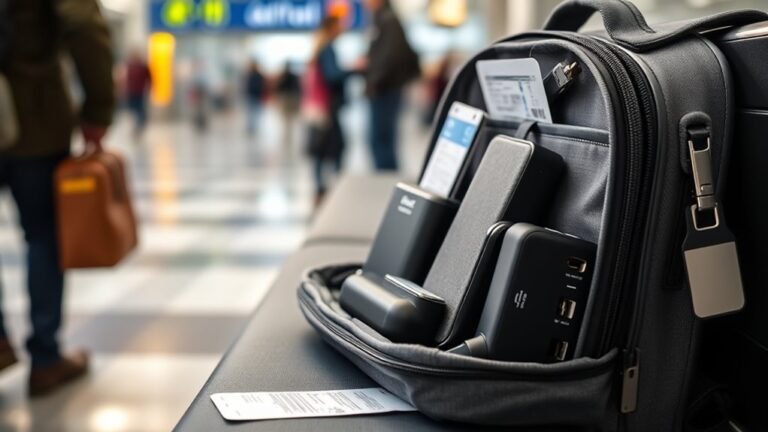
Dedicated tech pockets protect chargers and tablets and prevent tangled cords.
- Expandable shells: add capacity without permanent size.
- Packing cubes: organize by outfit or function.
- Tech pockets: shield devices and simplify access.
- Compression straps: stabilize contents and maximize space.
How to Test a Bag In-Store (And What to Ignore Online)
When you try a bag in-store, roll it to check wheel smoothness and listen for wobble or grinding.
Pull and extend the handle to make sure it feels solid and doesn’t hinge or wiggle.
Zip and unzip every zipper to confirm the teeth align and the pull won’t snag or split.
Check Wheel Smoothness
Because smooth wheels make dragging a suitcase feel effortless, that’s the first thing you should test in-store. Roll the bag forward, backward, and in gentle circles to hear for grinding or wobble.
Push it over tile and carpet seams to feel resistance. Lift and spin each wheel to check bearing play. Inspect wheel housings for cracks or loose screws.
- Roll forward and back to detect roughness.
- Turn in circles to spot wobble.
- Push over different flooring to assess resistance.
- Spin each wheel and inspect the housing for play or damage.
Test Handle Stability
After checking the wheels, give the handle the same scrutiny—it’s what you’ll grab hundreds of times, so it should feel sturdy and sit firmly in its housing.
Pull telescoping handles fully and partially, listen for wobble or grinding, and feel for play where sections meet. Push and pull from different angles, including one-handed lifts, to mimic real use.
Check fixed top and side grips for firm rivets and no flex. Ignore marketing claims or online videos showing quick pulls; you need tactile confirmation.
If it wiggles, clicks, or feels loose, rule that bag out—repairing handles is costly.
Inspect Zipper Strength
If you plan to rely on a bag for frequent travel, don’t let zippers be an afterthought—test them thoroughly in store. You’ll want smooth, sturdy pulls and tight teeth that don’t catch or flex. Zip and unzip several times, press along seams, and listen for grinding.
Tug the slider sideways to check for misalignment. Ignore flashy online claims; photos can’t reveal wear resistance or smoothness.
- Zip/unzip repeatedly to feel smoothness.
- Run fingers along teeth to detect gaps.
- Tug sliders sideways for alignment.
- Check metal vs. molded teeth for durability.
Budget Picks vs Premium Brands: Tradeoffs
When you’re choosing between budget luggage and premium brands, think about what you actually need from a suitcase rather than the price tag alone. You’ll weigh durability, warranty, weight, and appearance. Budget picks give immediate savings and decent function for occasional trips. Premium brands offer longevity, smoother wheels, and better support if you travel often. Match choice to frequency: buy cheap for light use, invest if you rely on luggage weekly. Consider repairability and resale value. Compare features side-by-side:
| Budget Picks | Premium Brands |
|---|---|
| Lower cost | Higher cost |
| Lighter warranty | Strong warranty |
| Adequate durability | Superior durability |
| Basic wheels | Smooth wheels |
| Limited resale | Higher resale |
Sustainable Luggage Options and Sizing Checklist
Wondering how to make your next suitcase choice kinder to the planet without sacrificing practicality? You can pick recycled materials, repairable designs, and durable builds that avoid fast replacements. Think about weight, carry-on limits, and how often you’ll travel.
Choose recycled, repairable, durable suitcases—lightweight and airline-friendly—to reduce waste without compromising practicality.
- Choose recycled or plant-based shells to cut virgin-plastic use.
- Prefer modular, repairable models with replaceable wheels and handles.
- Match size to trip length: 20–22″ for carry-on, 24–26″ for weekender, 28–30″ for longer stays.
- Check airline size/weight rules and aim for light but sturdy construction to reduce checked-fee surprises.
Frequently Asked Questions
Can Luggage Absorb Odors or Mildew During Long Storage?
Yes — luggage can absorb odors and develop mildew during long storage if it’s damp or sealed. You should clean, dry thoroughly, use desiccants and airflow, and check periodically to prevent musty smells and mold growth.
How Do Pets and Service Animals Affect Luggage Choices?
Pets and service animals influence luggage choices because you’ll need durable, odor-resistant, easy-to-clean bags; you’ll avoid fabrics that trap hair or smells, choose hard-shell or washable liners, and pack retractable leashes and spare cleaning wipes.
Are There Clothing Materials That Travel Better in Soft Vs Hard Cases?
Yes—you’ll find delicate fabrics like silk and linen travel better in soft cases with padding and compression to reduce creases, while structured garments and heavy coats benefit from hard shells that protect shape and resist crushing during transit.
Can Smart Luggage Batteries Be Shipped or Checked on Planes?
You generally can’t check smart-luggage lithium batteries; airlines usually require removable batteries carried in the cabin, often with terminals protected and capacity limits (usually ≤100Wh, sometimes 100–160Wh with approval). Check your airline’s rules.
How Does Climate (Humidity, Salt Air) Impact Long-Term Luggage Lifespan?
Humidity and salt air accelerate corrosion, mildew, fabric breakdown, and zipper/hinge failure, so you should dry luggage thoroughly, rinse salt, use protective sprays, store in breathable covers, and inspect hardware regularly to extend lifespan.
Conclusion
You’re ready to pick luggage that actually fits your trips and habits. Focus on durability for frequent travel, weight for airlines, and internal organization for neat packing. Choose hard-shell if you need protection and water resistance; pick soft-sided for flexibility and lighter weight. Try bags in-store for feel and wheel smoothness, and weigh budget tradeoffs against warranty and brand quality. Consider sustainable options and double-check size limits before you buy.