Will Hotels Hold Your Luggage
Yes—most hotels will hold your luggage before check-in or after checkout, though policies vary by property and location. You’ll usually get free short-term storage at the front desk, but ask about time limits, fees, and liability before handing bags over. Bring ID, request a receipt or written confirmation, and photograph valuables. If they can’t help, they’ll usually point you to nearby lockers or services. Keep going to learn practical tips and next steps.
Will Hotels Usually Hold Your Luggage?

Wondering if hotels will hold your bags? You can usually expect them to, especially if you’re arriving early or departing late.
Policies vary: many front desks offer short-term storage free or for a small fee, while some require ID or a claim ticket.
Chains and independent properties differ, so ask ahead to avoid surprises.
Staff typically tag and lock items in a secure room, but valuables should stay with you or in a hotel safe.
Don’t assume unlimited storage—confirm time limits and potential charges, and get a receipt to protect both you and the hotel.
Which Hotels Usually Offer Free Baggage Storage
When you’re planning, note that major hotel chains and well-known brands often include complimentary baggage storage as a standard perk.
Boutique and independent properties may offer it too, but policies can vary so you’ll want to ask ahead.
Business and airport hotels are also likely to provide free short-term storage given their guest profiles.
Hotel Chains And Brands
Although policies vary by location, many major hotel chains and brands usually offer free baggage storage for guests either before check-in or after checkout. Big names—Hilton, Marriott, Hyatt, IHG and Accor—commonly provide this service at front desk or concierge, especially for loyalty members.
You should call ahead to confirm hours, security measures, and any size or time limits. Airports and flagship properties tend to be more flexible.
Don’t assume complimentary service at every branch; independent franchisees may set different rules. If you need long-term or insured storage, request details on liability, tagging, and retrieval procedures before leaving your bags.
Boutique And Independent Properties
Because boutique and independent hotels often operate with tighter staff and unique policies, you’ll find more variation in whether they store luggage for free. You should call ahead or check reviews; some offer complimentary short-term storage, others charge or limit hours. Staff friendliness and available backroom space matter. If you need guaranteed service, ask about fees, pickup deadlines, and liability. Pack valuables in carry-on. Smaller properties may be flexible if you’re a guest, but confirm for late arrivals or long-term holds. Use local lockers as backup when policies aren’t clear.
| Service | Typical Answer |
|---|---|
| Free short-term | Often |
| Paid/limited | Sometimes |
Business And Airport Hotels
If you’re traveling for work or catching an early flight, business and airport hotels usually offer free short-term baggage storage so you can attend meetings or explore the city without hauling your bags. You’ll find streamlined services focused on efficiency, clear signage, and staff trained to handle quick turnarounds. Use these tips to make it smooth:
- Ask reception on arrival for storage policies and hours.
- Label your bag with contact info and pickup time.
- Request a receipt or tracking tag for security.
- Confirm any liability limits or long-term fees before leaving your luggage.
When Hotels Refuse or Limit Luggage Storage
When a hotel refuses or limits luggage storage, you’ll need to adjust plans quickly to avoid getting stranded with your bags—especially if you’re arriving before check-in or staying after checkout. First, stay calm and ask why; policies might be temporary or occupancy-based.
Then explore alternatives: nearby luggage storage services, train stations, or attractions that offer lockers. Prioritize essentials by transferring valuables and a change of clothes to a daypack. Confirm pick-up/drop-off hours and costs.
If you must keep bags with you, plan transportation and secure them in public areas. Document any refusals for complaints or future booking choices.
How to Request Luggage Storage and Get Proof Quickly

Before you hand over your bags, ask the front desk clearly and politely whether they can store your luggage and for how long. Then request written confirmation—either a stamped receipt, an email, or a photo of a signed log—so you’ve got proof of the arrangement and any liability limits.
Follow these steps to secure and document storage quickly:
- Confirm storage window and any fees verbally.
- Ask for a stamped or signed receipt and keep a photo.
- Request an emailed confirmation to your address or phone.
- Note the staff member’s name and time on your copy for reference.
What ID and Receipts Hotels Will Ask For
When you drop luggage with a hotel, they’ll usually ask to see a valid government ID to confirm your identity.
You’ll also want to show your booking confirmation receipt and the credit card you used for the reservation if they request proof of payment.
Have those ready to speed up the process and avoid extra questions.
Valid Government ID
Curious what documents hotels ask for when you drop off luggage? You’ll usually need a valid government ID to verify identity and tie the bags to you. Present the original; photocopies or photos mightn’t be accepted.
Staff log your name and room or a claim tag number, then keep the ID on file briefly. Expect simple verification, not a deep background check.
- Passport — if you’re international or prefer it.
- Driver’s license — the common local choice.
- National ID card — where applicable.
- Military ID — accepted at many properties.
Booking Confirmation Receipt
Although staff rarely ask for much beyond ID, you’ll usually need to show your booking confirmation or receipt so they can match your luggage to a reservation and note any prepaid or complimentary arrangements. Bring a printed or digital copy with your name, dates, and confirmation number visible.
If someone else booked for you, carry written authorization or the booker’s contact info so staff can verify details quickly.
Keep receipts for extras like early check-in or storage fees handy. Clear, matching documentation speeds service, reduces mistakes, and helps resolve disputes if luggage is misplaced or pick-up is contested.
Credit Card Used
If you paid with a credit card, staff will usually ask to see that same card plus a matching photo ID so they can verify authorization and prevent fraud. You’ll hand over the card and ID briefly; they’ll check name, signature, or chip.
If someone else paid, expect a signed authorization form or the payer present. Keep digital receipts handy.
- Present the credit card used.
- Show a government photo ID matching the name.
- Provide the booking or payment receipt if requested.
- Have a signed cardholder authorization when needed.
Complying speeds the process and protects everyone.
Label, Secure, and Photograph Bags Before Drop-Off
Before you hand over your luggage, label each bag clearly, fasten all zippers and locks, and snap a quick photo of the exterior (including any existing damage or unique marks). Do this so staff can match items and you can document condition. Keep tags visible and include your name and phone. Use simple locks, not bulky security devices, and tuck valuables away. Email or text photos to yourself for timestamped proof. Ask staff to confirm receipt and location. Use the table below to check tasks before drop-off.
| Tag | Lock | Photo |
|---|---|---|
| Done | Secure | Sent |
| Confirmed | Tucked | Saved |
Handling Oversized, Fragile, or Valuable Items

If you’re bringing oversized bags, ask the front desk about size limits and any special handling fees before you arrive.
For fragile items, request careful packing, cushioning, and clear labeling so staff know to treat them gently.
If you have valuables, find out whether the hotel offers in-room safes, a secure storage vault, or recommended alternatives.
Oversized Bag Policies
How will your hotel handle oversized, fragile, or valuable items when you arrive or check out? You should ask about size limits, storage location, and staff availability before arrival. Policies vary, so confirm fees and liability terms. Expect clear instructions for pickup times and ID verification. Consider travel insurance for valuables.
- Ask for dimensions and weight limits to guarantee acceptance.
- Confirm whether items go to a secure storage room or concierge hold.
- Check for handling fees and declared-value coverage options.
- Get written confirmation of pickup window and required identification.
Fragile Item Handling
When you arrive with oversized, fragile, or valuable items, tell the hotel in advance and get clear, written instructions on how they’ll handle them so you know who’s responsible and when to pick them up. You should label items, ask about packing materials, and confirm storage location and access hours. Photograph condition on drop-off and get a receipt. Note liability limits and consider insurance if needed. If you need special handling, request trained staff. Use contact names for pickup to avoid disputes.
| Item Type | Recommended Action |
|---|---|
| Glassware | Cushion, photo record |
| Electronics | Power off, secure |
| Artwork | Climate-controlled storage |
Valuables Storage Options
Where will you keep oversized, fragile, or high-value items so they stay safe and accounted for? You’ll want clear options and a plan before you arrive. Consider hotel safe protocols, documented receipts, and transport choices to minimize risk.
- Ask front desk about in-room safes, hotel vaults, and insurance coverage.
- Request documented handover for oversized items, noting condition and pickup time.
- Insist on padded storage or climate control for fragile or temperature-sensitive pieces.
- If value is high, arrange courier service or insured transport instead of hotel custody.
Confirm policies in writing and photograph items before relinquishing them.
How Long Hotels Will Hold Bags (Typical Limits & Fees)
Although policies vary by property, most hotels will store your luggage for a few hours before check-in and several hours after check-out, and some will keep bags for days for a fee or with prior arrangement.
You’ll usually get free short-term storage (same day) but overnight holds can trigger daily charges or require signed forms.
Long-term storage often needs prior approval, ID, and contact details. Limits on size, weight, and liability apply; small hotels tend to be stricter.
Ask at booking to confirm fees, maximum hold duration, and whether receipts or claim tags are provided to protect your belongings.
What to Do If Hotel-Stored Luggage Is Lost or Damaged
If your luggage goes missing or comes back damaged after hotel storage, act quickly: notify the front desk, ask to see the manager, and file an incident report so the hotel documents the loss.
Then follow these steps to protect yourself and seek resolution:
- Take photos of damage or the empty storage area and keep copies of receipts and the incident report.
- Request the hotel’s written policy on stored items and any internal CCTV review.
- Ask for a written timeline of the hotel’s investigation and follow up in writing.
- If resolution fails, contact your travel insurance or credit card issuer and consider small claims court.
Alternatives When a Hotel Can’t Help (Lockers & Apps)
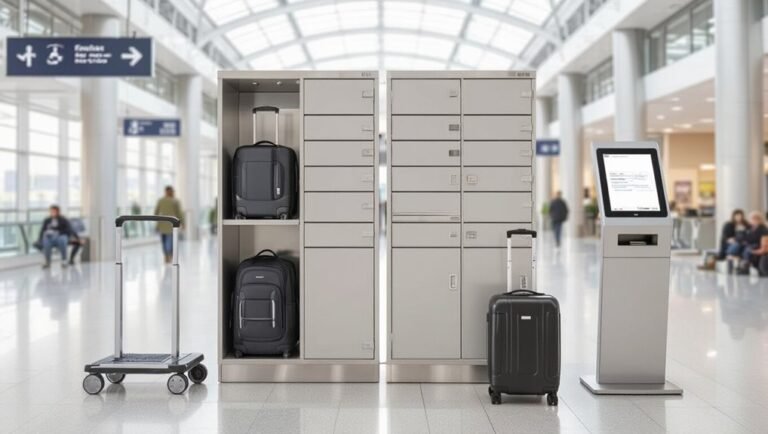
When a hotel can’t store your bags or won’t take responsibility, you’ve got practical options—like staffed luggage lockers, automated self-service units, and peer-to-peer storage apps—that let you drop off belongings for a few hours or days without relying on hotel staff.
You can use train-station or airport lockers for short stays, pay a staffed facility for secure, insured drops, or book a vetted local host through an app for flexible hours.
Compare prices, check size limits, read reviews, and note access rules.
Pack valuables separately, keep receipts and contact info, and plan pickup times to avoid extra fees.
Luggage-Storage Checklist to Get It Done Smoothly
Because a smooth drop-off depends on planning, use a concise checklist to cover timing, security, and paperwork before you hand over your bags. Follow these steps so staff can store items quickly and you can reclaim them without hassle.
- Confirm hours and fees up front, and ask about liability limits.
- Label bags with your name, phone, and room number; keep valuables with you.
- Get a dated receipt with item descriptions and the staff member’s name or tag number.
- Note pickup ID requirements and return times; set phone reminders for collection.
Stick to this routine, and transfers stay simple.
Frequently Asked Questions
Can Hotels Store Luggage for Non-Guests Who Paid a Day Fee?
Yes, some hotels will store luggage for non-guests who pay a day fee; you’ll need to call ahead, follow their policies, provide ID, and accept liability limits or charges they set for storage and handling.
Can Hotels Transfer Bags Between Properties for Guests?
Yes, many hotels can transfer bags between properties if you ask; they’ll coordinate logistics, may charge fees, and require ID or authorizations. You should confirm policies, timing, and liability limits before arranging the transfer.
Do Hotels Insure Stored Luggage Automatically?
No, hotels don’t automatically insure stored luggage; they’re typically liable only for negligence. You should ask the front desk about their policy, consider travel insurance or declare valuable items, and get written confirmation if needed.
Can I Request Overnight Access to Stored Luggage?
Yes — you can request overnight access to stored luggage; hotels often accommodate if staff availability, security, and policy allow. Call ahead, confirm hours, obtain receipt or tag, and agree on pickup procedures to avoid surprises.
Are There Health/Sanitation Rules for Stored Food Items?
Yes — hotels usually have sanitation rules for stored food: you’ll need sealed, nonperishable items, labeled containers, and sometimes refrigeration for perishables; staff won’t accept unsafe or odorous food, and they’ll follow local health codes.
Conclusion
Yes—most hotels will hold your luggage, but policies vary by property and circumstance. Always ask politely at the front desk, show photo ID and your reservation receipt, and request a timestamped claim ticket or receipt. Expect limits on liability, storage duration, and possible fees; high season, security concerns, or full-capacity hotels may refuse or restrict storage. If they can’t help, use station lockers, third-party services, or apps. Inspect bags on pickup and report issues immediately.